A soft robot could help doctors diagnose and treat disorders of the small intestine
MIT engineers designed a robotic enteroscope that can inch through the hard-to-reach small intestine, making biopsies and drug delivery easier.
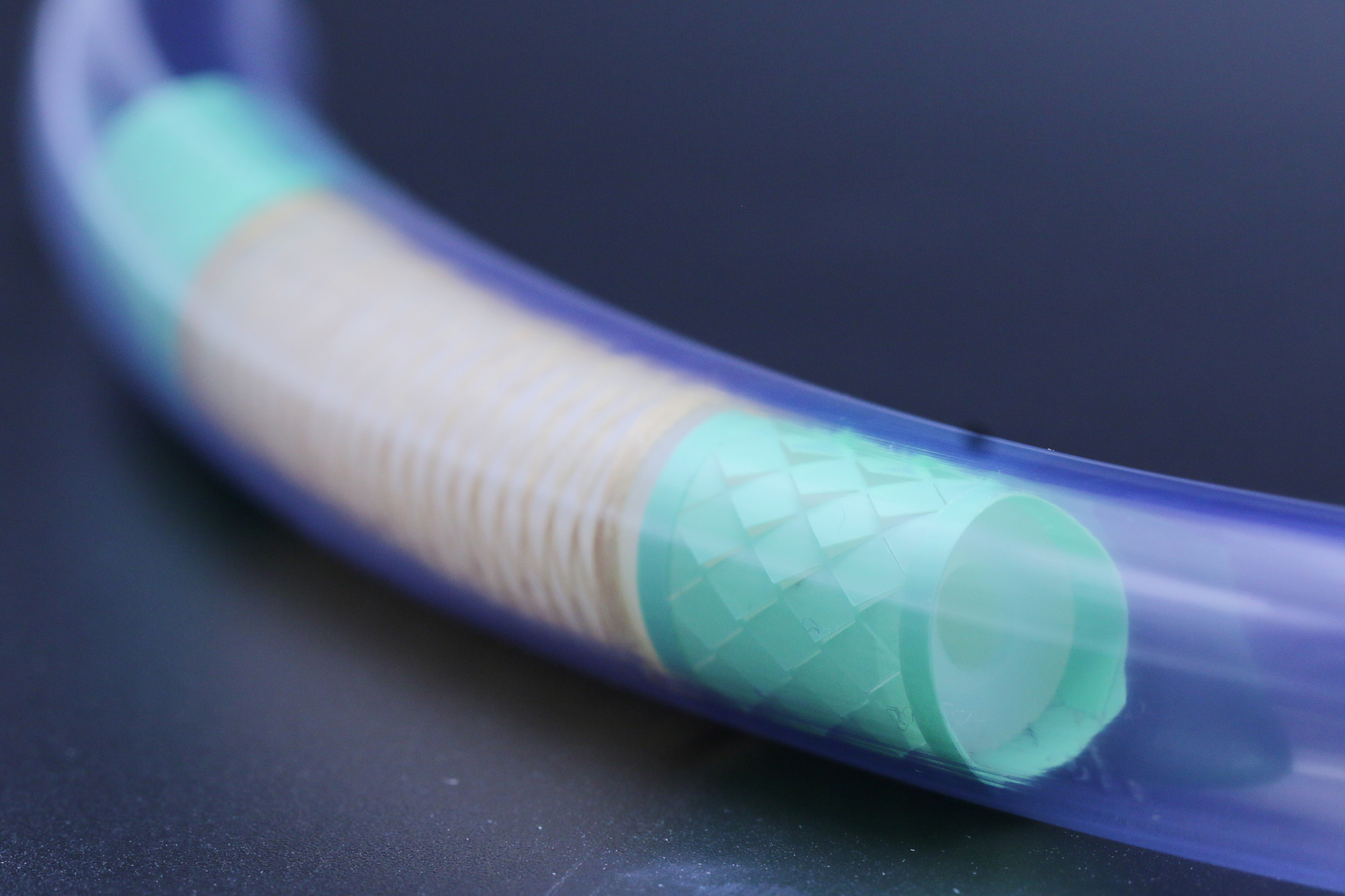
Diagnosing and treating disorders within the small intestine poses significant challenges due to its length, narrow passage, and deep location within the body. To tackle these issues, MIT engineers have developed a novel robotic enteroscope, modeled after the slithering motion of snakes and the textured scales on their skin. This innovative design incorporates a textured coating to help the robot maintain contact with the mucosal lining of the intestine as it navigates the narrow tube.
Similar to an endoscope, the robotic device is equipped with various tools for diagnosing and treating abnormalities. For instance, the robot can remove polyps or collect tissue samples for biopsy. Giovanni Traverso, a professor of mechanical engineering at MIT and gastroenterologist at Brigham and Women's Hospital, highlights the significance of this advancement, stating that the robot could enable biopsy or removal of a detected polyp.
The most common problems that doctors evaluate within the small intestine include bleeding, lesions, and blockages. Currently, the evaluation process relies on double balloon enteroscopy, a slow and laborious procedure involving the alternately inflating and deflating of two balloons to propel the enteroscope through the small intestine.
The new robotic enteroscope overcomes these challenges by leveraging a locomotion strategy inspired by snakes, allowing for easier control and faster movement through the intestine. The researchers designed multifunctional actuators that control the robot's movement by inflating and deflating four chambers, which enable the robot to extend or bend in any direction.
Additionally, the head and tail segments of the robot feature expandable anchoring balloons that inflate and deflate in turns, aiding in the robot's forward movement.
To enhance traction within the slippery lining of the intestine, the researchers applied a kirigami-inspired technique to create special patterned sleeves on the robot's coating. These kirigami sleeves lie flat when not stretched by the expansion of the balloons, transforming into three-dimensional structures resembling needles when stretched.
This design provides the robot with improved traction, enabling it to generate localized tissue engagement traction for locomotion without causing excessive stretching to the delicate small intestinal tissue.
The system also includes electronic navigation components with a controller that allows the operator to guide the robot through narrow passages and around tight corners. The soft robot can be inserted into the body through either the mouth or rectum and features tools such as a camera for imaging, a sprayer for drug delivery, and clips capable of taking tissue biopsies or removing polyps.
In animal studies, the researchers demonstrated that the robotic enteroscope could travel approximately six and a half feet through the small intestine, successfully showcasing the drug sprayer, tissue clips, and camera. The team is now focusing on improving the navigation systems and exploring the potential applications of this approach in the evaluation of the small intestine.
Written by urgent.news from MIT News Research's reporting — not their text. Machine-written — may contain errors; check the original before relying on it.