Schicksalswahl ohne Klarheit: Israels Wahl bringt keinen klaren Sieger - was nun?
Die Wahlbeteiligung war mit 77,7 Prozent die höchste seit mehr als einem Vierteljahrhundert. Doch die richtungsweisende Wahl in Israel ergab zunächst kein klares Ergebnis. Wie geht es jetzt weiter?
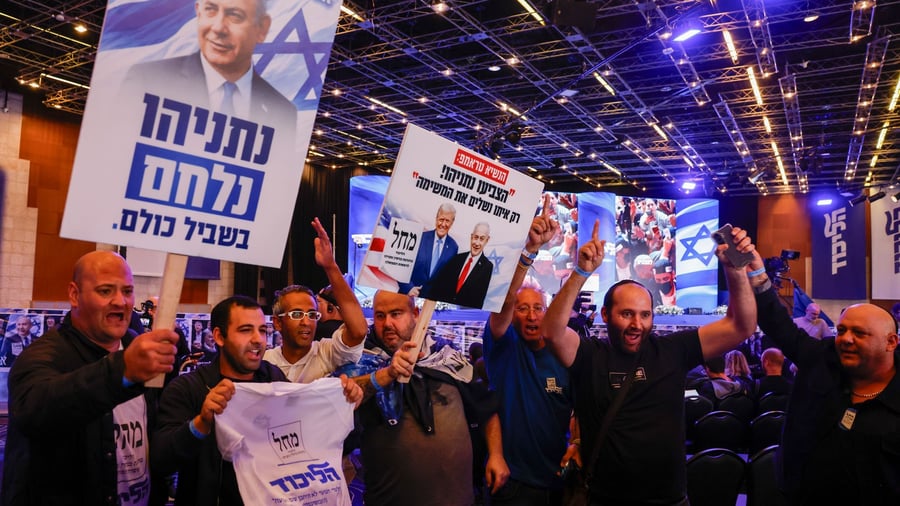
In Israel's decisive election, no clear winner emerged, with the right-wing Likud Party led by Prime Minister Benjamin Netanyahu predicted to be the strongest force in parliament. However, the right-religious coalition under Netanyahu only secured 50 out of 120 seats, failing to achieve an outright majority. The Center Party, led by former military chief Gadi Eisenkot, came in second with only two seats, also falling short of a majority.
This leaves the formation of a government and the question of who will lead the future administration uncertain. Opposition leaders view the results as a defeat for Netanyahu and aim to form a government themselves, while Eisenkot plans to replace the Netanyahu-led government immediately, stating his intention to implement the will of the voters.
The election results indicate that the majority of Israeli citizens have lost confidence in Netanyahu and his government. Opposition leader Jair Lapid called it a "devastating defeat" for the Netanyahu bloc. After a four-year election, Netanyahu formed a coalition with over 64 seats, supported by extremist and religious parties.
Arab parties may play a crucial role in forming a government, either as coalition partners or by tolerating a minority government. However, not all opposition parties are willing to support this. The Arab-conservative Raam Party and the United List of predominantly Arab parties Chadasch, Taal, and Balad secured a total of 18 seats.
Israeli political analyst Elizabeth Tsurkov suggested that the opposition could form a government with the support of the Arab parties, provided they overcome their racism. Raam Party Chair Mansur Abbas noted that the high voter turnout showed that "frustration and desperation within the Arab population has turned into hope." The Netanyahu government has mistreated Arab citizens, and this issue sparked a response from the sector.
He hopes that Eisenkot's coalition and his Raam Party could form a majority together. The Raam Party was the first Arab party to join an Israeli government coalition in 2021 under Prime Minister Naftali Bennett, seen as a historic step towards political integration of the Arab minority, which makes up about 20% of Israel's population.
However, Bennett's coalition eventually collapsed due to disagreements. In August, a Jewish politician joined the Raam Party, providing a bridge between the Jewish and Arab factions. Arab parties diverge significantly from Jewish parties in their stance on the Israeli state and the Palestinian issue. If the government formation fails, Netanyahu may initially remain in power as the head of a transitional government.
This could lead to a political crisis and another round of elections, similar to the previous five consecutive elections in the past four years due to the inability to form a stable majority. A renewed political deadlock could cripple the country for months, even as conflicts in the region remain unresolved three years after the Gaza War and with major security challenges looming, particularly in relation to Iran.
Written by urgent.news from Handelsblatt's reporting — not their text. Machine-written — may contain errors; check the original before relying on it.