What Early Voting Data Is Showing About the Midterm Elections
Tens of millions of Americans have already voted, offering an initial glimpse into how the pivotal midterms may play out.
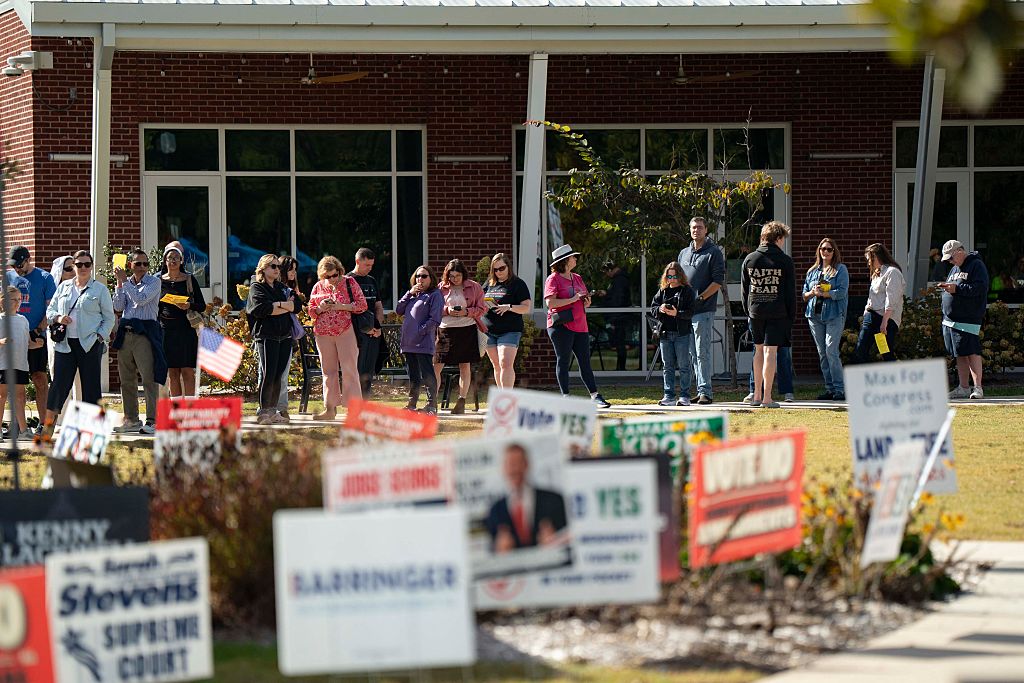
Early voting data for the upcoming midterm elections in the United States is revealing intriguing trends. As Election Day approaches on November 3, nearly 33 million Americans have already cast their ballots, accounting for more than a quarter of the roughly 122 million votes cast in the 2022 midterms. Michael McDonald, a political science professor at the University of Florida's Election Lab, cautions that early voting data alone cannot predict election outcomes but can provide insights into voting behavior.
A notable trend is that Democrats are currently leading in early ballots, with roughly 45% of early voters being registered Democrats compared to 31% being registered Republicans. The remaining 24% of early voters are unaffiliated with either party. This early turnout advantage for Democrats is expected to continue, as Republicans are anticipated to gain ground on Election Day, similar to past midterm elections.
Polls indicate Democrats have higher engagement and enthusiasm compared to Republicans. In a PBS News/NPR/Marist poll, 52% of likely voters said they would support the Democratic candidate in their House district, while 44% would back the Republican candidate. Independent likely voters favored Democrats by 13 points. Additionally, 71% of Democratic voters expressed high enthusiasm about voting, compared to 61% of Republican voters.
The midterms are occurring as President Donald Trump's approval rating has hit near record lows due to dissatisfaction with his handling of the war in Iran and the economy. Republicans attribute their lower early turnout to frustration with the Trump Administration, believing it has decreased support for the Republican party and led to decreased enthusiasm among GOP voters.
Democrats are also expected to gain ground with Hispanic voters, who are turning out in larger numbers compared to recent elections. The data suggests a potential "blue wave" of Democratic support that could determine the outcome of the midterm elections.
Written by urgent.news from Time's reporting — not their text. Machine-written — may contain errors; check the original before relying on it.