Prediction markets open new front for US election misinformation
With hundreds of millions of dollars on the line, experts are warning that the proliferation of live odds into news coverage and on social media could sow confusion.
The rise of prediction markets in recent US elections has brought a new dimension to political discourse and the potential for misinformation. As Americans head to the polls in the midterms, prediction markets, such as Polymarket and Kalshi, offer traders the chance to speculate on the outcomes of elections by buying and selling contracts. While these markets have gained popularity, experts warn that they could contribute to confusion and misinformation among voters.
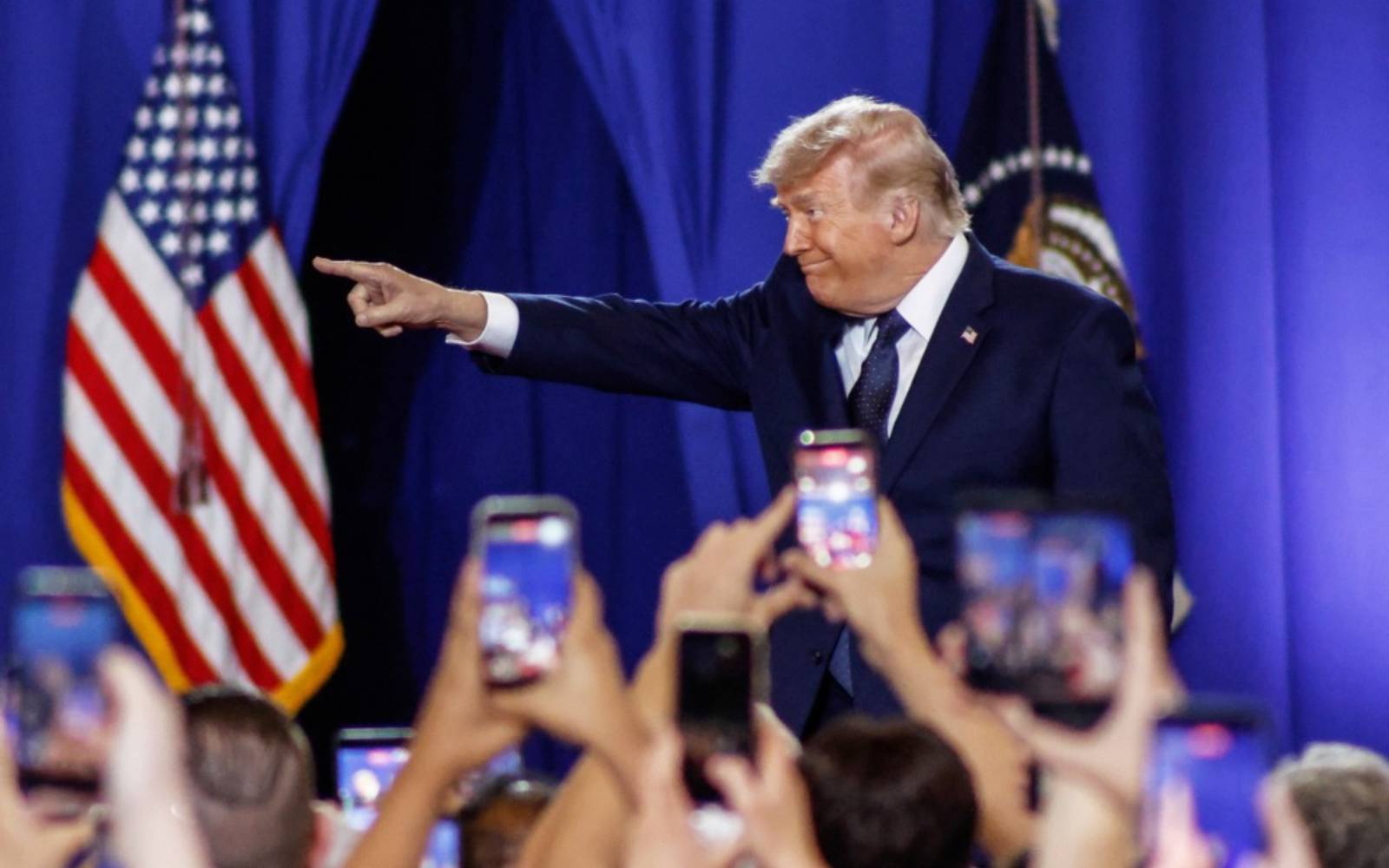
Concerns arise from the possibility that motivated actors may manipulate the markets to sway the perceived odds, or that voters may overtrust the predictions and baselessly accuse election officials of fraud when results differ. President Donald Trump, known for his tendency to spread unsubstantiated allegations of fraud, has already made such allegations ahead of the November 3 vote.
The companies behind these markets have partnered with prominent news organizations, blurring the lines between financial speculation and election coverage. This growing integration into mainstream news coverage raises the question of whether financial market expectations are gaining more weight in the public's perception than the actual votes.
Davina Hurt, government ethics director at Santa Clara University's Markkula Center for Applied Ethics, warns that elections are not games and that the public's perception of election outcomes could be skewed by financial market expectations. She emphasizes that prediction markets should be seen as complements to traditional polling, where participants trade based on their expectations, while polls reflect what respondents want to happen.
However, experts express fears that these markets could be misconstrued by the public, particularly as the companies issue race projections on social media. A high probability on prediction markets does not guarantee the outcome, and when predictions fail, it does not prove that elections are failures. Yet, when these predictions are disregarded, it may contribute to the spread of misinformation and confusion.
Written by urgent.news from Free Malaysia Today's reporting — not their text. Machine-written — may contain errors; check the original before relying on it.
Also reported by 2 other outlets
- Prediction markets open new front for US election misinformation freemalaysiatoday.com
- Prediction markets open new front for U.S. election misinformation japantimes.co.jp