NASA’s UVEX Space Telescope Successfully Passes Key Milestone
Agency officials have confirmed NASA’s UVEX space telescope after completing a technical and programmatic review known as Key Decision Point C. The post NASA’s UVEX Space Telescope Successfully Passes Key Milestone appeared first on NASA Science .
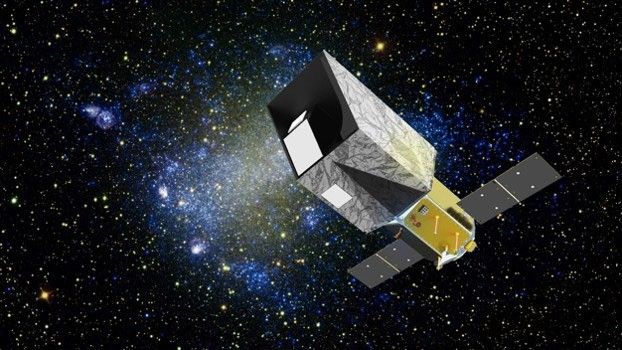
NASA’s UVEX (UltraViolet EXplorer) space telescope has successfully cleared a major hurdle by passing a crucial technical and programmatic review called Key Decision Point C, or KDP-C, on Thursday. This milestone confirms the agency’s commitment to launching the UVEX project by January 2031, with a total lifecycle cost of $590 million.
Originally designated as a Medium-Class Explorer mission in 2024, UVEX will undertake a sensitive survey of ultraviolet light across the entire sky. This extensive survey aims to deliver fresh insights into how galaxies and stars evolve. When combined with other wide-survey missions like NASA’s Nancy Grace Roman Space Telescope, UVEX will contribute to creating a modern map of our universe that spans various wavelengths of light.
Beyond its scientific objectives, UVEX possesses the unique capability to swiftly focus on sources of ultraviolet light in the cosmos. This feature allows the telescope to capture the explosive aftermath of gravitational wave bursts caused by merging neutron stars. Principal investigator Fiona Harrison, based at Caltech in Pasadena, California, spearheads the mission, which also involves University of California at Berkeley, NASA’s Jet Propulsion Laboratory, Northrop Grumman, and Space Dynamics Laboratory.
For those interested in exploring NASA’s space telescopes further, additional information is available at https://nasa.gov/universe.
Written by urgent.news from NASA Science's reporting — not their text. Machine-written — may contain errors; check the original before relying on it.