What's behind Asia's drive to build a $15-trillion energy empire
Asia is expected to power global energy demand to the tune of $1 trillion a year in fresh investment, according to a McKinsey & Co analysis published Oct. 22. This is equivalent to $15 trillion, driven by a ramp in batteries and solar to power data centres, cooling and factories through 2040, the new study shows. The wider region, however, is still writing its own "transition" rules. Overall, the…
Asia is poised to drive global energy demand to an astounding $15 trillion by 2040, according to a McKinsey & Co analysis. This projection, equivalent to $1 trillion in annual fresh investment, is fueled by the rapid expansion of batteries and solar power, which will serve data centers, cooling systems, and factories. The region's energy transition is becoming an Asian narrative, diverging from the trajectories set in Washington or Brussels.
Asia is projected to account for roughly 70% of global net energy demand growth through 2040, with demand forecast to reach 370 million terajoules—15% higher than a year ago. This surge is driven by data centers, industrial growth, and cooling needs.
Morgan Stanley estimates that Asia will invest $5.5 trillion in energy infrastructure over five years, with much of this spending likely to go toward coal, gas, and refining. The region consumes nearly half of the world's energy but produces only about a third. Coal remains dominant in Asia, supplying over half of its electricity, particularly in South Asia, where it constitutes 67% of power generation.
However, Asia's coal demand is expected to stay elevated for longer than anticipated, with China's coal use slowly declining while demand in India and Southeast Asia remains robust. In contrast, gas demand is projected to initially slow and then rebound, driven by industrial shifts away from oil and coal.
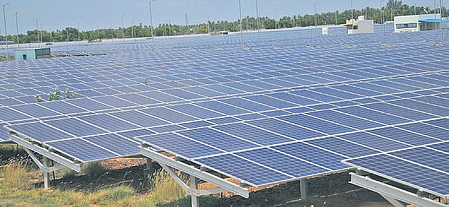
Renewables, especially solar, are becoming increasingly competitive. Utility-scale solar is now the lowest-cost power source in most Asian markets, with solar overtaking gas as Asia's third-largest power source in the 12 months to April 2026. Battery storage prices have plummeted by 93% over the past 15 years, making solar-plus-storage a viable alternative to gas peaking plants.
Additionally, biofuels are emerging as an import shield, with India aiming for E30 ethanol blends and Indonesia planning B50 palm-oil biodiesel, which could cut fuel import bills and emissions. These developments underscore the significant role Asia is set to play in shaping global emissions, fuel prices, and technology costs.
Written by urgent.news from Gulf News's reporting — not their text. Machine-written — may contain errors; check the original before relying on it.