Thyssenkrupp: So soll die Sparte Werkstoffhandel nach dem Börsengang wachsen
Im Handelsblatt spricht TK-Accelis-Chefin Ilse Henne über die neue Unabhängigkeit vom Mutterkonzern und künftige Übernahmepläne.
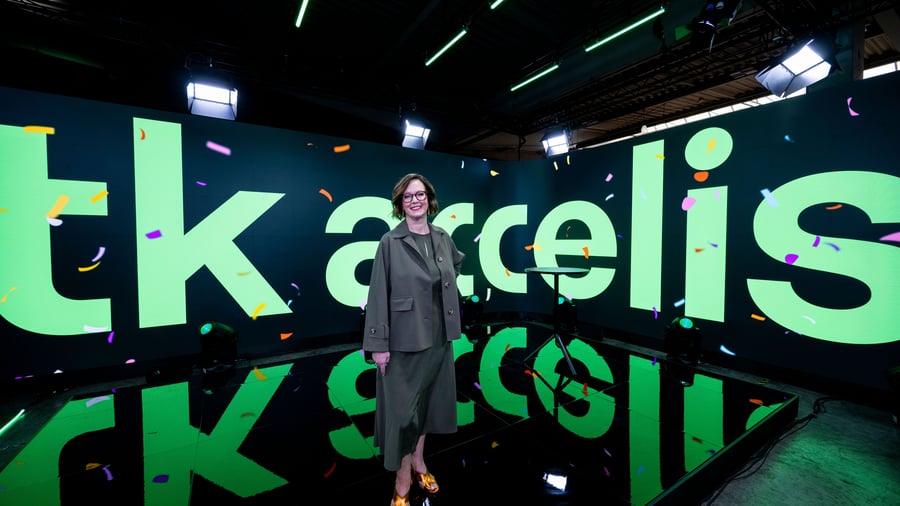
Ilse Henne, chief of TK Accelis, a newly spun off business of Thyssenkrupp, is both excited and nervous about the upcoming trading of her division on the Frankfurt stock exchange. As head of a subsidiary with around 15,500 employees and a turnover of 11.4 billion euros last year, Henne is at the helm of a stand-alone company with its own stock listing.
The separation of TK Accelis is part of Thyssenkrupp's broader restructuring into a financial holding company. However, the company retains 51% ownership by the parent firm, raising questions about how truly independent TK Accelis can be. Henne notes that the key to growth lies in North America, where the company has been working hard to make its organization capital market-ready over the past two and a half years, particularly through improved financing.
TK Accelis will now have greater freedom in using its capital, thanks to a secured credit line of around 1.7 billion euros. This financing is based on the company's operating revenue, mainly inventory and receivables. Henne highlights the advantage of this financing method in the volatile materials trade, stating that it allows the company to "breathe."
However, Henne also warns of potential risks from falling material prices, emphasizing that she would have a bigger problem if her company could not react quickly enough to price drops.
Henne's focus for growth includes the service center business, which processes materials for industrial customers in North America, and improving capacity utilization in Europe, in collaboration with Thyssenkrupp Steel Europe and Swedish steel producer Stegra. The company aims to increase its adjusted EBITDA margin, which excludes interest, taxes, and amortization, to 4-5% over the medium term, primarily through organic growth and performance improvements.
The manager also outlines potential acquisitions as a means to enhance the portfolio, contingent on cultural compatibility. In the processing business, which deals with materials for industrial customers, North America is a key priority. Henne expects growth in North America driven by electrification, industrial investments, and the construction of new data centers. In Europe, the focus is on optimizing existing capacities, in part through cooperation with Thyssenkrupp Steel Europe and the Swedish steel producer Stegra.
Written by urgent.news from Handelsblatt's reporting — not their text. Machine-written — may contain errors; check the original before relying on it.