How long will Pakistan's economy be ‘indebted’ to expats?
Pakistan entered FY2027 with stronger fiscal and external buffers. According to the Finance Division’s monthly Economic Update and Outlook for August 2026, the fiscal deficit narrowed to 2.6 per cent of GDP in FY26, the primary surplus reached 2.9pc, large-scale manufacturing expanded by 4.98pc, and foreign-exchange reserves improved. These are important achievements. However, the composition of…
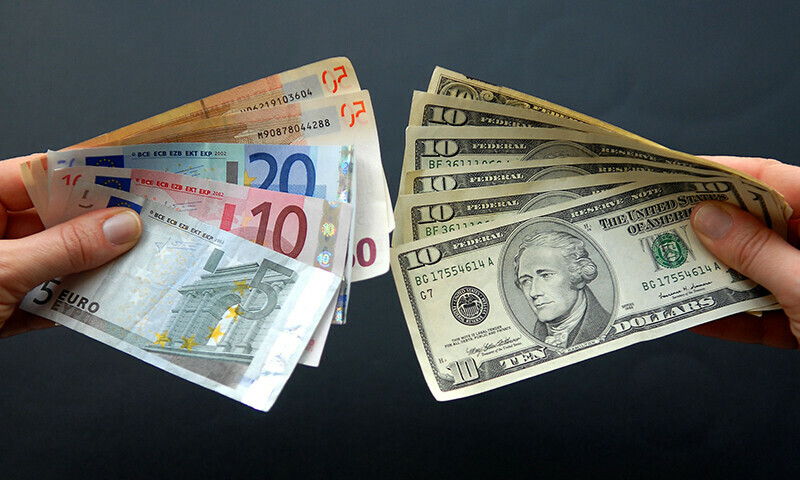
Pakistan's economy entered FY2027 with stronger fiscal and external buffers. While fiscal deficit narrowed to 2.6% of GDP and primary surplus reached 2.9%, the composition of foreign-exchange support reveals a concerning picture. Workers' remittances amounted to $41.6 billion, far surpassing merchandise exports of $30.8 billion and net foreign direct investment (FDI) of $1.67 billion. Remittances were nearly 25 times the net FDI received during the year.
Remittances are crucial for households, education, healthcare, housing, poverty reduction, foreign exchange availability, and trade deficit financing. However, they should not be mistaken for investment or export-led transformation, as they are recorded as secondary income in the balance of payments, not exports or capital inflows. Remittances enhance foreign exchange availability but do not generate new factories, technology, productivity, or export diversification.
The IT sector shows promise, with exports reaching $417 million in July 2026, up 17.8% from the same month. Unlike traditional exports, IT services require minimal imported raw materials and logistics expenses, potentially yielding stronger net foreign-exchange contributions. Policymakers should differentiate IT exports from merchandise exports, recognizing digitally delivered services as a distinct pillar of export competitiveness.
Private foreign investment, however, remains weak at $1.67 billion net FDI. The headline amount does not adequately reflect the quality of investment. Export-oriented manufacturing, technology, logistics, and renewable energy investments can enhance productive capacity and generate future foreign-exchange earnings. In contrast, non-tradable investments and portfolio investments are less dependable, sensitive to risk perceptions, interest-rate expectations, and global financial conditions.
Pakistan's current-account deficit was $304 million in FY26, showing improvement but still heavily reliant on remittances and other offsets to the merchandise deficit. A current-account improvement can stem from stronger exports, productivity, subdued imports, slower domestic demand, or temporary income movements. These scenarios have varying implications for economic welfare and future growth.
The opening month of FY27 demonstrates this dependency. Goods exports increased by 9.4% to $3.01 billion, while imports rose faster by 13.4% to $6.15 billion. Despite this, the current-account deficit narrowed to $328 million from $529 million the previous year due to remittance growth and improved services and primary-income balances.
However, this highlights the continued dependence on remittances and other adjustments to the merchandise deficit. Pakistan must assess not only the volume of foreign capital but also its maturity, volatility, sectoral destination, import content, and capacity to generate exports. The quality of flows supporting foreign-exchange reserves should also be considered—dollars earned through competitive exports differ from borrowed dollars repayable with interest.
Written by urgent.news from Dawn Business's reporting — not their text. Machine-written — may contain errors; check the original before relying on it.