First-time farmer solves mulberry packing problem with dental drill
A former dentist comes up with a $4 storage basket hack to protect the fragile fruit from bruising.
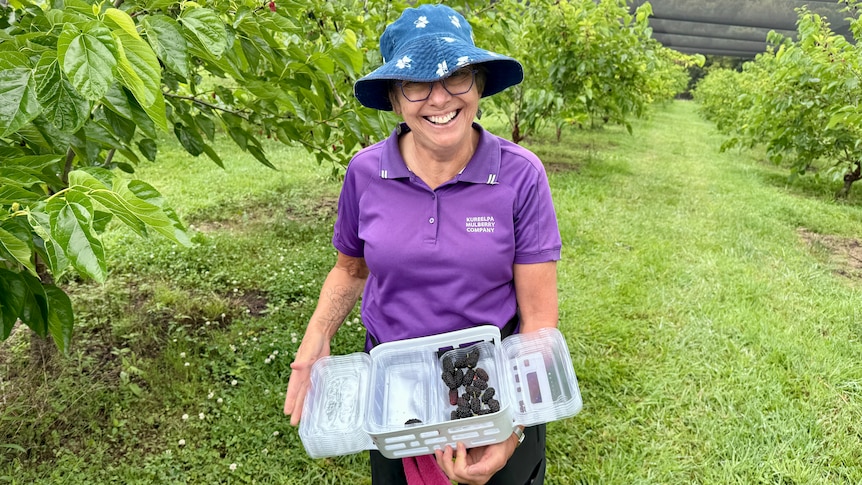
A retired dentist has found a solution to the labor and bruising issues associated with growing and transporting mulberries, a nostalgic fruit that once thrived in Australian backyards. Peter Lynch and his wife Karen established the Kureelpa Mulberry Company on the Sunshine Coast in 2013, and their orchard now consists of 1,500 trees.
Despite the fruit's popularity, only a handful of Australian farmers grow mulberries commercially due to the challenges of harvesting and packaging the delicate fruit. During the four-week harvest window in September and October, the Lynchs faced significant losses and labor costs due to bruised and damaged mulberries.
Determined to find a solution, Mr. Lynch purchased $4 plastic baskets and used his old dental drill to modify them. By cutting and reshaping the containers, he created a system that allowed pickers to stack the punnets on their waists, eliminating the need for double handling. This simple hack has reduced fruit damage by 80% and cut labor costs. The Lynchs now invest profits into a cold room for their packing shed.
Mulberries, once a common sight in Australian backyards, are now enjoyed by many as a sweet, purple fruit with nostalgic memories. The Lynchs sell their mulberries for $4 to $5 per 230-gram punnet to local fruit shops and markets in Brisbane, Sydney, and Melbourne. While the popularity of the fruit remains high, the couple now faces the challenge of finding enough labor to pick the fruit daily for four weeks during the harvest season.
The federal government's decision to cut working holiday maker (WHM) visa numbers by nearly 40,000 annually has raised concerns for the farmers. Mr. Lynch expressed worry about the difficulty of finding pickers willing to commit to a single month of work per year, as many potential workers may not be available for the entire season.
The couple's reliance on WHM visa holders highlights the broader concerns of the horticulture, hospitality, and tourism industries, which also face labor shortages. The Lynchs advocate for a more nuanced approach to immigration policy, focusing on the specific needs of various sectors rather than a one-size-fits-all solution.
Written by urgent.news from ABC News AU's reporting — not their text. Machine-written — may contain errors; check the original before relying on it.