As AI reshapes entry-level jobs, India's IT industry grapples with developing future talent
India’s biggest IT firms are hiring far fewer fresh graduates, as AI changes the skills employers seek. Industry experts tell CNA this could create a shortage of experienced workers in the future unless companies and universities do more to develop young talent.
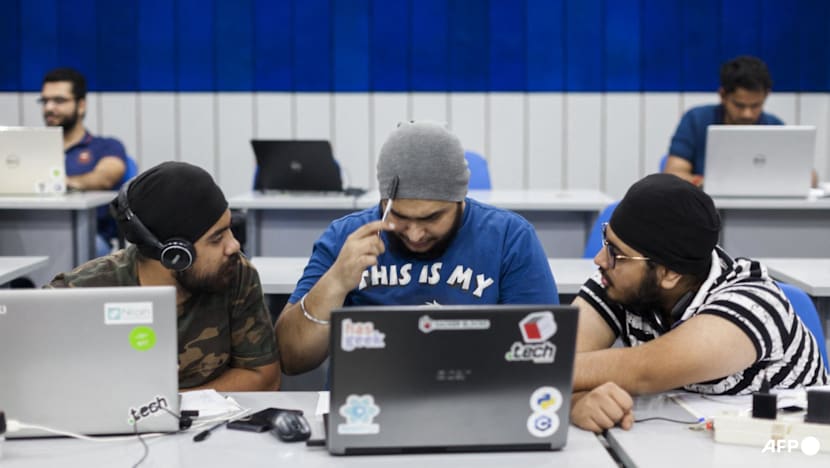
India's IT firms are increasingly hiring fewer fresh graduates as AI transforms the skills sought by employers. Experts warn that this trend could lead to a shortage of experienced workers unless companies and universities better develop young talent. Final-year engineering student Arpita Dayama, preparing for campus recruitment, notes that strong grades from prestigious institutions like the Indian Institute of Technology (IIT) Bombay are no longer sufficient.
Employers now expect candidates to showcase practical skills, including data science projects and work involving agentic artificial intelligence. The sector, which employs an estimated 5.95 million people in 2026, is undergoing a shift in entry-level roles. Mansee Singhal, country leader at Marsh Workforce & Rewards, explains that while companies once hired graduates in bulk and developed them over time, they now seek fresh graduates with greater technical depth and a solid understanding of real business problems.
For instance, Tata Consultancy Services (TCS) has seen a sharp decline in hiring, with 2026 intake less than half of the 2022 level. Infosys also hired about 80% fewer fresh graduates in 2025 compared to 2022. Infosys co-founder Nandan Nilekani attributes this to AI taking over coding tasks traditionally handled by junior engineers, emphasizing the need for new skills like client needs, business transformation, and technology management.
Workforce advisors suggest that companies are adapting by offering in-house training and closer collaboration with universities. Academic experts recommend that universities prepare students earlier by developing problem-solving, decision-making, and broader technical skills. The shift extends beyond AI automating coding tasks, as companies are moving toward more complex roles involving innovation and industry-specific knowledge.
A 2026 Zinnov survey indicates that about 60% of multinational companies' centers in India prefer experienced hires over fresh graduates for AI, cloud computing, and cybersecurity roles, citing the need for expertise and quicker deployment. Some major Indian IT firms are adapting training programs to include generative AI, but developing true specialization in roles like machine-learning engineers and AI architects requires years of hands-on experience.
Only 12% of respondents in an Oliver Wyman survey mentioned plans to use the time saved by AI for training and mentoring junior employees.
Written by urgent.news from Channel News Asia's reporting — not their text. Machine-written — may contain errors; check the original before relying on it.
This story
This is one outlet's version. Read the fullest account.
- As AI reshapes entry-level jobs, India's IT industry grapples with developing future talent channelnewsasia.com
- Talent, compute and R&D key to India's AI ambitions: Report economictimes.indiatimes.com