AI Killed the Homework Era
Commentary: And it could mean the massacre of grading in general.
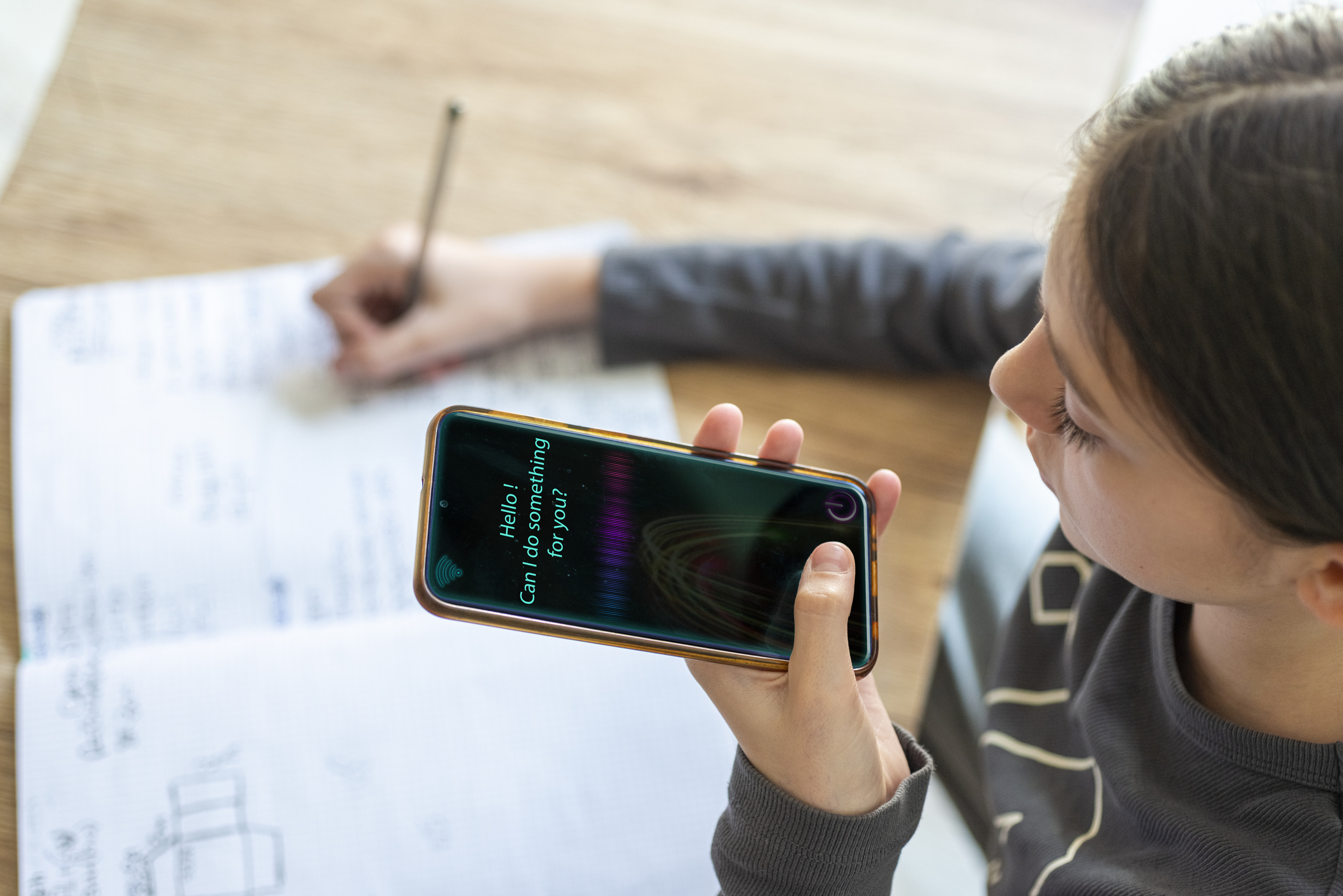
The era of homework is vanishing as artificial intelligence takes center stage, transforming the landscape of education. Grading assignments and offering feedback to learners is one of the most challenging aspects of teaching. During my time as an educator, scrutinizing the outcomes of meticulously designed tasks was merely a gauge of my effectiveness in conveying course concepts.
In the age of AI, it has morphed into a frustrating endeavor plagued by futility. Discussion posts were filled with convoluted references to materials beyond the course's approved curriculum. Some students arrived with innate mastery in the subject matter, reminiscent of the age-old strategy of forging one's parent's signature to maintain deceit.
After reading a recent article about a UC Berkeley mathematics professor who ceased grading homework due to widespread AI usage, I couldn't help but recall my own experience as a professor at the Walter Cronkite School of Journalism and Mass Communication at Arizona State University. The widespread availability of AI tools, following the launch of ChatGPT in late 2022 and subsequent global tech giants' adoption of increasingly advanced chatbots and AI agents, rendered grading homework a deeply disheartening task.
In advanced communications courses, reviewing homework evolved into an obsessive pursuit of AI-generated text patterns and ideas. Unfortunately, my tools for detecting it were woefully inadequate. Despite the impossibility of verification, I had a strong suspicion that numerous online students in my classes had never put in the effort to complete the assignments themselves throughout the course.
When faced with tasks they could not outsource to AI, such as simulations and recorded oral presentations, these students inevitably struggled to maintain their impeccable standards. However, when handed assignments they could easily circumvent with AI, like simulations and recorded oral presentations, they invariably succeeded.
To maintain vigilance against AI usage in homework, I subjected a selection of assignments to various widely available AI chat tools to compare against student-submitted work. Usually, this approach proved inconclusive; by the time I resigned from teaching, I believed that nearly 90% of my online students were leveraging AI to complete all or part of their assignments.
In my small in-person classes, several confrontations ensued due to unauthorized, clandestine use of AI to complete assignments. One particular incident prompted me to reconsider the purpose of my work. A student delivered a presentation at the beginning of the semester, and when queried about their creative process, the student faltered, unable to articulate the circumstances leading to their ideas.
We had a private discussion later that day about AI usage, and the student admitted to employing ChatGPT to assist with their assignment. They pledged never to use it again in my class. However, the same discussion resurfaced on subsequent assignments, with the student promising compliance once more, which I found unconvincing. When I reported the AI usage in my classroom to my supervising dean and inquired about referring the case to the academic integrity board, I was informed that it was ultimately my decision and that, candidly, the university and college were grappling with how to address the widespread adoption of AI.
Currently, ASU's stance on AI reads, in part: "Our focus is on utilizing AI not only to address educational challenges but to do so in a way that respects and uplifts all learners." While some may argue that cheating is a natural inclination, akin to tax evasion or Monopoly strategy, education is not a game. Though school environments may foster competition, learning is not a contest one "wins."
It is a personal journey aimed at unlocking fluency that can be readily applied, such as speaking a language or effortlessly opening a door. AI may be perceived as a master key by today's students, providing instant access to high grades and acceptable answers that a busy, disinterested teacher cannot detect as entirely fabricated.
Students who outsource their learning risk dismissing the importance of proficiency and potentially damaging their credibility in the long run. Until our brains are seamlessly integrated with our computers around the clock, it is a crutch that educators cannot afford to debate any further.
Written by urgent.news from CNET's reporting — not their text. Machine-written — may contain errors; check the original before relying on it.