How ancient Chinese night watchmen patrolled streets, used ‘dripping buckets’ to tell time
In ancient China, before the advent of mechanical clocks and digital devices, people relied mainly on night watchmen to keep time, prevent fires and maintain their daily routines. But how did the watchmen tell the time? Chinese night watchmen mainly used two methods: clepsydras and incense sticks. A clepsydra, also known as a water clock, measures time through the regulated flow of water from a…
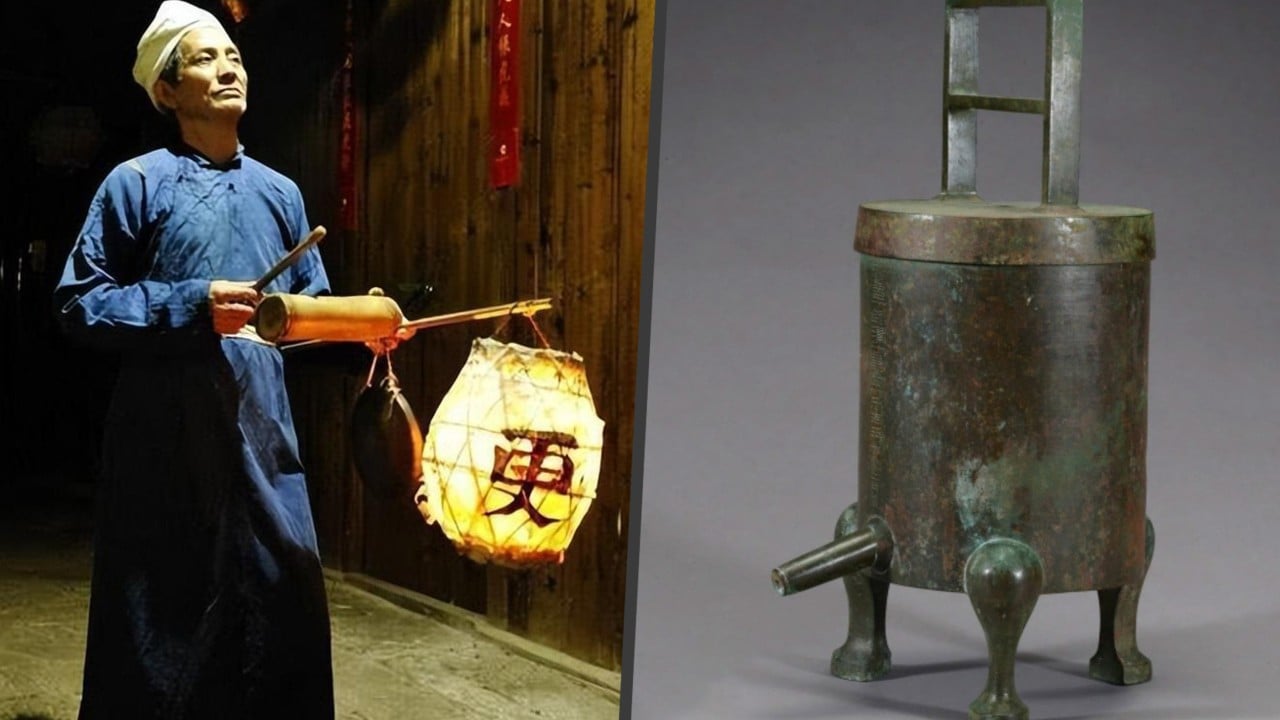
Ancient Chinese night watchmen played a crucial role in regulating daily life through two primary methods: clepsydras and incense sticks. Clepsydras, also known as water clocks, measured time through the regulated flow of water from a vessel. The night was divided into five gengs, each lasting about two hours, but the exact duration varied by season. The first geng ran from 7pm to 9pm, while the final geng ended around 5am.
The float-arrow clepsydra, believed to have originated during the Han dynasty (202 BC–220), was the main timekeeping device used by watchmen. It functioned by buoyancy: as water levels decreased, more of the floating arrow became visible above the surface. Watchmen could read the time by observing the marks on the arrow. During the Tang and Song dynasties (618–1279), a more intricate three-bucket system evolved, utilizing three dripping buckets to ensure consistent water flow.
Clepsydras were crafted from various materials, with those in royal palaces made of gold, silver, and jade. Royal court officials specialized in managing timekeeping, with nearly 400 individuals assigned to oversee the dripping buckets in the imperial city, according to the Old Book of Tang. Their responsibilities included refilling the buckets, monitoring the arrow's position, and reporting the time to night watchmen, who would announce it using a wooden clapper or gong while patrolling the streets.
Incense sticks also served as a timekeeping method, introduced during the Northern and Southern dynasties (386–589). However, incense-based timekeeping was less precise, as burn times varied depending on the stick's material and environmental conditions. As a result, incense measurements were less standardized compared to the dripping buckets.
Shen Li's Incense Manual recounts that during a severe drought in 1073, when clepsydras were ineffective, Shen Li invented a set of timekeeping tools called the five geng incense counter.
Written by urgent.news from South China Morning Post's reporting — not their text. Machine-written — may contain errors; check the original before relying on it.