Green energy vs local anger: Why this Sri Lankan community is saying no to wind turbines
MANNAR (Sri Lanka), Oct 26 — Beneath rotating wind turbines on Sri Lanka’s Mannar peninsula, a fishing net i...
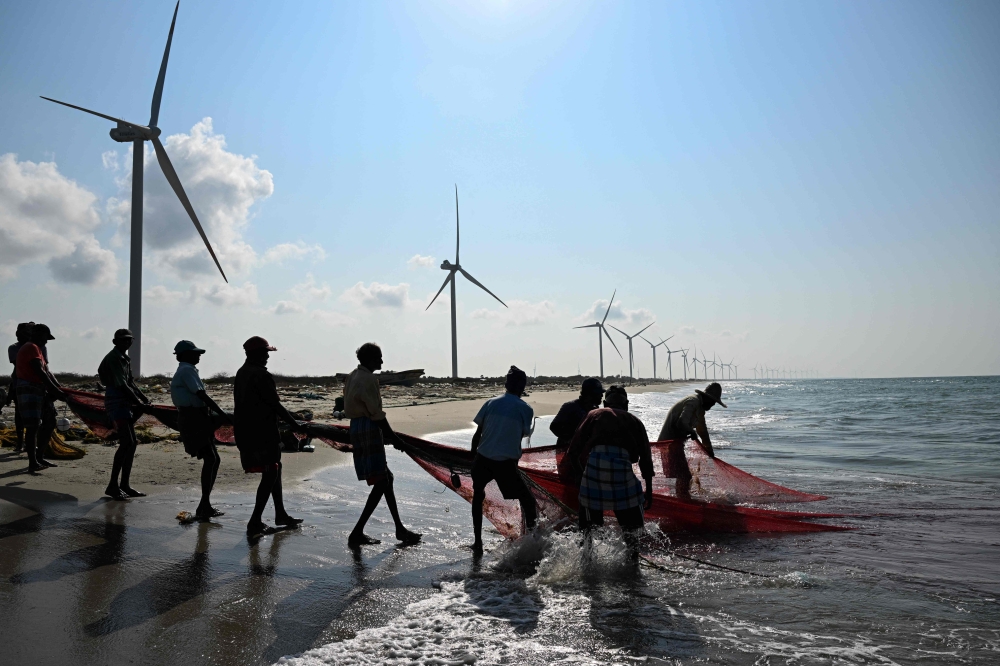
Mannar, a peninsula in Sri Lanka, is witnessing a clash between the push for green energy and the anger of local residents over wind turbines. Six years ago, these turbines were installed and since then, residents claim to have seen a decline in their fish catches and an increase in flooding. Venkatasamy Kalimuththu, a 65-year-old fisherman, believes the rotating blades are driving fish away as the shadow they create prevents fish from swimming up to the shallows.
Despite his inability to provide proof, many locals, including Kalimuththu, are opposed to the installation of more wind turbines.
The local civil society group OPEnE supports the residents but acknowledges the need for renewable energy. They argue that the turbines should not be installed in this specific location as there are other suitable sites. The turbines, owned by the state utility Ceylon Electricity Board (CEB), are part of a larger plan to generate 70% of the country's electricity from renewable sources by 2030. However, the government has frozen new projects in Mannar to ease local opposition.
The opposition is not just limited to the decline in fish catches and the increase in flooding. Benedict Mary Vijiliya, president of the Women's Rural Development Society (WRDS), also blames the turbines for preventing rainwater from draining towards the sea. During the monsoon rains, water levels rise up to her waist, damaging her home, cattle, and crops. "We never had that problem before 2020," she says, showing photographs of her submerged home on her phone.
The local fishermen's cooperative head, A. Stanislas Peries, also laments the decline in fishing incomes. "Before, people could earn up to 5,000 rupees a day from fishing. Now they barely make more than 1,000 rupees."
Energy Minister Anura Karunathilaka has acknowledged the complaints and promised to carry out feasibility studies to potentially reduce the flood situation. The government has pledged to only implement projects that have already been approved.
Written by urgent.news from Malay Mail's reporting — not their text. Machine-written — may contain errors; check the original before relying on it.
This story
This is one outlet's version. Read the fullest account.