Listen: Stellar streams and the dark Universe
When the general public speaks about dark matter, most of the discussion centers on the topic of whether dark matter exists or not: on whether it’s real. But in astrophysical circles, we’re overwhelmingly confident of dark matter’s existence, as we’ve indirectly detected it through an enormous number of independent lines of evidence. Instead, the conversation normally focuses on how to identify…
Dark matter remains a topic of great interest in the field of astrophysics, with most discussions focusing on its existence rather than the approach to identify and characterize it. Researchers are particularly interested in finding measurements that can reveal the underlying nature of dark matter. By observing the luminous signatures of normal matter within galaxies, scientists can gain valuable insights into the gravitational properties of dark matter halos, helping to determine which models remain viable and which should be discarded.
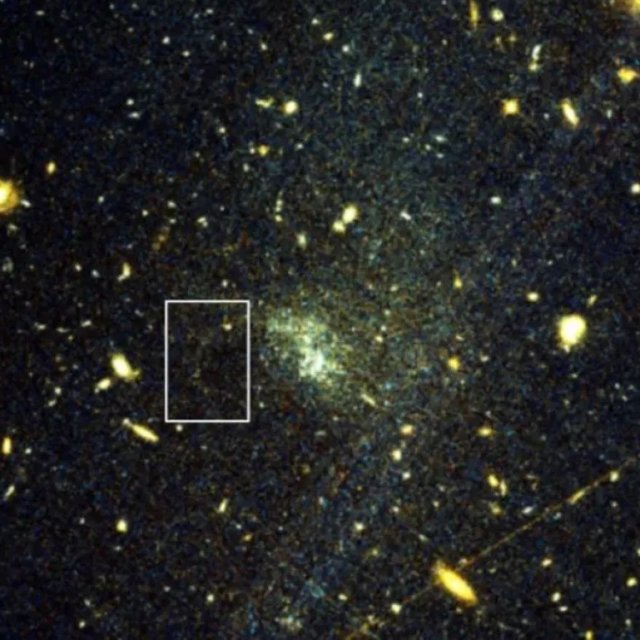
Simulations can be helpful, but the most crucial aspect is the data collected from novel locations and the most precise laboratories. This is why the recent discovery of the first extragalactic globular cluster stellar stream in an ultra-diffuse galaxy is so exciting. Not only is it the first of its kind, but the galaxy in which it is found is exceptionally rich in dark matter and poor in normal matter, making it an ideal laboratory for probing the gravitational nature and distribution of dark matter.
Julie Kiel Holm, a PhD candidate at the Niels Bohr Institute at the University of Copenhagen, is the discoverer of this remarkable finding. In this podcast episode, she shares her insights and the significance of this groundbreaking discovery.
Written by urgent.news from Big Think's reporting — not their text. Machine-written — may contain errors; check the original before relying on it.