Fangmengen: Wird „der einzige Strohhalm“ für Heringsfischer abgeschafft?
In Kürze beraten EU-Minister wieder über Fischfangmengen in der Ostsee. Ein Teil der Diskussion sei überflüssig, sagt ein Experte und erklärt, was Autos mit dem Dorschbestand zu tun haben.
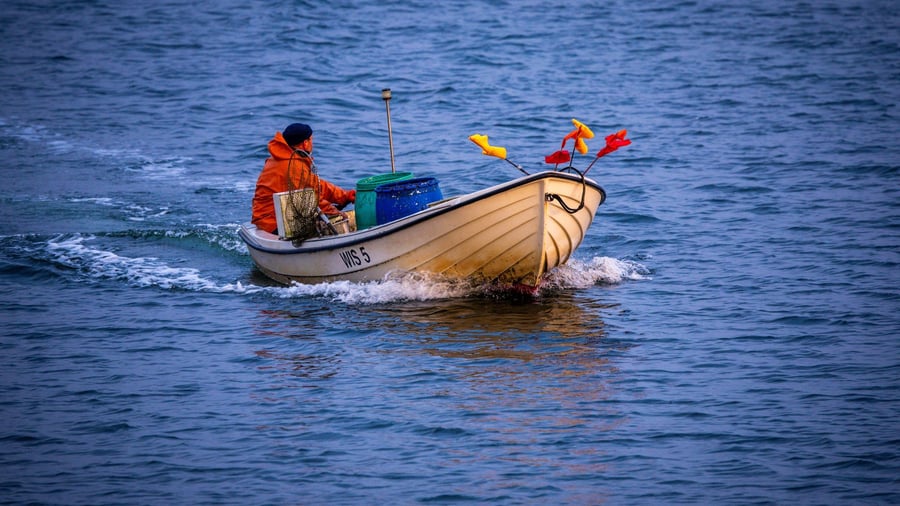
The German fishing industry might lose its only lifeline with the proposed abolition of "Herring straw" for fishermen along the country's eastern coast, according to a proposal presented by the EU Commission. Christopher Zimmermann, a fisheries expert, argues that this exception should be maintained, stating, "It is basically the only straw the coastal fishing industry still has."
The last permitted catch quantity for western Baltic herring does not any longer affect the stock's development. However, the Nabu (Nature and Biodiversity Conservation Union) disagrees. Kim Cornelius Detloff, head of marine protection at Nabu, emphasizes that "every ton of spawning-ready herring is crucial for the recovery of stocks despite the additional stress from the climate crisis."
The proposal mainly concerns the allowance to continue catching herring using passive fishing gear, such as purse seines, with boats shorter than twelve meters. Besides, herring in the western Baltic Sea could only be landed as incidental catch, which Zimmermann says hardly occurs anymore. Dorsch and herring once served as the main food source for local communities and ensured their livelihoods.
Each year in October, EU countries' fisheries ministers and ministers decide on the maximum allowable catches for fish stocks in the Baltic Sea, which are then divided among the coastal states. The EU Commission submits a proposal, which is then discussed by the International Council for the Exploration of the Sea (ICES), to which Zimmermann belongs.
The EU Commission recommends reducing the allowed catch for incidental herring catch in the western Baltic Sea by almost half for the coming year. However, Zimmermann proposes a "rollover," meaning everything stays as it was last year. The fishery has not had a measurable impact on these stocks. "In terms of the western herring, we are talking about three percent of the quota remaining compared to 2017," he adds.
Even these small quantities would not be fully utilized by local fishers. In Vorpommern, for instance, seal populations consume the herring caught in the purse seines, and expensive ship diesel fuel is lacking this year due to an ice winter. All these factors hinder sustainable fishing. The factors preventing stock recovery despite the almost suspended fishing are diverse, including overfishing from previous years, environmental and climate influences that burden the Baltic Sea, and the decline of Dorsch in the western Baltic Sea due to warm water in July and insufficient oxygen in the lower layers.
Additionally, emissions contribute to the oxygen deficiency in the water. Most of these emissions stem from agriculture, mainly from excess fertilizer, while Germany's contribution mainly comes from the atmosphere, such as nitrogen oxides from diesel engines, oil or gas heating. With warm and late winters, the development of the herring offspring is also disrupted.
Zimmermann would have considered allowing targeted fishing, beyond incidental catch and exceptions, for the western herring next year. However, research by his institute indicates that the stock will never be as productive again as it was 30 years ago, and a new threshold needs to be established for sustainable targeted fishing.
However, the ICES decided against this and continues to rely on unattainable reference values. Other stocks, such as sprotte, are proposed to increase their catch by around 50%, but this does not apply to coastal fishing in the region. The western Baltic Sea's herring population is not declining as severely as in the western Baltic Sea.
Zimmermann hypothesizes that the warming in spring may even lead to more offspring, but this will be temporary and affect both western and eastern herring stocks.
Written by urgent.news from Handelsblatt's reporting — not their text. Machine-written — may contain errors; check the original before relying on it.