The Secrets of Acid Salt Lakes
These stunning bodies of water—saltier than seawater and nearly as acidic as lemon juice—can teach us more about where life can survive, on Earth and beyond.
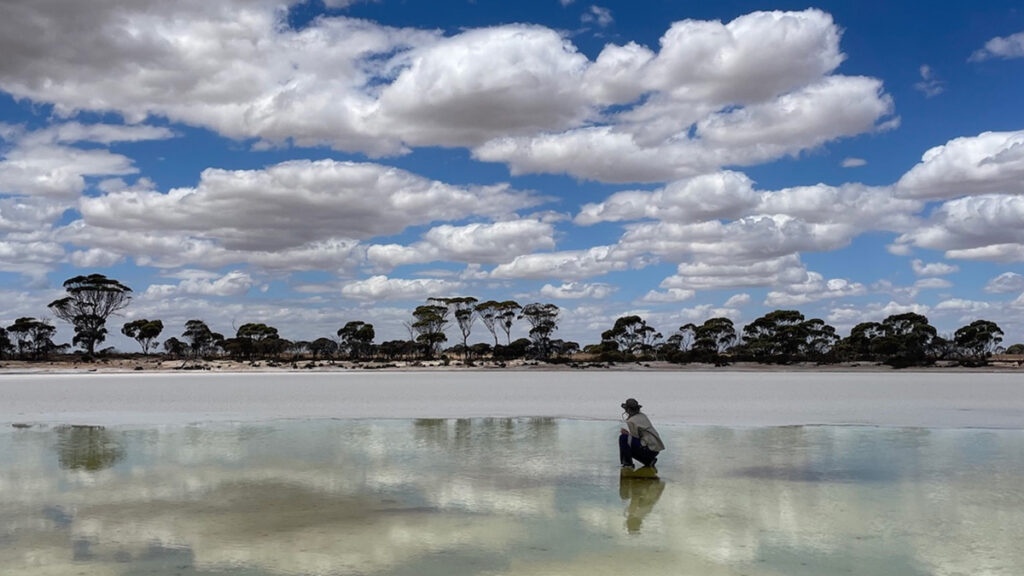
Every few years, Kathleen Benison travels the globe to examine a collection of unique lakes that are both highly saline and acidic. These extreme lake brines often contain only around 66% water, with the remainder made up of dissolved ions from elements such as aluminum, iron, calcium, and copper. In contrast, seawater comprises about 96.5% water and 3.5% dissolved solids.
One such Australian lake, known as Lake Magic, appears in a photo taken in March 2026, reflecting the sky overhead. Benison, a geologist at West Virginia University, remarked that these Australian acid salt lakes can be up to ten times saltier than seawater. The crystals from these lakes were observed in March 2026. Another familiar site for Benison is Statues Lake, visited regularly, photographed in January 2026.
Studying acid salt lakes benefits not only scientists looking to understand these extreme environments but also fields like astrobiology. Minerals found in these lakes bear resemblance to those on Mars, hinting that Mars may have once harbored acid salt waters. "If we're interested in questions like 'Was there ever life on Mars?' we look to extreme environments on Earth," Benison explained, as they reveal the scope of habitable conditions.
Microbiologist Shiladitya DasSarma from the University of Maryland School of Medicine emphasized the value of studying salt lakes. He cited the 2026 Nobel Prize in Physiology or Medicine, awarded for research into optogenetics—a technique using light to control nerve signals by influencing ion flow. "Earth offers many examples of diverse extreme environments, including ephemeral acid salt lakes where novel geochemistry and microbiology may provide clues to life elsewhere," DasSarma stated.
"Undoubtedly, there are many other potential benefits to such studies." Benison advocated for consistent monitoring of these environments in her presentation at the Geological Society of America's GSA Connects in October 2026. One-time sampling might accurately depict freshwater lake sedimentology, physical processes, or water chemistry, but acid salt lakes require temporal data due to their variability.
Western Australia’s Yilgarn Craton hosts hundreds of these saline lakes, which are often ephemeral, drying up, flooding, and then concentrating. Every return visit to the same lakes yields new insights, as Benison explained, noting that "many salt lakes are ephemeral: They dry up and they flood and then they evapoconcentrate." Each lake exhibits different chemical characteristics based on local geology.
The Yilgarn Craton, home to these lakes, is one of the oldest pieces of Earth's crust, with some rocks exceeding three billion years old. A fault running beneath one lake adds to its heterogeneity, potentially causing localized enrichment of certain elements like aluminum. Over time, changes in these lakes have been observed. Benison first visited Australia in July and August 2001, during the Southern Hemisphere's winter.
The first lake she examined, Lake Aerodrome, appeared unremarkable, resembling a blue puddle. However, when a pH meter was inserted, the results revealed a pH of 2.7, indicating significant acidity.
Written by urgent.news from Eos's reporting — not their text. Machine-written — may contain errors; check the original before relying on it.