In Northeastern North America, Alpine Zones Are Turning Green
Using satellite data, scientists have detected where once-stable alpine ecosystems are transforming into greener, shrubbier places.
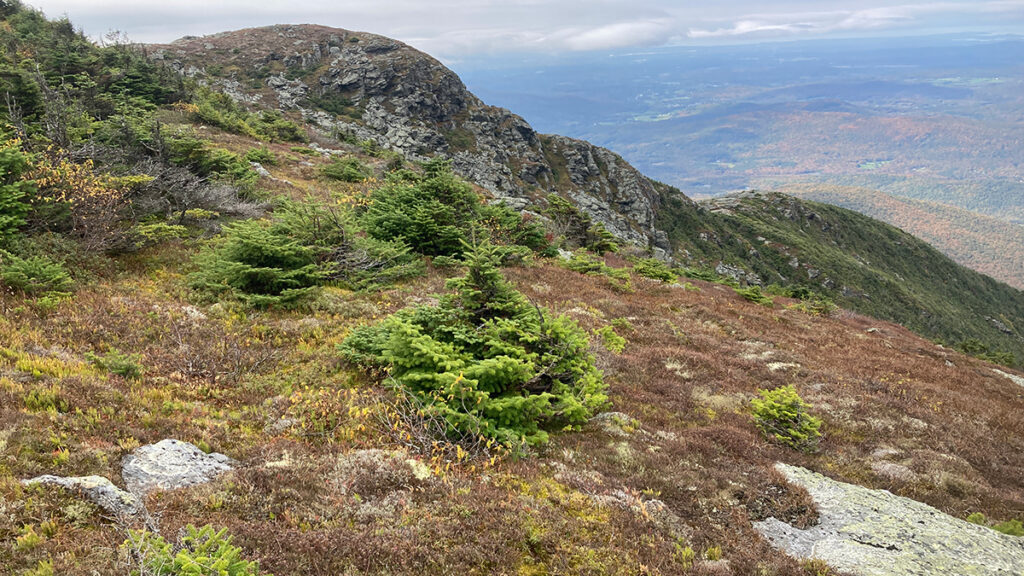
Since the 1980s, the Earth has visibly transformed into a greener landscape, encompassing diverse ecosystems ranging from densely populated areas to remote regions above the Arctic Circle. Alpine zones, including those in the Alps and Rocky Mountains, have been among the regions exhibiting this greening trend. A recent study published in Ecosphere delves into this phenomenon in northeastern North America, analyzing 41 years of satellite data to understand how alpine areas have changed under a warming climate.
The study, led by Dartmouth College geographer Jonathan Chipman, reveals a significant shift in the plant composition in these alpine regions. Researchers found that 88% of the alpine area in these regions—covering approximately 11,352 hectares—has experienced substantial greening, with no signs of browning. This greening trend is evident across notable alpine areas such as the White Mountains of New Hampshire, the Adirondacks in New York, and the mountains of Quebec’s Gaspé Peninsula.
One of the key findings of the study is the shift from smaller alpine plants with less leaf area to greener, shrubbier species. This change could have far-reaching implications for conservation efforts, as the shifting plant communities adapt to the evolving climate. The researchers used nearly 1,000 satellite images from the Landsat mission, spanning from 1984 to 2024, to convert the colors in these images into a greenness value. This analysis allowed them to quantify the extent of greening across the studied alpine areas.
While the study does not specify which plant species are involved in this greening, it underscores a broader pattern where sensitive alpine plants, adapted to cooler temperatures, may gradually disappear, replaced by lower-elevation plants that thrive in warmer conditions. These changes can occur through various mechanisms, including the displacement of native species by more resilient ones, the introduction of invasive species by human activity, and even fertilization from atmospheric nitrogen released by industrial processes.
The study's findings are particularly noteworthy for their broad geographic scope and the use of remote sensing technology to contextualize local field studies. The results not only highlight the accelerating pace of greening in alpine ecosystems but also serve as a reminder that changes in these high-altitude regions may not be uniformly attributed to a single ecological process.
Furthermore, the study suggests that atmospheric nitrogen deposition, a byproduct of industrial activity, could be a contributing factor to the greening phenomenon.
Arthur Bayle, an ecologist from the Université de Genève, commends the study for its integration of satellite observations with detailed knowledge of the landscape and its plant communities. He highlights the unique climatic conditions and plant communities in the northeastern North American alpine region, suggesting that these factors may lead to different responses compared to other mountain systems.
Overall, this comprehensive study contributes valuable insights into the broader theme of climate change's impact on ecosystems worldwide, particularly emphasizing the dynamic and multi-faceted nature of greening processes in alpine environments.
Written by urgent.news from Eos's reporting — not their text. Machine-written — may contain errors; check the original before relying on it.