NASA’s Dragonfly Completes First Simulated Flight
Separated from its protective backshell, NASA’s Dragonfly rotorcraft autonomously speeds over the sand dunes of Titan. It scans the terrain below, searching for a safe place to land. When Dragonfly discovers a safe site, it turns, descends, and lands at the selected location, touching down for the first time on the surface of Saturn’s largest […] The post NASA’s Dragonfly Completes First…
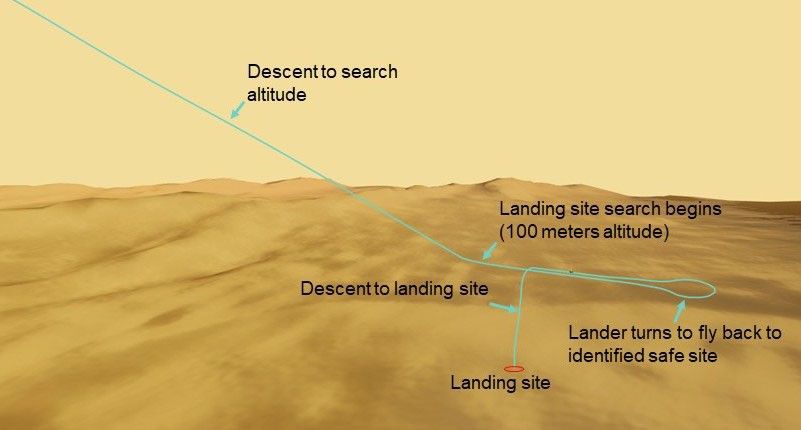
NASA's Dragonfly rotorcraft successfully completed its first simulated flight over Titan's sand dunes in a computer testbed. The test, conducted at Johns Hopkins Applied Physics Laboratory in Laurel, Maryland, showcased the rotorcraft's ability to autonomously navigate and land on Titan's surface. The simulation incorporated most of the systems and maneuvers the rotorcraft will use when it arrives at Titan in 2034.
Dragonfly is scheduled to launch by 2028 for a six-year mission to explore Titan's chemistry, geology, and atmosphere, advancing our understanding of life's chemical origins. The rotorcraft will fly from location to location, spending three years on the moon. This milestone, which involved integrating flight software and avionics with simulated sensor data, was made possible through incremental testing and the addition of lidar, a system Dragonfly will use to measure terrain altitude and slope.
The team plans to run the real flight sequence on Dragonfly's actual flight system and conduct additional tests to ensure the rotorcraft's autonomous operations on Titan.
Written by urgent.news from NASA Science's reporting — not their text. Machine-written — may contain errors; check the original before relying on it.