Critics call for halt to road construction in Mexico’s Sian Ka’an Biosphere Reserve
MEXICO CITY — In early October, Mexico’s environment ministry published a statement about minimizing infrastructure development inside the Sian Ka’an Biosphere Reserve, a protected area on the Caribbean coast. But environmental groups say road construction continues to move forward there, threatening mangroves, cenote sinkholes, and dunes. The courts should address a lawsuit filed by local […]
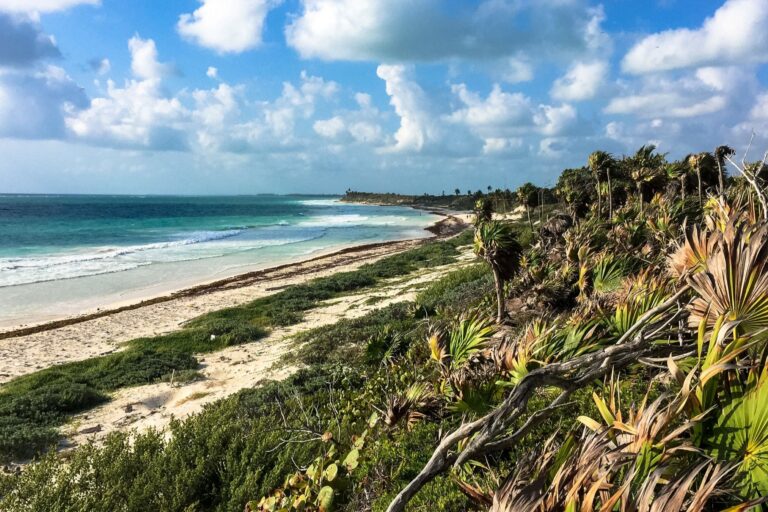
In early October, Mexico's environment ministry announced a call for reduced infrastructure development within the Sian Ka'an Biosphere Reserve, a protected coastal area in the Caribbean. However, environmental organizations claim road construction is still underway, endangering mangroves, cenote sinkholes, and dunes. The communities are seeking legal action through a lawsuit to halt the construction and address the ecological harm, emphasizing that while the ministry's statement is reassuring, it lacks the legal binding of a court ruling.
Viridiana Maldonado, co-coordinator at Territorios Diversos para la Vida, an NGO supporting Indigenous communities defending the environment, expressed to Mongabay the desire for certainty: "We want certainty for the communities that, first, the project is canceled, and second, that they repair the damage already done." A significant portion of the construction is already completed, resulting in the destruction of mangroves, forest, and disruption of hydrological flows.
The Sian Ka'an Biosphere Reserve spans over 528,000 hectares, encompassing mangroves, rainforests, and dunes in the southern state of Quintana Roo. It was granted UNESCO World Heritage status in 1987 and serves as a vital habitat for various species, including jaguars, Central American tapirs, and numerous migratory birds. The reserve also hosts 47 community-based tourism initiatives and 140 permits for tourism and recreational activities, as stated by Semarnat.
The Puerta al Mar ("Door to the Sea") project is currently in progress, as detailed in this Mongabay report.
Written by urgent.news from Mongabay's reporting — not their text. Machine-written — may contain errors; check the original before relying on it.