European and Middle Eastern foreign ministers urge restraint at Istanbul talks
Regional and European powers on Friday urged parties to war in the Middle East to avoid further military escalation, amid fears of renewed US-Israeli strikes on Iran and continuing attacks on Saudi Arabia by Yemen’s Houthi rebels. “Military intervention is not a solution, and nobody approves this at the moment,” Turkish Foreign Minister Hakan Fidan told journalists in Istanbul after a meeting…
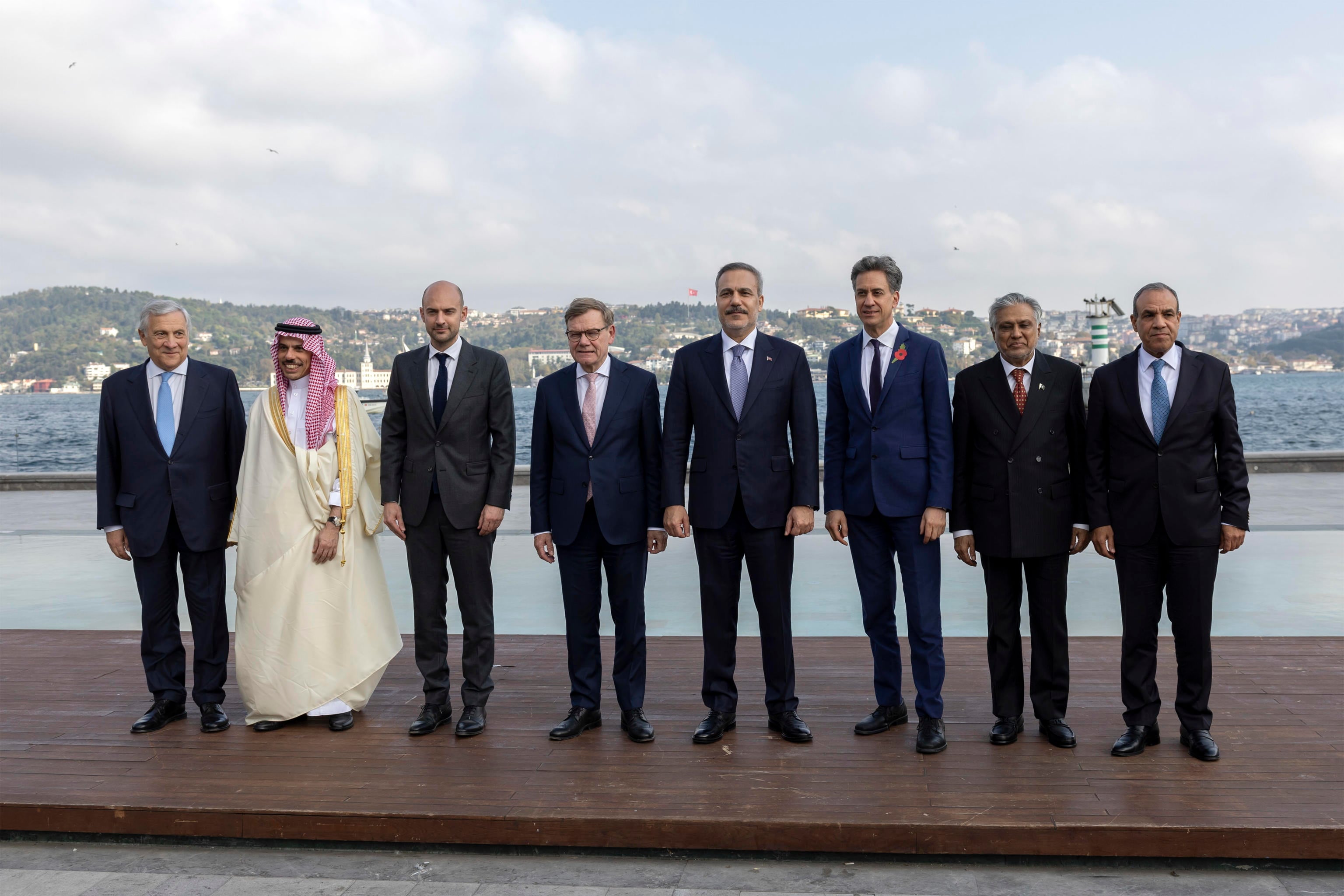
European and Middle Eastern foreign ministers convened in Istanbul on Friday to implore all parties involved in the ongoing conflicts to refrain from further military escalation. Turkish Foreign Minister Hakan Fidan emphasized during a press conference that military intervention is not a viable solution and that dialogue is the preferred course of action.
The ministers gathered alongside their counterparts from Turkey, Saudi Arabia, Pakistan, and Egypt, marking the inaugural meeting of its kind for all these nations. Fidan expressed concern that a resurgence of attacks on Iran could exacerbate regional tensions and foster a cycle of retaliation. French Foreign Minister Jean-Noel Barrot concurred, stating that any fresh aggression from Tehran and Washington would yield only negative outcomes.
At the talks, the ministers deliberated on the imperative need for diplomacy to address regional challenges and prevent a broader conflict. Pakistan's Foreign Ministry announced that Foreign Minister Ishaq Dar briefed his counterparts on Pakistan's diplomatic efforts aimed at mitigating tensions and averting renewed hostilities.
The discussions encompassed the "parameters" required to avert a potential escalation that could spread throughout the Middle East. The United States and Israel were reportedly contemplating a major military operation against Iran, potentially targeting missile and nuclear facilities as well as oil installations. However, President Donald Trump had previously stated his reluctance to engage in additional strikes before the U.S. midterm elections on November 3.
Iranian officials have pledged a more extensive response to any new attack, warning of potential strikes on cables, data centers, and artificial intelligence facilities. The United States maintains a naval blockade on Iran's seaports, while Tehran continues to target vessels attempting to navigate the strategically vital Strait of Hormuz without official permission.
Amid the geopolitical tensions, the ministers also underscored the importance of a ceasefire and a peace agreement in Ukraine, as well as the necessity for freedom of navigation in key maritime chokepoints such as the Black Sea, Red Sea, and Hormuz.
Written by urgent.news from The National UAE's reporting — not their text. Machine-written — may contain errors; check the original before relying on it.
This story
This is one outlet's version. Read the fullest account.
- European and Middle Eastern foreign ministers urge restraint at Istanbul talks thenationalnews.com
- European, Middle East foreign ministers push for peace at Istanbul talks freemalaysiatoday.com