European and Middle Eastern foreign ministers urge restraint at Istanbul talks
Regional and European powers on Friday urged parties to war in the Middle East to avoid further military escalation, amid fears of renewed US-Israeli strikes on Iran and continuing attacks on Saudi Arabia by Yemen’s Houthi rebels. “Military intervention is not a solution, and nobody approves this at the moment,” Turkish Foreign Minister Hakan Fidan told journalists in Istanbul after a meeting…
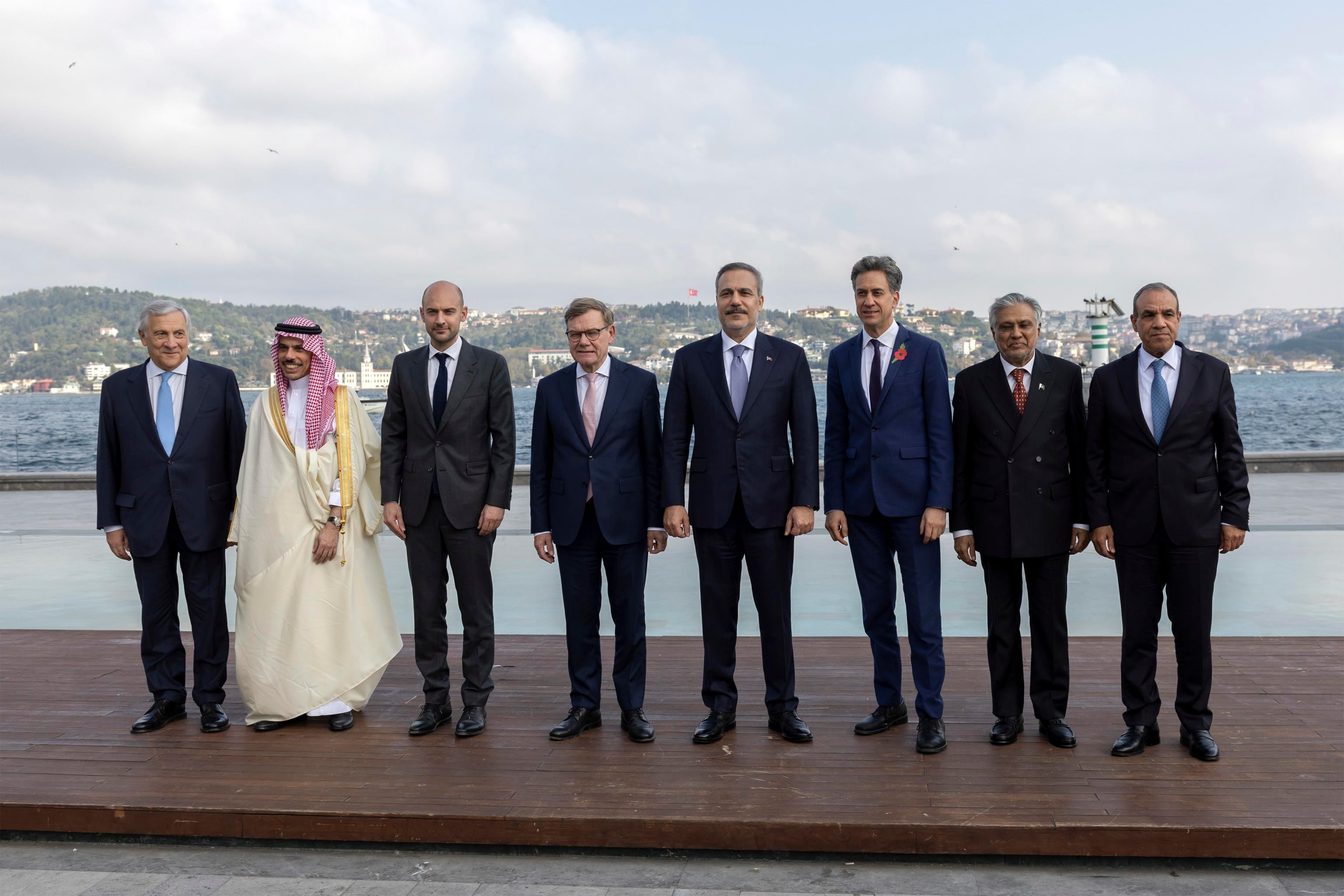
European and Middle Eastern foreign ministers convened in Istanbul on Friday to implore combatants to halt military escalation in the region, amid apprehensions of additional US-Israeli strikes on Iran and ongoing assaults by Yemen's Houthi rebels on Saudi Arabia. Turkish Foreign Minister Hakan Fidan cautioned that "military intervention is not a solution," following a summit with counterparts from across the Middle East and Europe at a Bosphorus hotel.
Delegates from the UK, France, Germany, Italy, Turkey, Saudi Arabia, Pakistan, and Egypt pledged to convey the message of diplomacy over further warfare. "A repeat attack on Iran could escalate the conflict in the region," Fidan emphasized, acknowledging his dialogue with both the US and Iran. French Foreign Minister Jean-Noel Barrot echoed concerns, stating that "any new escalation between Tehran and Washington would bring only losers."
The ministers deliberated on the "urgent need" for diplomacy to resolve regional disputes, with Pakistan's Foreign Ministry noting their discussion of de-escalation efforts. They also examined parameters to avert conflict spread, though specifics were withheld. The US and Israel reportedly contemplated a major military operation against Iran, potentially targeting missile and nuclear sites, alongside oil installations. However, Trump previously ruled out strikes before the November 3 US mid-term elections.
Iran has warned of a broader retaliation to any fresh attack, including strikes on cables, data centers, and artificial intelligence facilities. Meanwhile, the US maintains a seaport blockade on Iran, while Tehran routinely targets ships attempting passage through the Strait of Hormuz without authorization. The ministers aimed to secure energy supplies and address attacks by Iran-backed Houthi rebels on Saudi Arabia.
Three signatories to a collective defense pact - Pakistan, Saudi Arabia, and Turkey - vowed to safeguard Saudi Arabia. The Istanbul discussions occurred amidst Europe's economic turmoil, driven by inflation from Middle East tensions, prompting protests in France and Italy. Barrot highlighted the impact of such disruptions on global transportation costs, ultimately contributing to inflation and reduced purchasing power.
Written by urgent.news from The National Business's reporting — not their text. Machine-written — may contain errors; check the original before relying on it.
Also reported by 2 other outlets
- European and Middle Eastern foreign ministers urge restraint at Istanbul talks thenationalnews.com
- European, Middle East foreign ministers push for peace at Istanbul talks freemalaysiatoday.com