China consumption targets outpace momentum: QNB
For more than two decades, China’s growth model has relied on investment and exports, with industrial policy prioritised over household demand. On the supply side, the results have been remarkable.Chi...
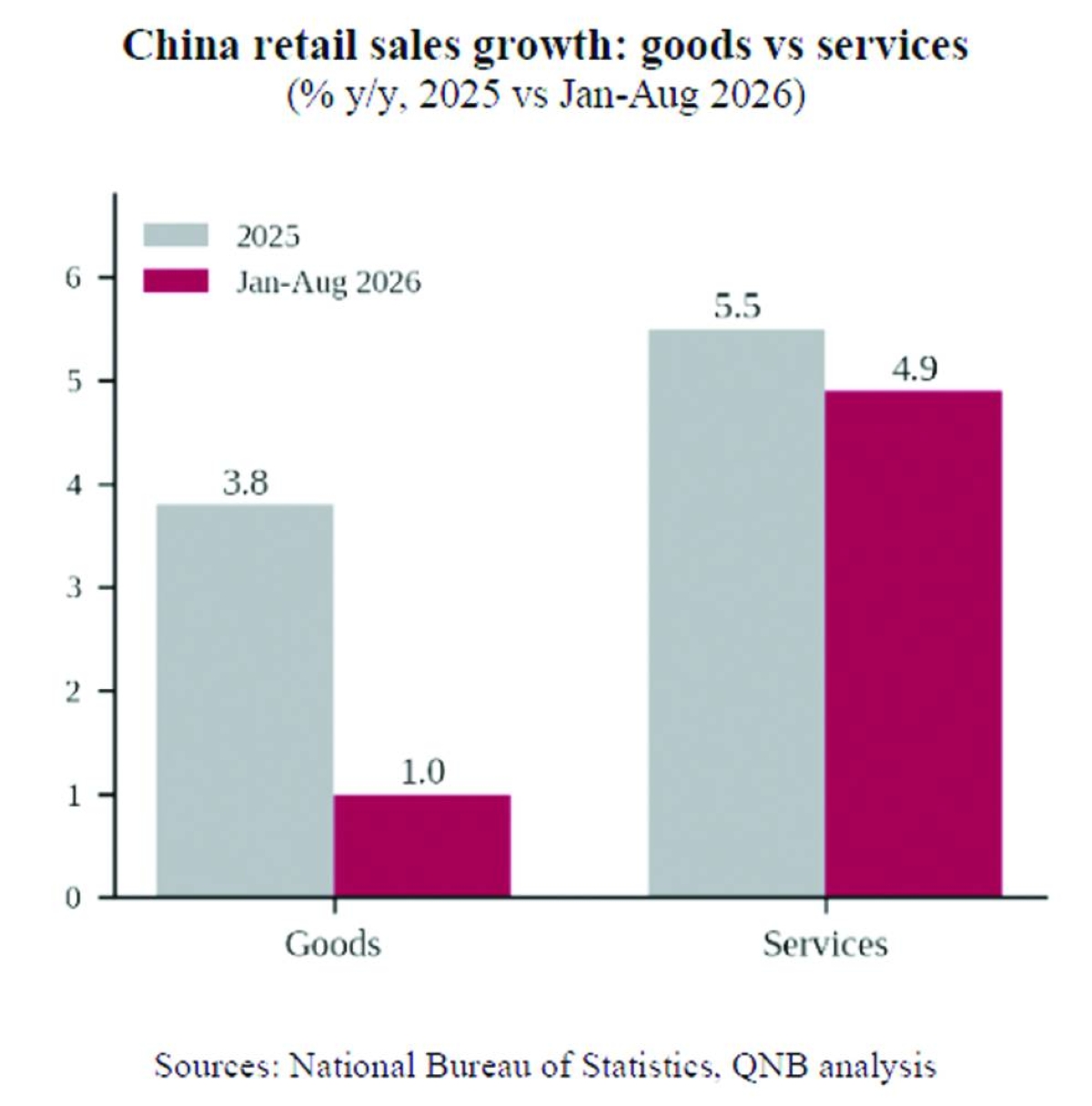
China's consumption goals are outpacing its progress, according to QNB's latest economic commentary. While the 15th Five-Year Plan aims for a 3.7% annual growth in retail sales by 2030, recent data shows the share of final consumption in GDP growth weakened from 52% in 2025 to 46.7% in the first quarter of 2026. Retail sales of consumer goods grew by only 1.1% in the first half of 2026, far below the required pace, and household spending increased at a slower rate than income gains.
QNB attributes this subdued consumption performance to several factors. Firstly, Chinese households receive a small share of national income, with disposable income accounting for only 60% of GDP, much lower than in advanced economies. This reflects the investment-led growth model, which benefits corporate and government sectors more than households.
Secondly, widespread income inequality and rural-urban disparities reduce the purchasing power of those most likely to spend additional income. Property wealth, a major store of wealth for Chinese households, has eroded due to a prolonged downturn. Housing prices have fallen for 38 consecutive months, and property's share of household assets dropped from 67% to 52%.
This wealth effect weighs on spending, and net property income has stagnated. Confidence has also been eroded, with the consumer confidence index falling to a record low of 89.5 in August 2022. Job insecurity and limited social protection further reinforce precautionary saving. Youth unemployment reached 18.9% in August, and households traditionally save around a third of their income.
As credit growth fell to a record low, and households held twice as much in deposits compared to loans, they have the capacity to spend but lack the willingness. QNB concludes that meeting the consumption targets will require structural reforms to income and social protection, rather than temporary subsidies.
Written by urgent.news from Gulf Times Business's reporting — not their text. Machine-written — may contain errors; check the original before relying on it.