5 Lessons from Prithvi Raj Banerjee’s Mindful Thinking
Discover five lessons from Prithvi Raj Banerjee’s Mindful Thinking to manage anxiety, boost productivity and reshape your thoughts.
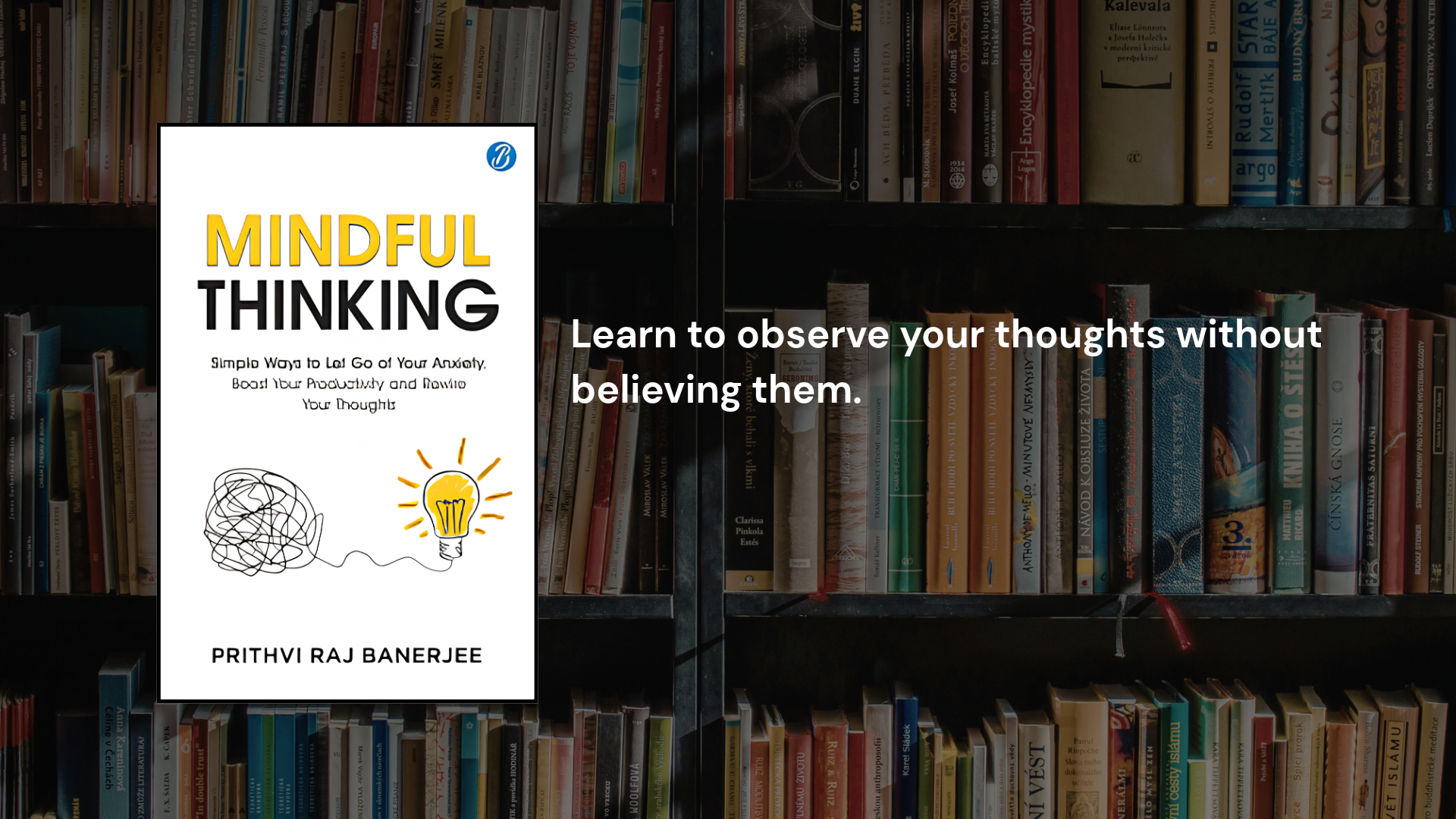
Prithvi Raj Banerjee's book Mindful Thinking offers five key lessons for overcoming anxiety and improving productivity through mindful thinking. The first lesson emphasizes the importance of training attention as a skill, much like a muscle that can be strengthened through regular practice. Rather than getting frustrated when the mind wanders, one should acknowledge the distraction and gently bring it back to the task at hand.
This idea highlights that focus is not an innate talent but a skill that can be developed through consistent effort.
The second lesson focuses on learning to observe thoughts without accepting them as facts. Anxiety can lead people to believe worst-case scenarios without critically examining the situation. Banerjee's approach encourages individuals to recognize that thoughts are not always accurate representations of reality. By observing thoughts without immediately reacting, one can respond more thoughtfully and avoid unnecessary distress.
The third lesson discusses how mindfulness can be practiced through small exercises, rather than requiring lengthy meditation sessions. Techniques such as Belly Breathing, Bumblebee Humming, and the Sensation Scan are presented as practical ways to bring attention back to the present moment. These simple exercises can be incorporated into daily routines, making mindfulness a natural part of life.
The fourth lesson in the book suggests that mindfulness is not just a spiritual concept but a practical skill. Banerjee approaches mindfulness from a cognitive science perspective, emphasizing its potential to improve focus, manage anxious thoughts, and respond more consciously to life's challenges. This perspective helps readers understand that mindfulness is a valuable tool for everyday life rather than an abstract or mystical practice.
Finally, the fifth lesson stresses that mindfulness is a continuous process of growth and improvement. Just as physical exercise requires ongoing practice, mindfulness is not a one-time activity but a skill that requires consistent attention and effort. By approaching mindfulness with patience and a willingness to learn, individuals can gradually transform their thought patterns, leading to reduced anxiety and increased productivity.
Written by urgent.news from YourStory's reporting — not their text. Machine-written — may contain errors; check the original before relying on it.