U.S., Israel prepare short, intense Iran strikes after midterms — NYT
The United States and Israel are planning a short but intense military operation against Iran that could begin after the Nov. 3 U.S. midterm elections, The New York Times reported on Oct. 21.
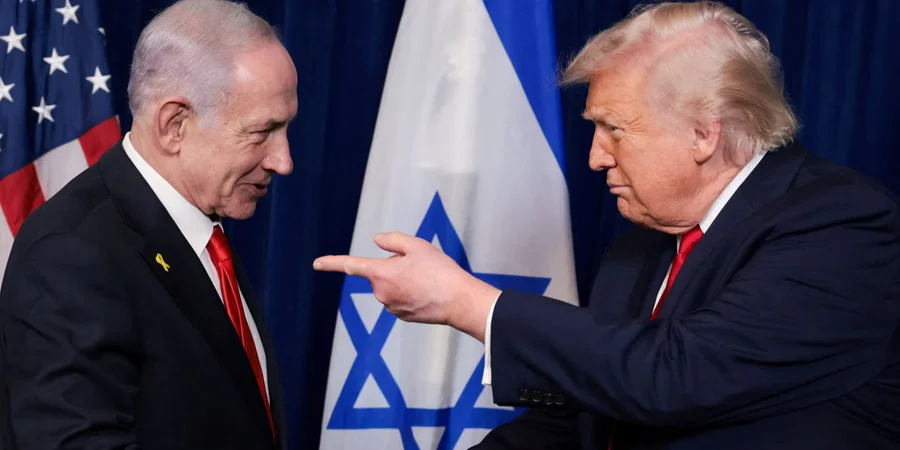
The United States and Israel are formulating a brief, intense military operation against Iran that may commence following the November 3rd U.S. midterm elections, according to a report from The New York Times on October 21st. U.S. officials and insiders familiar with the preparations reveal that the military has intensified training and is conducting drills in anticipation of potential strikes, including aerial maneuvers over Iraq.
Defense Secretary Pete Hegseth convened with Israeli Prime Minister Benjamin Netanyahu in Israel this week to deliberate potential new attacks, according to American officials. Targets could encompass Iran's energy infrastructure, nuclear facilities, and missile and drone arsenals. Some U.S. officials hypothesize that a fresh surge of strikes could inflict substantial harm on Iran's economy, compelling Tehran to capitulate in diplomatic talks.
Nonetheless, there remains uncertainty whether renewed hostilities would yield superior outcomes compared to the prior phase of intense U.S.-Israeli assaults, which transpired from February to April. Iranian officials caution that Tehran would retaliate on a larger scale should strikes resume, positing that potential objectives might span commercial vessels and energy installations across the region, as well as data centers and submerged internet cables.
Diplomatic engagements persist notwithstanding the military preparations. The U.S. leverages the prospect of another conflict to coerce Iran into yielding concessions on its nuclear program and dominion over the Strait of Hormuz. Iranian negotiators, however, have thus far resisted compromising on the nuclear matter, asserting that it must be addressed in a subsequent phase of the discussions.
Certain U.S. military strategists posit that a three-day barrage of rigorous strikes could inflict sufficient economic harm on Iran to sway the leadership's stance. Yet, other Western officials caution against overestimating this possibility, highlighting that Iran's leadership has thus far endured economic turmoil in spite of military coercion, sanctions, and a U.S. naval embargo.
President Trump could ostensibly endorse a new military campaign as early as October, U.S. officials divulge, but political factors suggest he is more likely to postpone a decision until after the midterm elections. Earlier this month, the president vowed not to launch strikes prior to the vote. The U.S. has yet to deploy the entire military force requisite in the region; the complete contingent, comprising three aircraft carriers, thousands of Marines, fighter jets, and special operations units, is projected to be prepared in early November.
The White House refrains from commenting on military schemes "that may or may not exist," emphasizing that Trump is contemplating all feasible options to thwart Iran from procuring nuclear weapons. U.S. and Israeli military officials are likewise devising plans for strikes against Iran's nuclear program, according to sources. Potential targets include Pickaxe Mountain, a deep underground nuclear complex in Iran referred to as Kuh Kolang.
Iranian officials assert that they are cognizant of U.S. military intentions and are formulating their own targets and tactics for a conceivable response. Tehran-based political analyst Peyman Salehi posits that if Pickaxe Mountain were targeted, Iran could strike major Saudi Arabian oil refineries, including those operated by Aramco.
On October 7th, The Atlantic reported that the Trump administration had directed the Pentagon to explore options for new strikes against Iran that could be executed before the U.S. midterm elections. Potential targets encompass Iran's energy infrastructure and nuclear installations. Even supporters of this approach remain skeptical that limited strikes would reinstate safe passage through the Strait of Hormuz and diminish fuel prices.
On October 8th, Trump affirmed that the United States would not attack Iran prior to the November 3rd congressional midterm elections, having previously left open the prospect of resuming strikes after the vote.
Written by urgent.news from New Voice of Ukraine's reporting — not their text. Machine-written — may contain errors; check the original before relying on it.
This story
This is one outlet's version. Read the fullest account.