Qatar highlights global police cooperation as key to tackling cross-border crime
<p>Doha, Qatar: Qatar is strengthening international police partnerships and sharing its expertise in major-event security to help law enforcement agencies tackle criminal networks that operate across borders, with trust, timely intelligence-sharing and technology central to effective cooperation, Director of the Arab and International Police Liaison Department and INTERPOL Executive Committee…
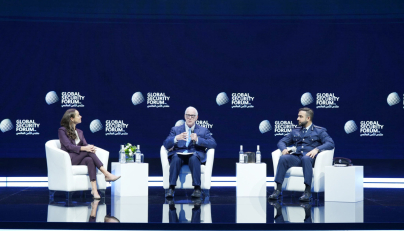
Doha, Qatar - Qatar is bolstering international police collaborations and sharing its expertise in major event security to assist law enforcement agencies in combating cross-border criminal syndicates, according to Brig. Gen. Ali Mohammed Al-Ali, Director of the Arab and International Police Liaison Department and INTERPOL Executive Committee Delegate at Qatar's Ministry of Interior.
Speaking at the Global Security Forum 2026 in Doha, Al-Ali emphasized that effective policing necessitates sustained cooperation between nations and agencies to keep pace with criminal organizations that leverage global connectivity.
Addressing the session titled "Cross-jurisdictional Cooperation in Policing," Al-Ali highlighted the role of international organizations in establishing frameworks for cooperation, but stressed that their effectiveness ultimately hinges on the relationships between personnel involved. He underscored Qatar's experience in hosting major international sporting events, noting that the country has expanded its international security partnerships and developed mechanisms for coordination with law enforcement agencies worldwide.
Following the COVID-19 pandemic, Qatar has hosted nearly triple the number of events compared to pre-pandemic levels. Al-Ali attributed Qatar's advancements in international police cooperation to the International Police Cooperation Center (IPCC), established and developed in Qatar. This center assists in security planning before major events, operational coordination during them, and post-event assessments, enabling authorities to identify lessons and improve their approach for future operations.
Al-Ali stressed that the exchange of intelligence should operate within the framework of international law, human rights, and the national legislation of participating countries. He stressed that the necessity and urgency of sharing information should be evaluated based on the potential to protect lives. As criminal networks rapidly move money and people across borders, law enforcement agencies must adapt to these challenges.
Al-Ali argued that countries need to strengthen their capabilities collectively, including through technology-sharing and supporting agencies with limited resources. The New York City Police Department's Deputy Commissioner Rebecca Weiner provided a practical example of international cooperation, recounting how INTERPOL liaison officers facilitated the arrest of a suspect in New York who was attempting to flee the country.
Written by urgent.news from The Peninsula Qatar's reporting — not their text. Machine-written — may contain errors; check the original before relying on it.
Also reported by 1 other outlet
- Hungary marks 70th anniversary of 1956 revolution, highlights Qatar ties thepeninsulaqatar.com