Ahead of US and Israeli elections, 3-day joint attack on Iran 'would not radically change conflict'
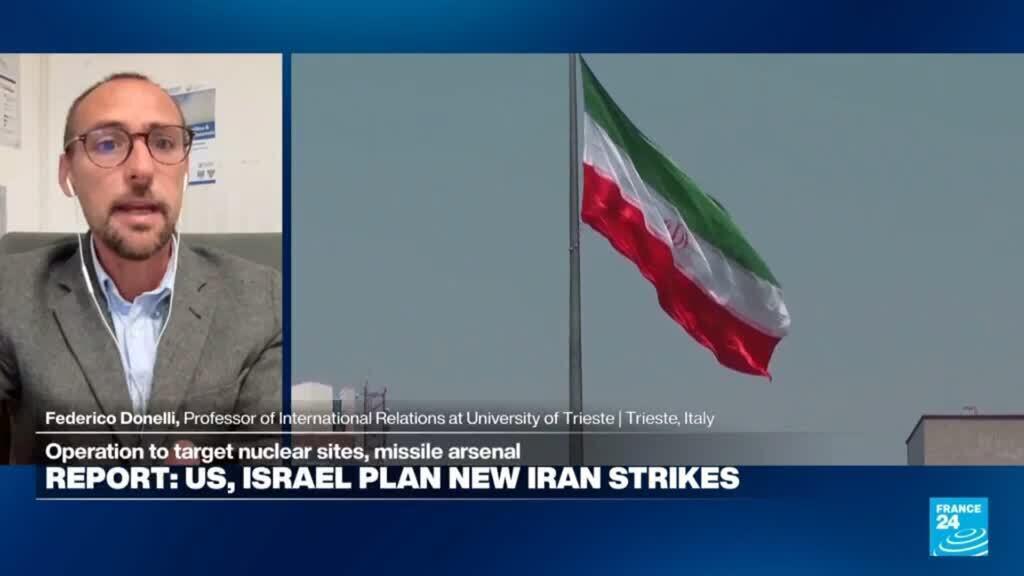
Jean-Emile Jammine is pleased to welcome Federico Donelli, Associate Professor of International Relations in the Department of Political and Social Sciences at the University of Trieste in Italy. Can another three days of military strikes achieve what eight months of confrontation have failed to deliver? Donelli challenges the assumption that a short, intensive offensive would necessarily produce…
Israel's upcoming election, scheduled for next week, may alter its leadership but not its approach to Iran. Analysts and regional policymakers note that Iran will continue to be Israel's primary adversary, with military force remaining its favored tool. Palestinian statehood, however, is seen as a distant goal. The strategic assumptions behind Israel's policies were solidified following the Oct 7, 2023, Hamas attacks and ongoing conflicts in Gaza, Lebanon, and Iran.
If the election results in a victory for Prime Minister Benjamin Netanyahu, supported by far-right coalition partners, there is a possibility that he could escalate the conflict with Iran, tighten Israel's control over the occupied West Bank, and prioritize diplomacy less. Israel's security doctrine revolves around three key principles: eradicating Iran, maintaining buffer zones beyond its borders, and employing force to deter adversaries.
The primary divergence lies in the degree of aggression Israel employs, the extent of settlement expansion, and the extent to which leaders pursue diplomacy. Experts predict that regardless of the election outcome, Israel's stance on Iran and other issues will likely remain unaltered, with potential shifts being stylistic rather than substantive.
Written by urgent.news from New Straits Times's reporting — not their text. Machine-written — may contain errors; check the original before relying on it.
This story
This is one outlet's version. Read the fullest account.