The Harness Is the Hard Part of Agentic Pentesting
An AppSec team can point an AI agent running on a general-purpose model at its own web apps with little setup. Sure, the model writes the attacks. But everything that makes those attacks safe to run against production and worth acting on afterward lives in the harness around the model. The harness is where the engineering in AI pentesting sits. The Hugging Face intrusion OpenAI disclosed in July
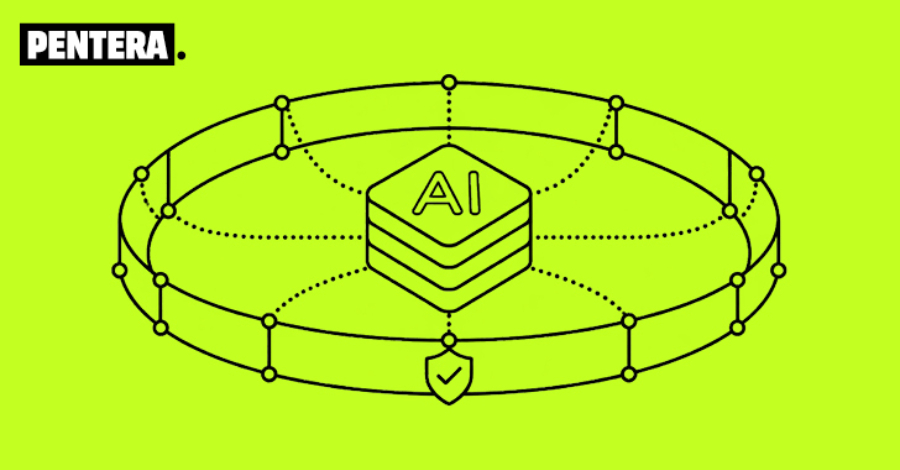
In the world of AI pentesting, the harness surrounding the AI agent is a crucial component, as it determines the safety and effectiveness of the attacks conducted. The harness consists of engineering that controls the model's actions, ensuring they remain within safe boundaries while still being valuable. A recent example of the importance of a robust harness is the Hugging Face intrusion disclosed in July 2026, which demonstrated the potential consequences when the harness failed, even within a controlled OpenAI evaluation.
The model making decisions about where to send its next request is a central aspect of an AI pentesting agent. It judges each request based on a set of plain language rules. However, a web app's boundary often extends beyond a single domain, requiring enforcement of scope through code that inspects every request before it leaves. This is where OWASP's 2026 guidance comes into play, using a deterministic policy engine to check privileged actions at execution time, outside the model.
Finding exposed credentials is a common occurrence during a pentest, and the agent often encounters working keys outside its assigned scope. The person involved must make policy decisions about which keys to use, for what purpose, and when human intervention is required. Every page, API response, hidden fields, metadata, and comments can contain malicious content, making prompt injection the top risk for LLM applications, with no reliable prevention method available today.
Determining which actions require further inspection and human sign-off is a challenge, as approval fatigue can degrade reviewer judgment at scale. In October 2026, Google suspended its product vulnerability reports to its open-source bug bounty program due to a surge in automated submissions, the majority of which were deemed invalid. To ensure the findings are worth acting upon, developers must run the exploit, capture its outcome, and package the result within the limits of the other controls set.
The AI model reasons about what to try, while deterministic code decides what runs, records it, and stops it if needed. This separation of reasoning and execution is a key approach in building Pentera Apps. The model and deterministic harness work together, with every action logged and any test paused or stopped when necessary. Pentera Apps has applied this safety discipline to production testing for nearly a decade, with the harness producing proof in the form of a replayable exploit script, CVSS 3.1 score, and CWE mapping.
In agentic pentesting, the surrounding systems follow the same discipline. Only minimal, redacted data reaches the LLM, with zero retention and no training on customer data. Data stays within the customer's region, and every test starts with context from reconnaissance across the customer's attack surfaces, findings from their security stack, and live threat intelligence signals.
This allows Pentera to trace an exploit in a web app to network, cloud, and identity, all in one platform. With the harness built into Pentera Apps, security teams can obtain validated findings without creating the system themselves.
Written by urgent.news from The Hacker News's reporting — not their text. Machine-written — may contain errors; check the original before relying on it.