NASA JPL Looks to Next 90 Years of Innovation, Exploration
Interstellar probes. Lunar drones. Helicopters on Mars. When a group of Caltech graduate students and enthusiasts began conducting rocket-propulsion tests in Pasadena’s Arroyo Seco on Oct. 31, 1936, they had no idea that their work marked the inception of the Jet Propulsion Laboratory. Ninety years later, the lab, now managed by Caltech for NASA, isn’t […] The post NASA JPL Looks to Next 90 Years…
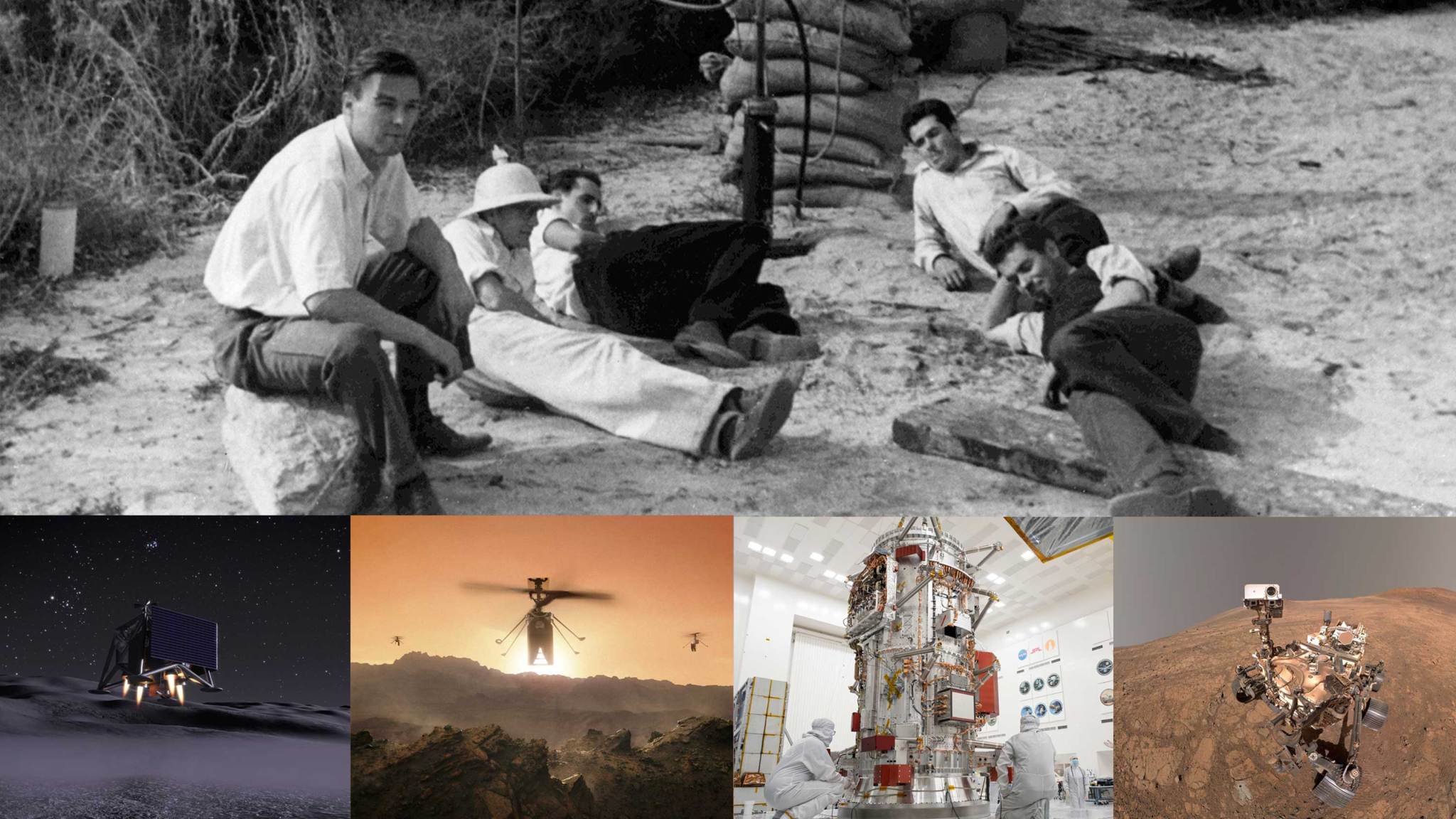
In 1936, a group of Caltech graduate students and enthusiasts conducted rocket-propulsion tests in Pasadena’s Arroyo Seco, marking the beginning of the Jet Propulsion Laboratory (JPL). Initially a contractor for the U.S. Army, JPL launched America’s first satellite, Explorer 1 in 1958. This spacecraft, equipped with an onboard Geiger counter, discovered Earth’s protective radiation belts, a significant milestone in space exploration.
JPL became a part of NASA in the same year, leading various historic missions, including the first U.S. mission to the Moon, Ranger 7 in 1964. Over the years, JPL has achieved numerous firsts, such as sending the first planetary flyby, the first infrared telescope, and the first rovers on Mars. Looking ahead, 2028, JPL plans to launch SkyFall, a mission featuring three helicopters descending mid-descent over Mars to map hidden ice deposits and analyze weather patterns.
The same year, MoonFall will land large propulsive drones at the lunar South Pole, helping advance NASA’s Moon Base. SunRISE, a mission set for a 2027 launch, will comprise six toaster-oven-size satellites flying in formation to study the Sun’s activity, potentially enhancing space exploration safety. NEO Surveyor, managed by JPL, aims to hunt for potentially hazardous space rocks that other telescopes cannot detect.
Closer to home, JPL is working on missions to provide detailed readings of Earth’s vital signs, such as monitoring water movement, studying tropical convective storms, and understanding the impact of air pollution on human health. These missions join other Earth-focused projects led by JPL, like NISAR, a joint mission with the Indian Space Research Organisation, and AVIRIS, which detects rare Earth elements crucial to modern technology.
With a rich history of innovation, JPL continues to push the boundaries of space exploration, inspiring future generations.
Written by urgent.news from NASA Science's reporting — not their text. Machine-written — may contain errors; check the original before relying on it.
This story
This is one outlet's version. Read the fullest account.