NASA JPL Looks to Next 90 Years of Innovation, Exploration
Interstellar probes. Lunar drones. Helicopters on Mars. When a group of Caltech graduate students and enthusiasts began conducting rocket-propulsion tests in Pasadena’s Arroyo Seco on Oct. 31, 1936, they had no idea that their work marked the inception of the Jet Propulsion Laboratory. Ninety years later, the lab, now managed by Caltech for NASA, isn’t […]
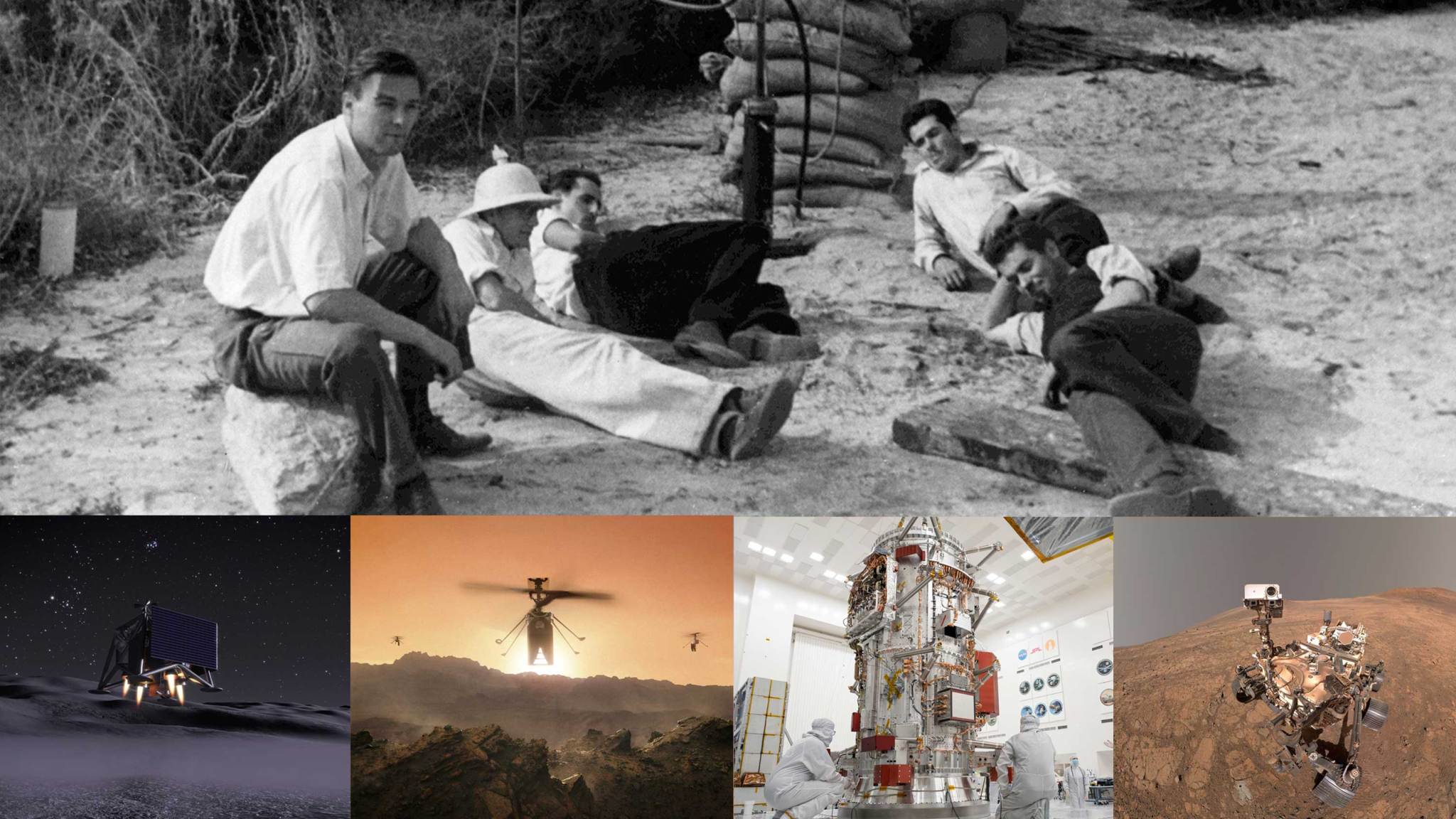
In 1936, a group of Caltech graduate students and enthusiasts began conducting rocket-propulsion tests in Pasadena’s Arroyo Seco, marking the inception of the Jet Propulsion Laboratory (JPL). Ninety years later, JPL, now managed by Caltech for NASA, continues to pave the way for groundbreaking innovations and exploration. The lab was initially a contractor for the U.S. Army but launched America’s first satellite, Explorer 1, in 1958, which made history by being the first spacecraft to conduct science.
JPL has since led numerous historic missions, including the first U.S. mission to the Moon, Ranger 7, and the first planetary flyby. With a focus on the future, JPL is set to launch the SkyFall mission in 2028, which will deploy three helicopters to map hidden ice deposits and analyze weather patterns on Mars. The lab is also developing MoonFall, a mission to land large propulsive drones at the lunar South Pole in 2028, and SunRISE, a mission featuring six small satellites to study the Sun's activity.
Additionally, JPL is working on missions to protect humanity from potentially hazardous space rocks and to offer a deeper reading of Earth's vital signs. These missions, along with others like NISAR and AVIRIS, demonstrate JPL's commitment to advancing scientific understanding and pushing the boundaries of exploration.
Written by urgent.news from NASA's reporting — not their text. Machine-written — may contain errors; check the original before relying on it.