InSight into Seismology on the Red Planet
Viking 2 detected two possible marsquakes in 1976. New analysis links one to the same region where InSight recorded nearly 1,000 marsquakes decades later.
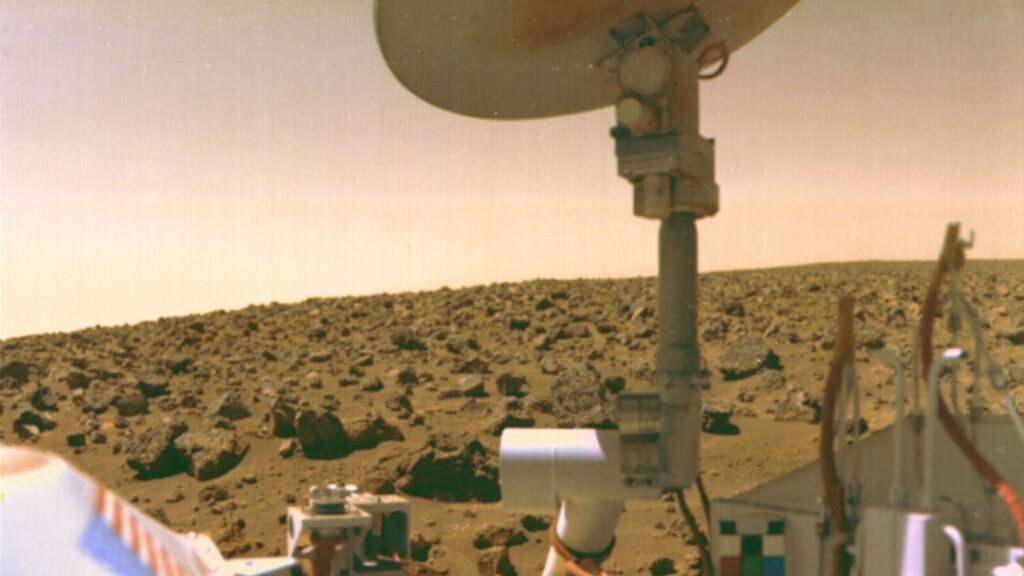
Seismology provides crucial insights into a planet's interior, with seismic waves revealing much about Earth's structure. NASA's InSight mission, which landed on Mars from 2018 to 2022, carried a seismometer directly on the ground, detecting over 1,300 seismic events. This was a significant improvement over earlier missions to Mars.
In 1976, the Viking landers were sent to Mars with seismometers aboard. However, Viking 1's seismometer failed to deploy, while Viking 2 recorded only two events that were difficult to interpret. Kathleen Xiao and colleagues reassessed these events and compared them to data from InSight. They found that one of Viking 2's ambiguous events could have been a true marsquake, originating from the same region where InSight later recorded nearly 1,000 marsquakes.
However, Viking 2's seismometer was mounted on the lander's deck, picking up significant wind noise, making it unclear whether the events were truly seismic or wind-related.
The Viking missions, primarily focused on searching for life on Mars, also aimed to understand the planet's geological evolution. Seismology played a key role in this, as it could reveal Mars's internal structure and tectonic activity. By comparing data from Viking and InSight, scientists gained a broader understanding of Mars's seismic history, suggesting that the planet experienced seismic activity both in the Viking era and nearly 50 years later.
Written by urgent.news from Eos's reporting — not their text. Machine-written — may contain errors; check the original before relying on it.