A Rock Avalanche Buried an Arctic Glacier. Was Climate Change to Blame?
Degrading permafrost and earlier small quakes likely weakened a rock slope until it collapsed and buried an Arctic glacier in tons of rock.
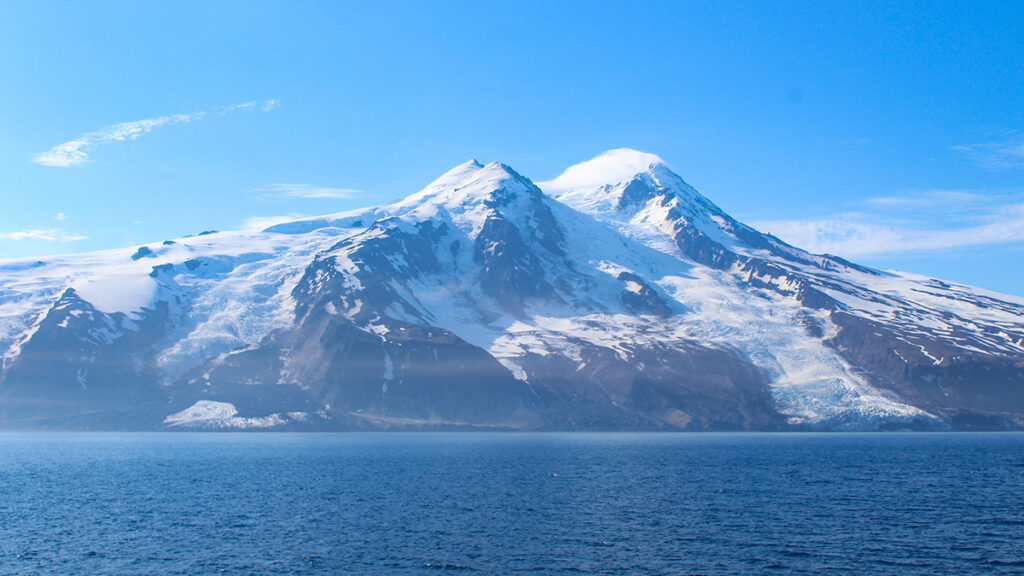
On March 10, 2025, a magnitude 6.5 earthquake struck the Arctic Ocean, triggering a rock avalanche on Jan Mayen Island that buried Kjerulf Glacier under nearly a million cubic meters of rock. Researchers from GEOMAR Helmholtz Centre for Ocean Research Kiel in Germany found that a series of previous rockslides, possibly caused by warming-degraded permafrost, had weakened the rock slope above Kjerulf Glacier.
As the strong earthquake hit, the weakened slope collapsed. Lead researcher Guilherme de Melo noted that permafrost is degrading due to rising temperatures. The glacier was buried between 30% and 50% within three minutes of the main shock, with neighboring Weyprecht Glacier experiencing ice calving four hours later. Over the following three weeks, more than 1,500 aftershocks occurred.
The researchers gathered seismic, GNSS, infrasound, and satellite imagery data, as well as long-term weather and climate records to understand the event. They concluded that the previous rockslides destabilized the slope, making it more vulnerable to collapse when the earthquake occurred. Permafrost degradation is a plausible contributing factor, but further analysis is needed to establish a stronger connection.
The event highlights the need for risk assessments in areas where strong earthquakes could affect unstable permafrost slopes.
Written by urgent.news from Eos's reporting — not their text. Machine-written — may contain errors; check the original before relying on it.