Immobilien: Die Babyboomer verkaufen ihre Immobilien – was das für die Preise heißt
Die Häuser der geburtenstarken Jahrgänge könnten bald auf den Markt kommen. Eine Studie, die dem Handelsblatt vorab vorliegt, zeigt die Folgen für alle 400 deutschen Landkreise und Städte.
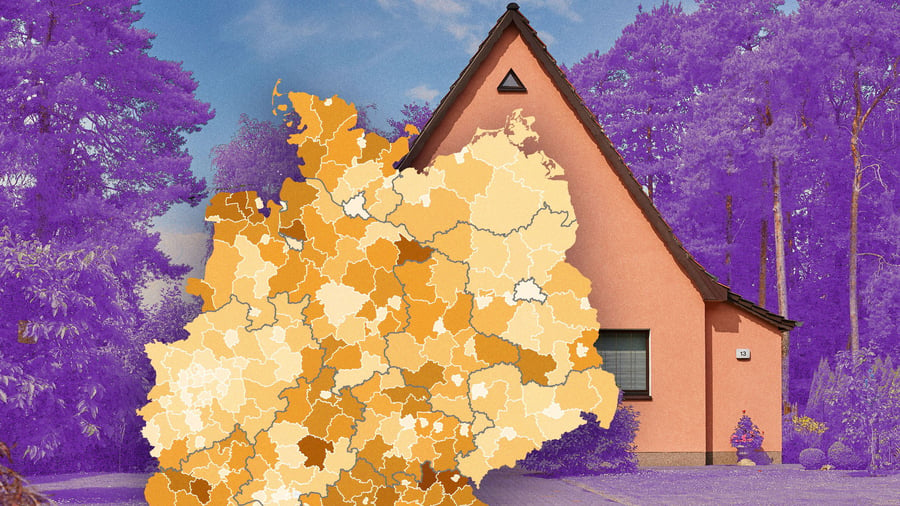
The baby boomer generation is selling their properties, and this could have implications for property prices in Germany. As the aging population transitions into retirement, their homes may become available on the market. The Institute of German Economy (IW) conducted a study examining the potential impact of this demographic shift.
According to the study, roughly 28 to 32 percent of homeowners aged 65 and older are likely to sell their properties in the coming decades. However, the distribution of potential homeowners and sellers varies significantly across different regions.
Certain cities, such as Wilhelmshaven, Dessau-Roßlau, Baden-Baden, Kempten, and Bremen, have a higher proportion of elderly homeowners, with 38 to 36 percent of the population falling into this age group. Meanwhile, other metropolitan areas, including Munich, Stuttgart, Frankfurt, Düsseldorf, and Cologne, have a greater number of younger homeowners, with 29 percent of households in these age ranges.
This disparity between older and younger homeowners in various regions highlights the complex interplay between demographic shifts and property market dynamics.
The study points out that for potential sales and price pressure to materialize, both the supply of older homeowners and the demand for properties from younger buyers must align spatially. In some regions, there are already more elderly homeowners than potential younger buyers. For example, in 300 out of 400 analyzed districts, the potential supply of homes from individuals aged 65 and older exceeds the potential demand from younger buyers.
However, if the potential supply of older homeowners is limited to those aged 75 and older, the excess supply would diminish to only 91 districts.
In contrast, metropolitan areas such as Berlin, Hamburg, Düsseldorf, and Munich face a larger discrepancy between the potential number of sellers and buyers. In these cities, the potential supply of homes from elderly homeowners is significantly lower than the potential demand from younger buyers. For instance, in Berlin, there are about 90,000 elderly homeowners compared to 434,000 younger buyers, resulting in a 79 percent gap between supply and demand.
Similar disparities exist in Hamburg, Düsseldorf, and Munich, where the supply of homes from older homeowners is less than 70 percent of the demand from younger buyers.
The study suggests that the generational shift could lead to structural oversupply and falling prices in certain regions, particularly those with weak population growth, lower economic dynamism, and high property ownership rates. However, the situation is different in metropolitan areas like Berlin, Hamburg, Düsseldorf, and Munich.
Despite an anticipated influx of properties from elderly homeowners in the coming years, these cities may not be able to fully alleviate the existing demand gap due to their large population of younger buyers.
In conclusion, the baby boomer generation's decision to sell their properties could impact property prices, but the extent of this impact will vary depending on the region. While the "Silver Tsunami" may not completely solve the structural shortage of housing in major cities, it could provide an additional market opportunity in metropolitan areas, where young homeowners are actively seeking properties.
Written by urgent.news from Handelsblatt's reporting — not their text. Machine-written — may contain errors; check the original before relying on it.