Fernwandern in Portugal: Klippen, Sand und Amálias Strand: Auf dem Fischerpfad
Weite Blicke auf den Atlantik, bizarre Küstenlandschaften - der Fernwanderweg an Küste Portugals ist beliebt und belebt die regionale Wirtschaft. Doch die empfindliche Natur braucht auch Rücksicht.
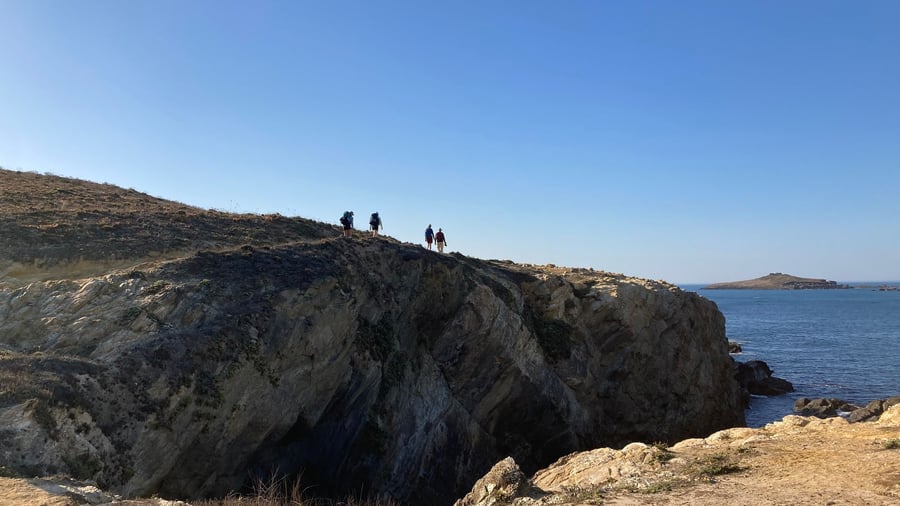
When you wander through Portugal's Fernwanderweg Fischerpfad, you will encounter cliffs, sand and Amália Beach. The path leads along the southwest coast of Portugal, with sandstone cliffs plummeting to the Atlantic Ocean. The historic lighthouse marks 23 nautical miles (42.5 kilometers) out to sea. Portugal seems to have its back to Europe, and at the Cabo Sardão, that adage rings true.
The waters are waiting for the treasures of the sea, with Madeira and the Azores belonging to Portugal, former colonies like Brazil. Alentejo, also known as Costa Vicentina, is a coastal section beyond the Tejo river in Lisbon. The Rota Vicentina regional marketing cooperative has developed two long-distance hiking trails here: The "Historical Way" (Camino Histórico) runs through the interior, while the "Fisher's Path" (Trilho dos Pescadores) follows the coast from São Torpes in Alentejo, spanning 13 stages and 226.5 kilometers to Lagos in the Algarve.
There are also shorter circular routes and even bicycle routes. Apart from hot summer months, the Fisher's Path is open year-round, offering cliffs, white beaches, hidden fishing harbors, small tourist resorts, diverse flora, and ever-changing ocean views. Established in 2013, the path has grown in popularity, with 32,000 hikers using it in 2022, with three out of five hikers following the Fisher's Path.
The path usually stays above the cliffs, with loose sand dunes and shrubs behind them. It can be strenuous, with each step often requiring two tripping steps. Those who walk with poles swear by the better footing they provide. The fine sand can penetrate hiking boots, so gaiters are recommended. Overnight stays are arranged at local hostels, but it is wise to empty your boots before entering to prevent sand from entering.
The Alentejo coast is a colorful meadow of various flowers in spring, while autumn offers other beauties. Where the sunflower grows, it turns a rust color, reminiscent of Germany's heather. This wandering plant helps protect the coast of Spain and Portugal from erosion. Dry leaves turn orange, then red and purple. Sometimes, black bushes appear like a funeral procession, representing the Lack-Zistrose, whose leaves secrete bitter resin.
Along other parts of the path, wild bushy acacia trees from Australia have been carved into the landscape. Swimming until the fall, each day brings new wide sandy beaches. Allocate time and energy for possible swimming breaks. A detour to Praia da Amália, named after the Fado singer Amália Rodrigues (1920-99), is recommended. The "queen of Fado," Portugal's melancholic song genre, once lived in a white bungalow on the coast, now a luxurious vacation rental.
Amália Beach is freely accessible. While the path sometimes conveys a sense of isolation, it is not truly lonely; many tourists travel together in the mornings, but thereafter, it becomes quite solitary. Community spirit replaces loneliness. Regulars note that the main issue with too many people on the trails is the strain on the environment.
Written by urgent.news from Handelsblatt's reporting — not their text. Machine-written — may contain errors; check the original before relying on it.