SAFA pushes for government backed price stabilisation fund; seeks floor price for certified UCO
Writes to Petroleum Ministry
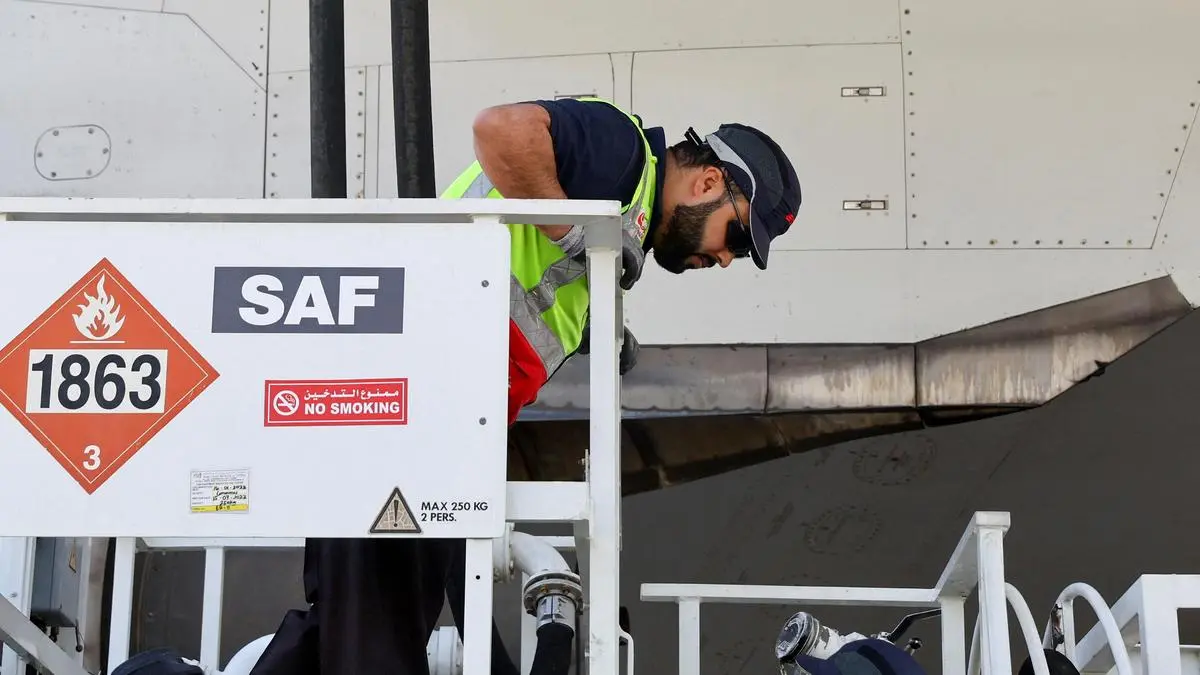
The Sustainable Aviation Fuel (SAF) Association has approached key ministries, including Environment, Petroleum & Natural Gas, and Civil Aviation, to establish a well-designed extended producer responsibility (EPR) framework for used cooking oil (UCO). This framework aims to bolster domestic feedstock supply, enhance food safety, and bolster India's growing SAF industry. The EPR framework for UCO is a law that obliges companies that sell cooking oil to collect and recycle it post-frying.
Rohit Kumar, Secretary General of SAF Association, stated that they have engaged with the Ministries on this matter. When asked whether the Petroleum & Natural Gas Ministry would subsidize the deficit through a dedicated green fund or make airlines bear the costs under penalties, Kumar responded that the framework should distribute responsibilities equitably across the supply chain.
SAFA has suggested the creation of a government-backed UCO Price Stabilisation Fund, possibly backed by a cess on edible oil imports. This support could mitigate investment risks, strengthen collection networks, and facilitate industry growth.
Kumar further explained that to prevent speculative trading and hyper-inflation of UCO feedstock prices, the Petroleum Ministry is considering a minimum price (floor price) for certified UCO to make collection economically viable, rather than a price ceiling on EPR certificates. He emphasized the importance of transparent pricing, digital traceability, and safeguards against market manipulation to protect collectors and fuel producers while promoting circularity.
The Ministry's long-term strategy heavily emphasizes multi-feedstock pathways, such as agricultural residues, bagasse, and municipal waste. When asked if the Ministry prefers a standalone UCO-EPR policy over a unified, multi-feedstock credit system that covers all domestic waste streams, Kumar affirmed that UCO-EPR is a preliminary step, not a substitute for India's broader multi-feedstock strategy.
He highlighted that a dedicated UCO framework can secure near-term domestic feedstock supplies and aid India in meeting global aviation decarbonization requirements.
SAFA recommended the immediate formation of a stakeholder working group comprising industry participants to assess the proposal and develop an implementation roadmap. The ultimate goal is to transition India from a SAF mandate to a functional market, supported by reliable domestic feedstocks, viable economics, and long-term investments.
Kumar concluded that the UCO-to-EPR framework is not merely a waste management intervention but a strategic national tool that integrates energy security, aviation decarbonization, public health protection, and circular economy development.
Written by urgent.news from Hindu BusinessLine's reporting — not their text. Machine-written — may contain errors; check the original before relying on it.