The Fight Against Galamsey: Who is Deceiving Whom, the Government or the Public?
By: Franklin ASARE-DONKOH In this endless fight against galamsey, who is deceiving whom? Is it the government playing politics with our future, or is the hypocritical citizenry trading its heritage for quick cash? Rivers like the Offin, Pra, Ankobra, Birim, and Densu flow like a thick, milky-brown porridge. Along their banks, the skeletal remains of […]
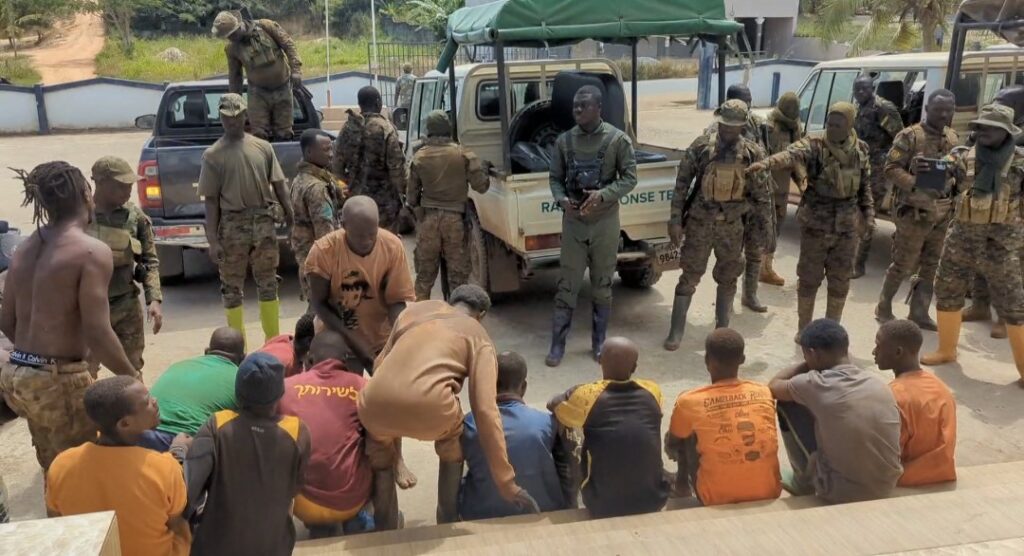
The ongoing battle against galamsey, informally known as illegal small-scale mining in Ghana, raises a crucial question: are the government's actions and the public's response genuine attempts to tackle the problem, or are they merely veiled attempts to deceive one another? This issue has become increasingly pertinent as Ghana grapples with a looming water crisis and a surge in diseases linked to heavy metal poisoning in drinking water sources.
The government, in its pursuit of combating galamsey, has employed a multi-million-cedi strategy, deploying military and security forces through operations such as Operation Vanguard and Operation Halt. These measures aim to enforce strict controls on mining activities through community schemes and legal reforms. However, upon closer examination, the reality appears to be a staged play, with galamsey evolving from a low-income pursuit by impoverished villagers to a highly mechanized, capital-intensive industry.
The heavy machinery involved is not the tool of impoverished youth but rather the domain of affluent financiers, including politicians, traditional rulers, top law enforcers, and influential elites who fund these operations.
Selective law enforcement further exacerbates the deception. While ordinary individuals are arrested and paraded before the public eye, the individuals who profit from these illegal mining endeavors go unpunished. Moreover, the state's paradox is evident as it condemns the destruction caused by galamsey while simultaneously legitimizing it through tax collection from illegal sites. This paradox underscores the government's reliance on the gold revenue stream, even when that gold is tainted by the pollution of rivers.
The public's complicity in this deception is also significant. Mining communities harbor a web of collaboration, where citizens who voice concerns about poisoned water and decaying ecosystems are often the same individuals guiding illegal miners to their land. Property owners and farmers, enticed by short-term gains from leasing their ancestral lands to galamsey operators, overlook the long-term consequences of land degradation.
This short-sightedness is further compounded by the debilitating diseases that plague the community due to the polluted water sources.
The role of traditional authorities in this cycle of deception cannot be overlooked. Some chiefs, while outwardly opposing galamsey, secretly benefit from the illicit activities by accepting gifts, cash, and mining concessions. These leaders prioritize personal gain over the well-being of their communities, effectively nullifying local environmental safeguards.
The mindset of such chiefs highlights a troubling trend where even custodians of our lands and heritage are willing to forsake their responsibilities for personal gain.
Additionally, military task forces often face resistance from local youth who act as informants, alerting galamsey operators of incoming inspections in exchange for payment. This collaboration further intertwines the public and government deception, with citizens prioritizing economic survival over environmental preservation. The community's defense of galamsey rests on the economic desperation that permeates their lives, though this excuse trivializes the irreversible damage inflicted on their environment and health.
Ultimately, the fight against galamsey is characterized by a mutual contract of deception. Governments maintain the facade of addressing the issue to appease environmental advocates and international partners while the public continues to engage in, protect, and profit from the illegal gold rush. Both sides are entangled in a dangerous game of survival, with politicians safeguarding their political futures and local communities pursuing instant wealth. In this intricate dance of mutual deception, everyone is lying to everyone and themselves.
Written by urgent.news from GBC Ghana's reporting — not their text. Machine-written — may contain errors; check the original before relying on it.