Millions of species, missing data: The painstaking work of cataloguing life on Earth
PARIS, Oct 20 — A bumblebee-like insect that was last seen in France 150 years ago was spotted again in the Paris...
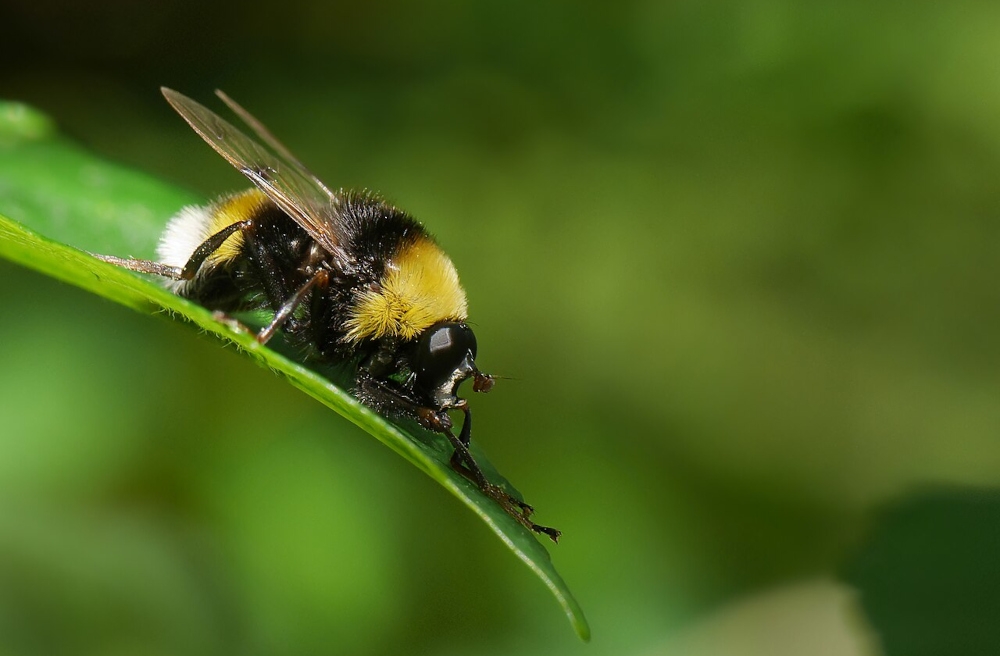
Paris (Oct 20) — Scientists in France are facing a daunting task in cataloguing the country's biodiversity, as vast amounts of data on species remain unknown. One example is the re-emergence of a bumblebee-like insect known as Pocota personata, which had been thought to have disappeared over 150 years ago. This mystery underscores the challenges faced by researchers as they strive to quantify and understand the state of species around the world.
At the upcoming COP17 biodiversity summit in Armenia, this issue is expected to be a focal point, as nations review their progress in protecting nature. In France, the National Museum of Natural History (MNHN) and the National Centre for Scientific Research (CNRS) have launched a project to build a comprehensive database of the country's plants and invertebrates.
Rodolphe Rougerie, head of the Dynabiod project, highlighted the critical lack of data on both current and historical monitoring of species, making it difficult to accurately assess biodiversity loss. The scale of the unknown is immense. A 2011 study estimated that 86% of terrestrial species and 91% of marine creatures have yet to be formally described.
Even among identified species, understanding their conservation status is often lacking. Scientists have assessed the extinction risk of only about 8% of known species, according to the International Union for Conservation of Nature. Identifying species can be a painstaking process, particularly for smaller organisms like insects, fungi, and microscopic organisms.
With tools such as field observations, researchers can encounter challenges, as spotting larger animals or certain birds is relatively straightforward, but smaller species require more intricate identification methods. The MNHN researcher responsible for collecting insect data, Fanny Kratz, spends her week setting up insect traps at various sites and analyzing the collected DNA to fill in data gaps.
However, even this seemingly simple task is both "very, very long" and "very, very complicated". Each trap can contain up to 261 types of DNA, but identifying the corresponding species is not always straightforward, and there are always "unknowns" — DNA sequences that do not match any existing database. To effectively monitor biodiversity, researchers need access to well-stocked reference databases that allow for accurate identification and comparison of species.
However, such databases are often lacking, particularly in tropical regions where data is scarce despite the regions' extraordinary biodiversity. While artificial intelligence can help analyze large amounts of data, its effectiveness is ultimately limited by the quality of the underlying data. Kratz emphasized that without a robust reference database, researchers are "stuck" and unable to accurately determine the status of species and devise effective conservation strategies.
Written by urgent.news from Malay Mail's reporting — not their text. Machine-written — may contain errors; check the original before relying on it.