Is your marketing AI tool driving profit or just noise? CleverTap co-founder Anand Jain weighs in
At TechSparks 2026, CleverTap co-founder Anand Jain explained why marketing teams must move beyond basic generative AI productivity tools and adopt autonomous, real-time decisioning systems that drive genuine business profit.
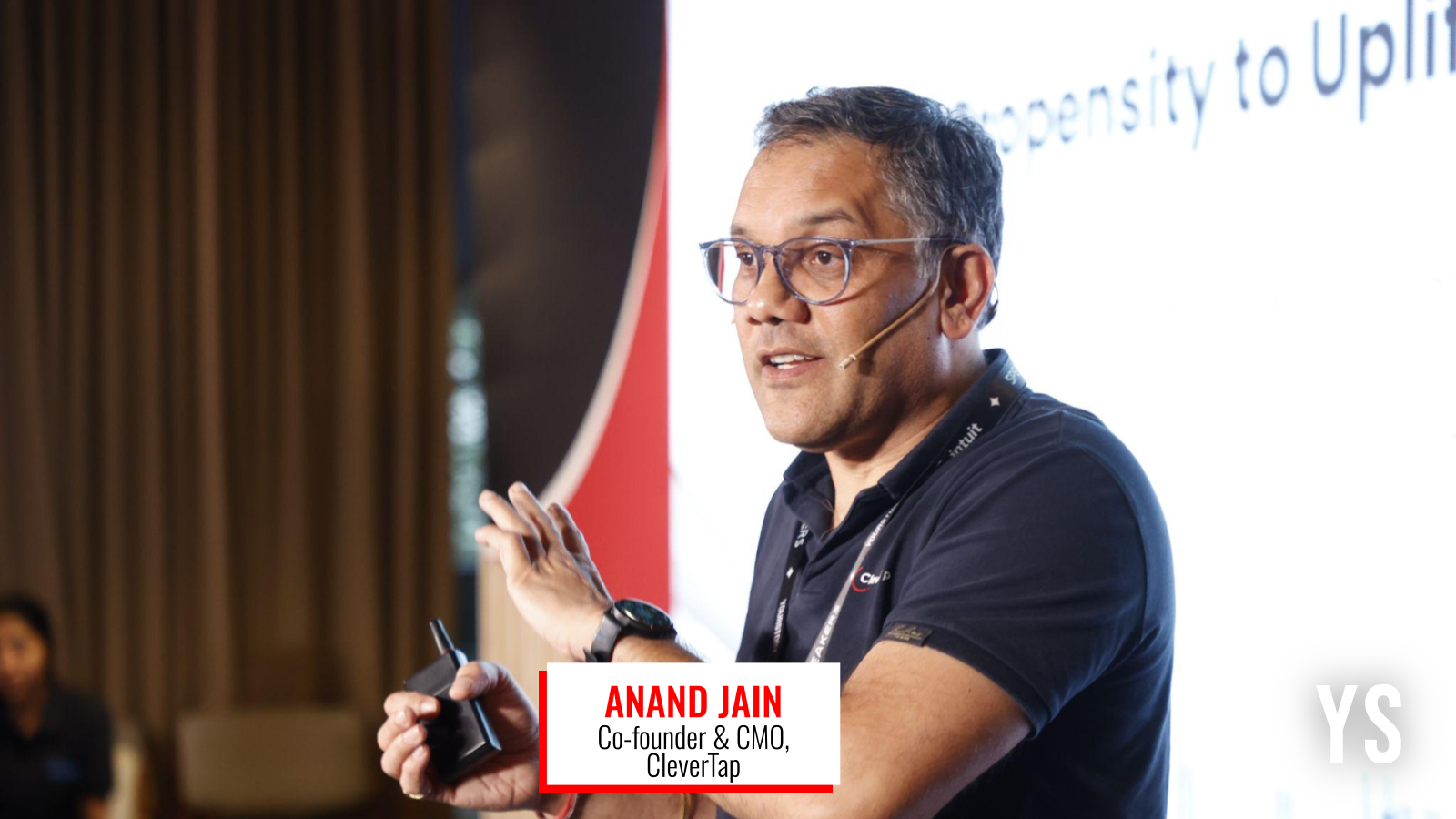
Most marketing teams employ AI to expedite tasks like email drafting, image variant creation, and document summarization. However, Anand Jain, CleverTap's Co-founder and Chief Marketing Officer, contends that such basic AI tools usually fail to boost company profits. At a TechSparks 2026 masterclass on marketing strategy, Jain emphasized that leaders must go beyond these superficial uses of AI.
He urged them to transition from using AI merely for convenience to leveraging it for generating tangible business outcomes. While AI-driven content creation streamlines the process, Jain questioned whether it genuinely contributes to growth, asking, "Is it actually going to impact business results or is it just more of the same?"
Traditional digital campaigns operate on a push model, where companies decide what they wish to sell instead of understanding what customers desire to purchase. In contrast, a local shop assistant in an offline setting remembers a customer's personal preferences, observes immediate reactions, and suggests items aligned with their budget and style.
Modern marketing should emulate this mindset. Instead of broadcasting generic promotions to broad audiences, advanced marketing engines should analyze live customer actions to tailor individual needs. This represents a leap towards the highest level of AI maturity, known as real-time decisioning. Marketing technology traditionally evolves through three stages.
The first level concentrates on time-saving tasks, the second level involves experimentation like A-B testing (comparing two ad versions to determine which performs better), and the third level achieves genuine automated decisioning. "You begin with productivity, then you conduct experimentation, and the most challenging aspect is decisioning," Jain explained.
Rather than inundating users with discount codes, decisioning offers subtle yet helpful steps, such as fostering brand trust or elucidating product benefits. Real-time decisioning hinges on a single data hub that amalgamates a customer's historical profile with their immediate live actions. While A-B testing typically concludes after selecting one fixed winner, decisioning utilizes reinforcement learning, a sophisticated system that learns continuously from user responses and adjusts offers dynamically.
Furthermore, decisioning employs uplift modelling, a technique that identifies the precise nudge, message, or channel required to motivate an individual user to progress toward their next positive action. As automated systems oversee campaign delivery across thousands of message options, a marketer's role evolves from execution to strategic direction.
Rather than manually drafting creative variations, marketers set high-level objectives and establish strict operational constraints. "Your responsibility is to establish budget guardrails, brand guardrails, regulatory guardrails. Do not use the word 'free' if you are offering something, if you are a bank," Jain asserted. By defining clear boundaries, marketing leaders enable smart decisioning engines to operate autonomously, safeguarding brand messaging while driving genuine commercial profits.
Written by urgent.news from YourStory's reporting — not their text. Machine-written — may contain errors; check the original before relying on it.