Deutschland braucht wieder mehr Spielraum für Wachstum
Deutschlands Mittelstand steht unter anhaltendem wirtschaftlichem Druck. Damit wieder investiert und gewachsen wird, braucht es vor allem mehr unternehmerischen Spielraum.
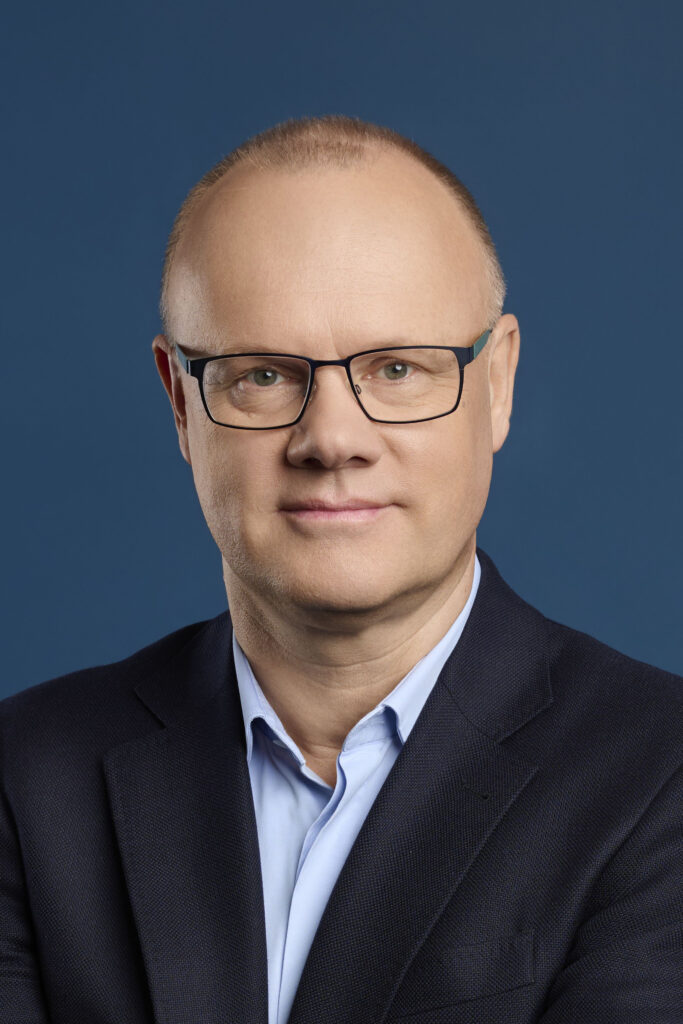
Deutschland needs more room for growth in its economic policy, but before discussing where we want to be by 2030, we should first examine where our companies currently stand. Prof. Dr. Robert Mayr, © DATEV Over the past two years, we have observed economic development in Germany that resembles a slow exhaustion rather than a sudden decline.
Revenue is not rebounding sustainably, while wages and other costs continue to rise. Employment, historically a stability anchor for the Mittelstand (middle sector), is increasingly under pressure. The Mittelstand holds on, but it is not experiencing an upturn. If earnings barely grow over a long period while costs rise, the room for maneuver for what our country urgently needs—investments and economic renewal—shrinks.
Therefore, we must improve the conditions under which economic dynamism can arise. Investments create the future. Many companies focus their available resources in the current framework conditions on securing the existing base. Investments are made in replacement and preservation, while expansions, new technologies, or additional capacities are more difficult to finance.
This has long-term consequences. Digitalization, artificial intelligence, climate-neutral production, or new business models do not emerge solely from political targets. They must be concretely implemented and financed within companies. For this, companies need economic room to maneuver. If earnings barely grow over a long period while costs rise, the room for maneuver for what our country urgently needs—investments and economic renewal—shrinks.
Small, dynamic companies are where disruptive innovations and thus the future companies can originate. However, companies can only take risks if they have sufficient reserves and can rely on the fact that long-term investments in Germany are worthwhile. Instead of trying to generate economic dynamism mainly with new incentive programs, we should give companies more space, better conditions, and more planning security for their own decisions.
A leaner state is part of good location conditions. Administrative procedures, reporting requirements, tax processes, and bureaucratic procedures cost time and bind personnel. This applies to large corporations and small and medium-sized enterprises, but especially the latter, because they cannot distribute regulatory requirements across large functional departments.
At the same time, the state itself has become larger. The state share was over 50 percent in 2025. This is not a figure we should become accustomed to. Germany needs a leaner state—not as an end in itself, but because a state that binds increasing resources takes away these resources and workforce from the private sector. We should speak the uncomfortable truth: Germany does not have an income problem.
The decisive question is what we do with the existing resources and which tasks the state actually needs to take on. Creating more revenue while companies suffer from high costs and weak revenues is not a growth strategy. Neither are additional tax burdens. Raising the top tax rate does not only affect well-off private individuals.
It hits many Mittelstand companies directly. For partnerships and sole proprietorships, income tax is corporate tax. Who takes away additional resources from these companies cannot wonder when there is then no money for investments. Europe must therefore be not only a large regulated market. It must also be a large market for growth.
The state itself stands before demographic change. Digitalization and artificial intelligence offer the opportunity to achieve more efficient fulfillment of state tasks in the future. A leaner state does not have to be a weaker state. It must focus on its tasks and fulfill them more quickly and reliably. Europe must allow growth Europe can only secure its economic strength permanently in a economically strong Europe.
The European single market is one of our greatest advantages. Businesses, however, still too often experience Europe as fragmented in everyday life. Different procedures, additional documentation requirements, and national special paths make cross-border growth more difficult. This is especially noticeable with young, successful companies that want to take the next growth step.
For them, Europe must become a common market with better conditions to grow and mobilize capital for the next development stage. Europe must therefore not only be a large regulated market. It must also be a large market for growth. It must use its size as an economic advantage. For this, national special paths must be dismantled and conditions created under which successful startups can become global companies.
Otherwise, we risk that ideas are born here, but the resulting value creation grows elsewhere. Resilience alone is not enough Two years of DATEV Mittelstandsindex show how long companies can withstand burdens. But a economy cannot live on the fact that its companies are always only more resilient. It needs new companies as well, from which the Mittelstand and world market leaders of the future can grow.
The Mittelstand has kept jobs for a long time, even though sales development remained weak and wages continued to rise. Employment only began to feel pressure later.
Written by urgent.news from Politico EU's reporting — not their text. Machine-written — may contain errors; check the original before relying on it.