Comment | Art does not function like other commodities, so why is it being priced like one?
A commodity economist explains why the art market's plumbing, its financial apparatus and its blind spots all look familiar—and why it enables fraudsters like Inigo Philbrick
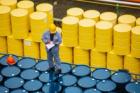
Art does not function like other commodities, yet the global art market continues to be priced as if it were. Last year, the art market grew by 4% to $59.6bn, but this figure is misleading, as it combines two markets that are moving in opposite directions. Works valued above $10m fell by 44% in the first half of 2025, down 72% from their peak in 2022, with no sales exceeding $50m.
Conversely, works valued below $250,000 reported a 17% increase in sales. The top tier of the market is shrinking, while the lower end is expanding, making the aggregate figure neither representative nor accurate.
While commodities traders are familiar with the pitfalls of this approach, it seems to be the default for those reporting on the art market. The flagship research outlets that lead with this single price figure are likely catering to an audience that expects to see such data. Art is unique and cannot be substituted, and its pricing may never settle at a "correct" level, as William Baumol argued in 1986. However, the parallels between oil and art go deeper than just supply and demand dynamics.
Before 1980, crude oil was supplied through a cartel, the Organization of the Petroleum Exporting Countries (Opec), which managed the supply through relationships rather than exchanges. The introduction of futures markets in the 1980s and a reporting agency, Platts, that gathered real bids and trades and published an assessed price, transformed oil into a legible commodity.
Art has not achieved the same level of transparency and legibility. A gallery that sets a price privately and offers it selectively operates like a posted-price market, similar to Opec's practices. Meanwhile, an artist's estate or a gallery choosing buyers and cutting off resellers functions like Opec's quota system.
However, the most crucial number in any commodity market—the buy-in rate—is buried in art reports. This rate serves as the clearest demand signal available, yet it never takes center stage. The record lot sold is the most honest number in a commodity market, yet art consistently overlooks it. The parallels between art and commodities do not prove that art is a commodity; they merely explain why it is treated as one.
Art cannot be made fungible, so it has been wrapped in instruments that treat it as such. Lending against art turns a unique object into collateral, while funds pool works to create interchangeable shares. Fractional platforms even slice paintings into tradable portions, all without making the painting a commodity.
Despite these instruments, valuation remains a necessity for finance to function. A credible appraisal profession exists, but an appraisal is merely a point-in-time opinion and does not constitute a continuous market price. It offers no insight into who owns a work, in what fractions, or against what liens. This lack of transparency creates opportunities for fraud, as demonstrated by Inigo Philbrick, who defrauded collectors and lenders of over $86m between 2016 and 2019.
Philbrick exploited the lack of transparency in the art market, selling more than 100% of individual works to multiple buyers and pledging the same pieces to lenders without any record of their interconnection.
The market has seen a significant amount of capital flow into regional art markets, often without the necessary price infrastructure to verify what is being underwritten. This opacity selects for a specific type of investor, deterring those who demand transparency and leaving the field open to those willing to take risks with claims against artworks.
The capital behind these markets often originates from hydrocarbon revenue, and analysts who can model this link hold a forward indicator on a market that most researchers have yet to uncover. African art, in particular, has seen a re-rating of prices, with artists like South African painter Lisa Brice achieving record-breaking sales in recent years.
However, this upward trend is not a genuine rally, but a reflection of the market's selective nature, which deters disciplined investors and attracts those willing to write claims against artworks.
Written by urgent.news from The Art Newspaper's reporting — not their text. Machine-written — may contain errors; check the original before relying on it.