Why Aren’t We Teaching Every Student CPR?
Schools already rehearse fire drills and lockdown drills. Cardiac arrest is far more common, write Meng Yang and Dr. John Maa.
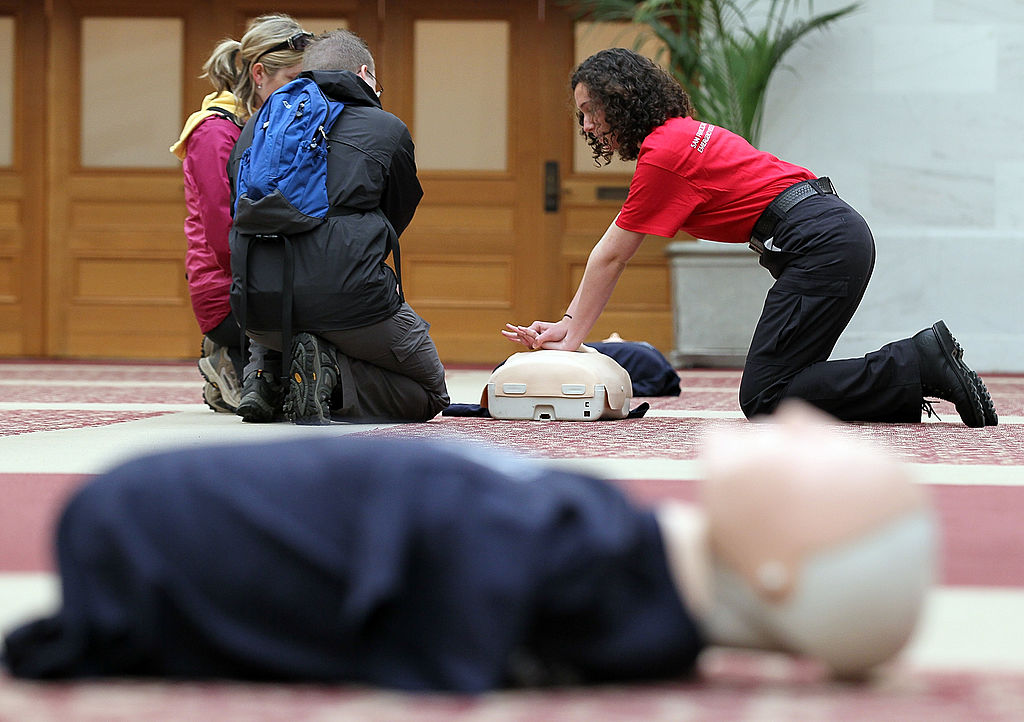
In 2024, a tragic incident unfolded at a high school basketball game in Michigan when a physical education teacher suffered cardiac arrest during a game. Two students, who had recently completed CPR training, immediately sprang into action, performing chest compressions and using an automated external defibrillator (AED) until emergency services arrived.
Their prompt actions saved their teacher's life, one of an estimated 350,000 Americans who experience out-of-hospital cardiac arrest each year, with only one in ten surviving. The difference between life and death in such scenarios often hinges on whether someone nearby initiates CPR within the crucial first few minutes, a responsibility that usually falls on ordinary individuals like classmates, teachers, or strangers.
Schools serve as unique public health hubs, exposing most Americans to CPR training, potentially making them the most effective venues for equipping the next generation with lifesaving skills. While schools frequently practice fire and lockdown drills, cardiac arrest is a far more common occurrence, yet students rarely receive training.
Countries like Belgium, Denmark, France, Italy, Norway, Portugal, and England have mandated school-based CPR education, which has led to a significant increase in bystander CPR rates and survival rates post-cardiac arrest. However, scaling up CPR training on a global scale poses significant challenges. The KIDS SAVE LIVES initiative, endorsed by the World Health Organization, provides a practical framework, advocating for regular, age-appropriate basic life support education starting in childhood, with children as young as four learning the basics and capable of performing effective chest compressions by age 12.
Legal concerns often deter potential rescuers from performing CPR, fearing injury, but every state in the U.S. has Good Samaritan laws offering legal protection to those providing emergency aid in good faith. The U.S. has made progress in integrating CPR education into schools, with 43 states now mandating CPR instruction before high school graduation.
California, Colorado, Hawaii, Massachusetts, Nebraska, New Hampshire, and Wyoming are the remaining states without such requirements, though some, like California, are exploring ways to expand their programs. The U.S. can learn from international success stories, such as Denmark's nationwide resuscitation initiatives, and initiatives like Wesley’s Law in Georgia, which required schools to stock naloxone, and Indiana's Stop the Bleed training, demonstrating the potential impact of policy and funding on lifesaving education.
Collaborating with national organizations like the American Medical Association, American Red Cross, Project ADAM, and American Heart Association could help broaden CPR education initiatives across the United States.
Written by urgent.news from Time's reporting — not their text. Machine-written — may contain errors; check the original before relying on it.