Turning Gen Next Into A Green Brigade
Famed as a wildlife haven hosting one of the best-run sanctuaries in the country, Assam is a living laboratory of good conservation practices. Kaziranga, the crown jewel with its rare mix of large animals led by the Indian rhinoceros and the tiger, sits at the top of a state also known as a birdwatcher’s paradise. Yet, conservation is challenging in a century of growing population, climate…
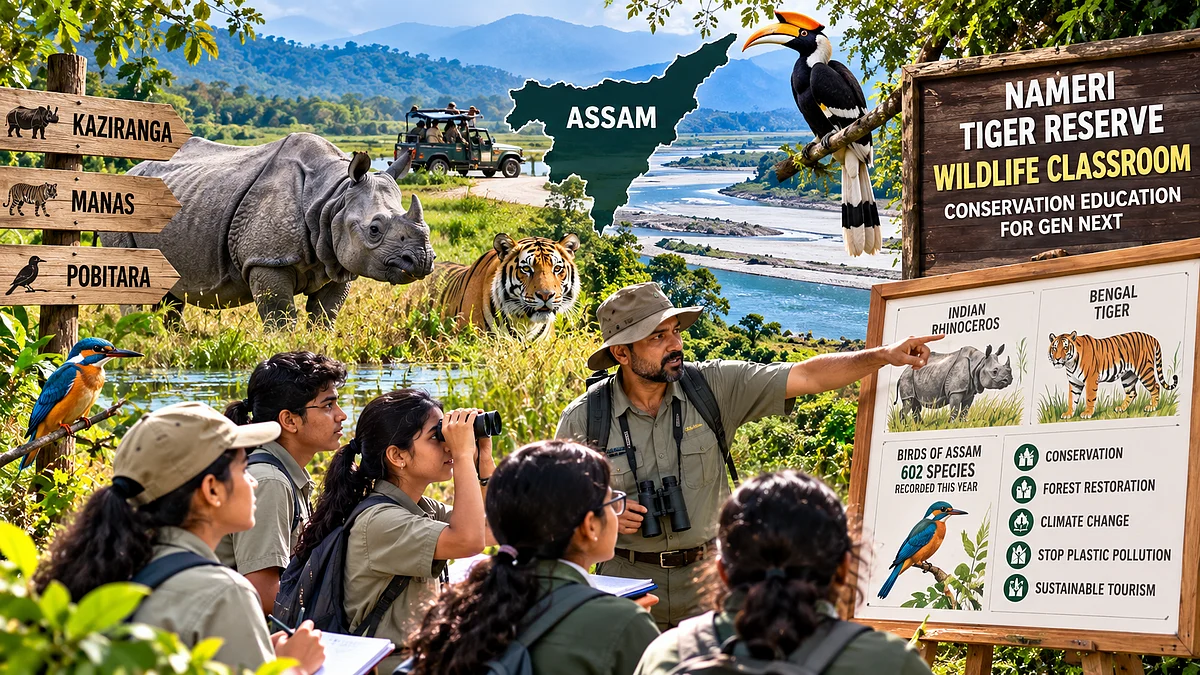
Assam, a renowned sanctuary for wildlife, boasts one of the most well-managed wildlife sanctuaries in the country. It is home to the Indian rhinoceros and the tiger, making it a popular destination for nature enthusiasts. The state, known for its diverse bird population, attracts birdwatchers from far and wide. However, conservation efforts in Assam face numerous challenges in the face of a growing population, climate change, and loss of natural forests.
The Assam government aims to prepare for the future by engaging the youth in conservation education. Wildlife classrooms have been established in Nameri, where students from classes beyond 8 can explore nature in the vastness of a tiger reserve. This presents an exciting opportunity for young people to experience birdwatching and learn about the 602 distinct bird species reported in the area this year through the Cornell Lab of Ornithology’s eBird database.
Historically, Assam has been a habitat for 738 bird species, including various east Asian and Eurasian species. The tiger population in Kaziranga has seen a significant increase from 104 in 2022 to 148 adult tigers in the 2024 census. The return of the one-horned rhinoceros, which nearly faced extinction during the British era, is another success story. The rise to about 2,900 rhinos in 2020 is attributed to the Indian Rhino Vision 2020 plan launched in 2005.
Despite these achievements, Assam's ecology faces severe challenges, including annual floods and erosion due to the swelling of the Brahmaputra and its tributaries, affecting up to 31 lakh hectares. Other issues include failed initiatives to prevent pollution in water bodies, such as Deepor beel, the impact of oil exploration, resource extraction, and the effects of climate change.
Every wildlife club member has the potential to become an environmental activist, combating degradation caused by plastic and urban waste pollution. By building a dedicated community at Nameri, similar efforts could be encouraged in other areas.
The student clubs also serve as future wildlife guardians, who can contribute to forest restoration and the rewilding of sites to promote sustainable wildlife tourism. Apart from Kaziranga, other conservation initiatives are underway in Pobitara and Manas. By fostering ecological consciousness among the younger generation, Assam can nurture responsible custodians of its natural heritage.
Written by urgent.news from Free Press Journal's reporting — not their text. Machine-written — may contain errors; check the original before relying on it.