This 850-year-old 'firework' supernova is full of mysterious knots
Pa 30, linked to a supernova seen in 1181, reveals chains of tiny gas knots in a new image from the Gemini North telescope in Hawaii.
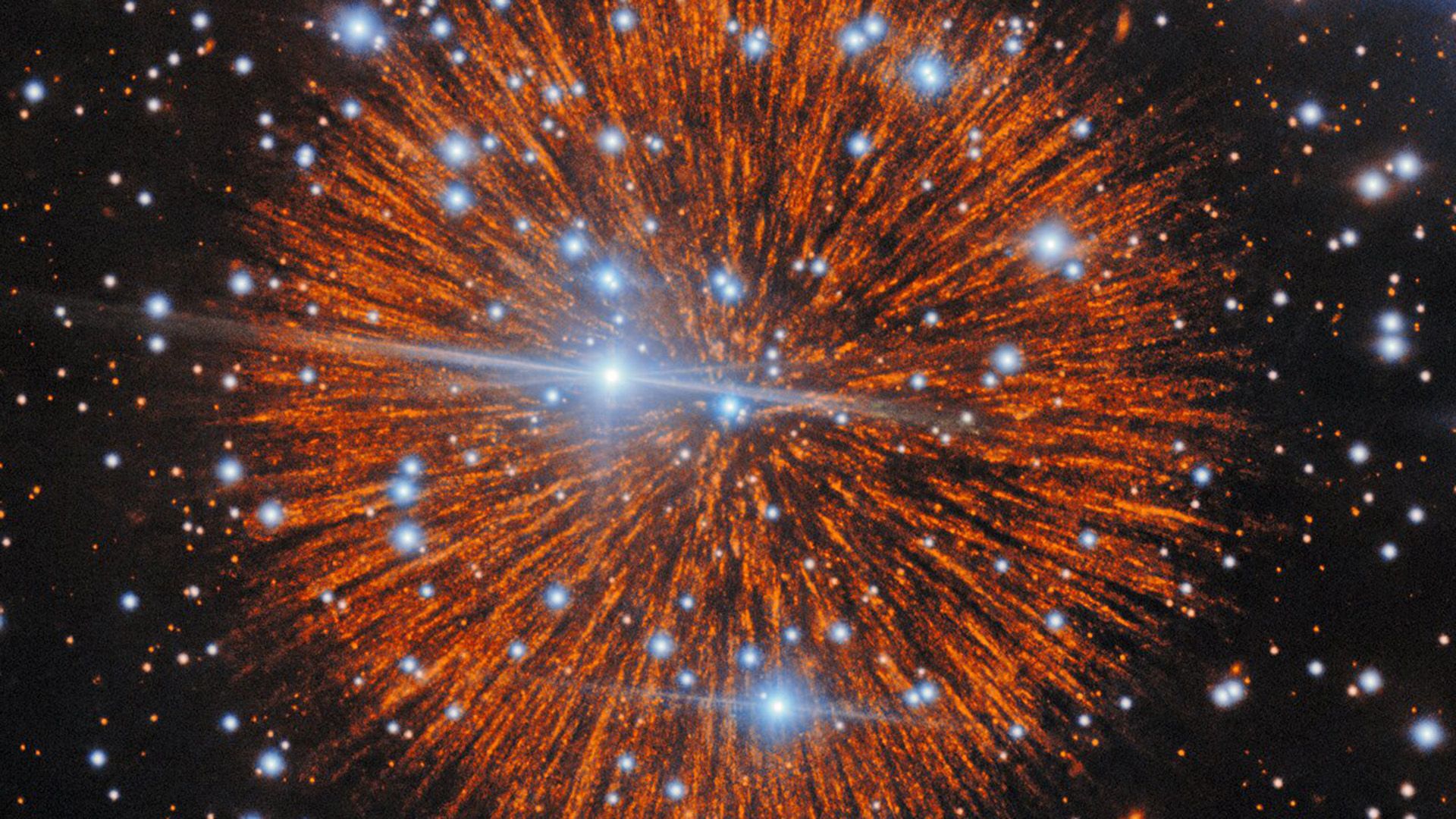
In 1181, medieval astronomers in China and Japan documented a fleeting appearance of a celestial event called SN 1181 in the constellation Cassiopeia. This supernova, visible to the naked eye, remained observable for 185 days, making it rare to obtain such precise dating of a supernova event. Over the centuries, the remnants of this supernova, known as Pa 30, have intrigued scientists with its peculiar structure.
Recent observations using advanced ground-based telescopes have unveiled a wealth of detail, revealing that Pa 30's spectacular filaments are not smooth streams but rather chains of tiny gas knots. These findings, detailed in a study published in The Astrophysical Journal, provide new insights into the nature of the space surrounding the star before its explosive demise and the processes shaping the expanding ejecta.
Interestingly, Pa 30 contains a surviving star situated at the very center of the remnant, which is highly unusual as supernova explosions typically displace stars from their original positions. The presence of this "zombie star" suggests that the initial explosion was highly symmetrical. Moreover, Pa 30 is identified as a Type Iax supernova, a unique category of event that, unlike the more common Type Ia supernovas, does not completely destroy the progenitor star, potentially leaving behind a remnant known as a zombie star.
This rare observation of a Type Iax supernova adds to the growing list of known examples of this enigmatic class of stellar explosions.
Written by urgent.news from Live Science's reporting — not their text. Machine-written — may contain errors; check the original before relying on it.