The challenge in making the national language a vessel for unity
Drawing from the spirit of tolerance in East Malaysia, Bahasa Melayu can begin to be viewed not as a tool of division, but as a bridge that unites.
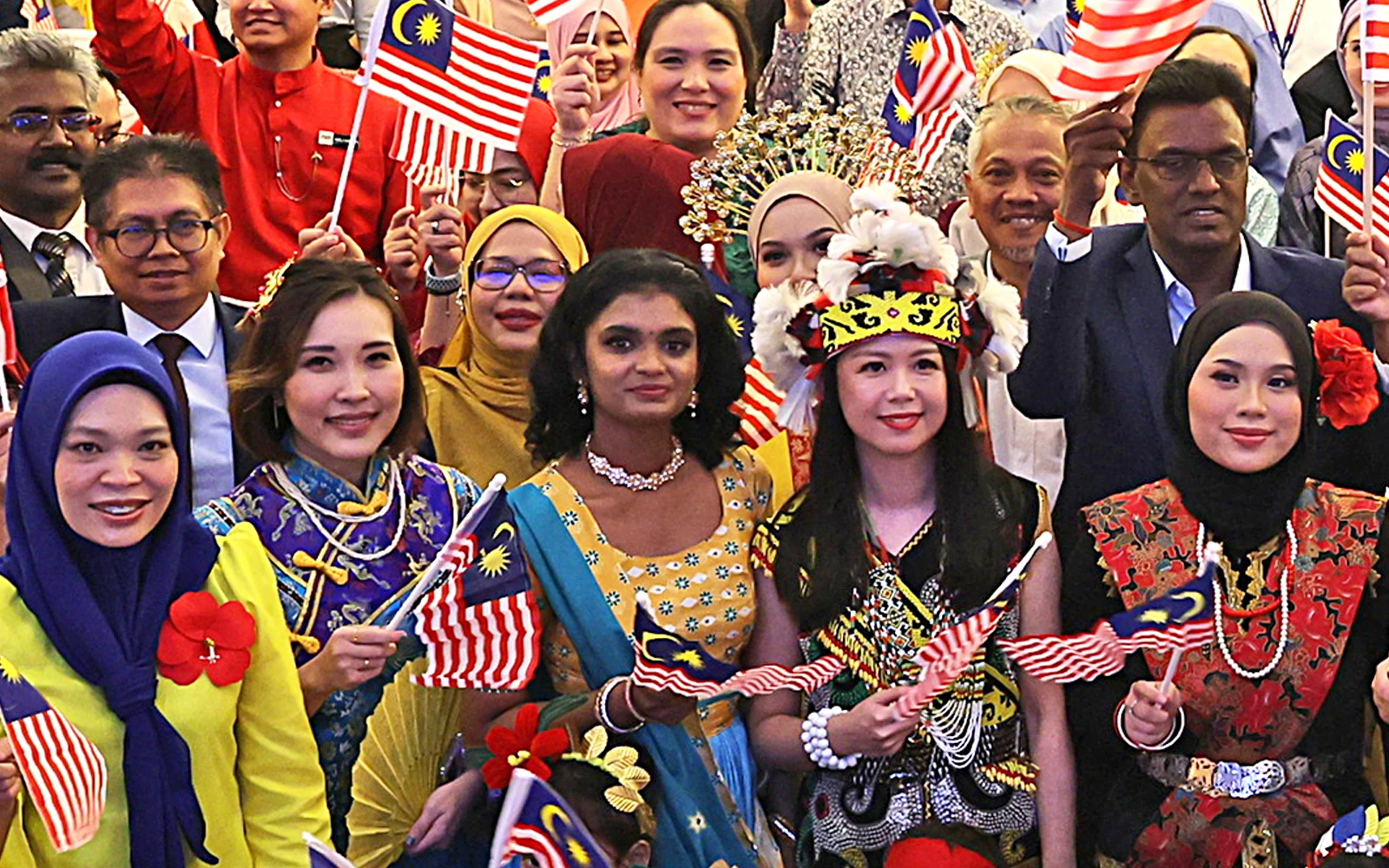
The challenge of making Bahasa Melayu a unifying language in Malaysia involves navigating the delicate balance between national identity and religious sensitivity. In Peninsular Malaysia, the law stipulates Malay identity by three criteria: practicing Islam, speaking Malay, and following Malay customs. This has led to the heavy incorporation of Arabic terms into Bahasa Melayu, thus influencing the language's evolution.
Consequently, non-Muslim communities, predominantly of Chinese and Indian descent, tend to use their native languages, such as Mandarin or Tamil, or even English, for religious matters. This linguistic segregation inadvertently creates a divide in spiritual contexts, despite the community's proficiency in Bahasa Melayu in daily life.
In contrast, East Malaysia and Indonesia present different models where Bahasa Melayu and Bahasa Indonesia respectively, are used extensively in religious affairs. East Malaysian communities, such as the Iban, Kadazandusun, and Bidayuh, have historically used Bahasa Melayu as a unifying lingua franca, even in church services. In Indonesia, Bahasa Indonesia has been successfully implemented as a neutral, inclusive language in religious practices across various faiths.
This is facilitated by the Malaysia Agreement 1963 (MA63) and the influential roles of organisations like Nahdlatul Ulama (NU) and Muhammadiyah, which promote a concept of inter-citizen brotherhood to ensure the harmonious coexistence of religious diversity.
The differing approaches in language usage significantly impact social interactions. In Peninsular Malaysia, a cautious, compartmentalized approach to language in religious affairs fosters a model of cautious coexistence. Social interactions are largely confined to secular spaces such as economics, education, and sports. Conversely, in East Malaysia and Indonesia, the use of the national language in spiritual contexts helps to dissolve suspicion and foster a stronger sense of unity among diverse communities.
These varying linguistic practices demonstrate the potential for Bahasa Melayu and Bahasa Indonesia to serve as unifying forces when embraced across all facets of life. The key to achieving this lies in constructing a more inclusive and nuanced understanding of the national language, free from the constraints that might otherwise divide the nation.
Written by urgent.news from Free Malaysia Today's reporting — not their text. Machine-written — may contain errors; check the original before relying on it.
Also reported by 1 other outlet
- The challenge in making the national language a vessel for unity freemalaysiatoday.com