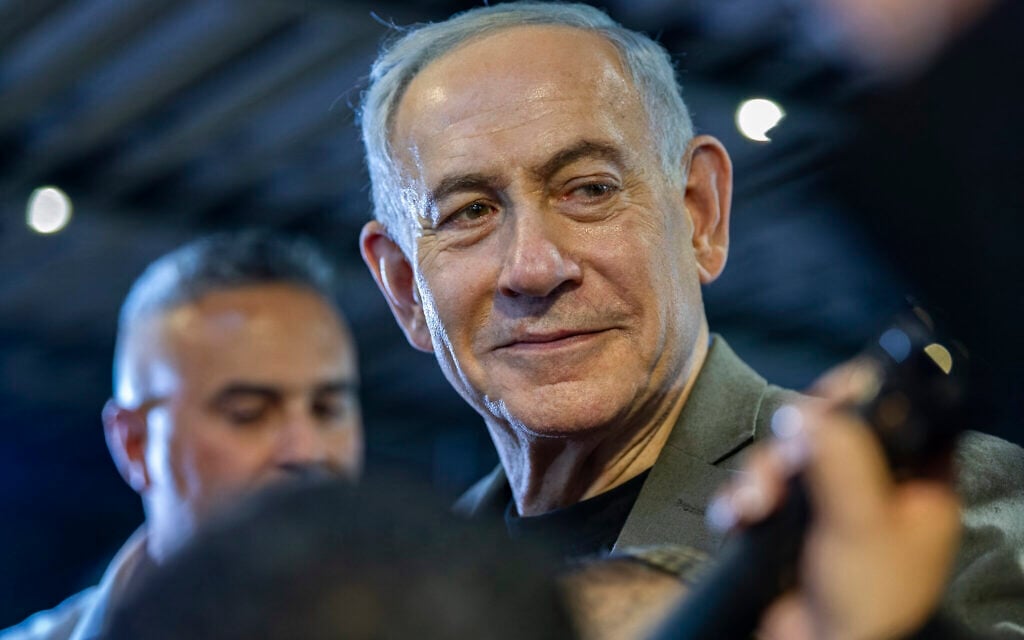
Netanyahu condemns ‘monkey’ slur against Eisenkot, but says Likud members face worse
Premier says remarks by pundit Yinon Magal, widely seen as a Netanyahu mouthpiece, 'highly inappropriate,' claims incorrectly that businesswoman called Likud supporters chimpanzees and baboons
With just nine days remaining until the election, recent surveys indicate that Gadi Eisenkot's Yashar party and Prime Minister Benjamin Netanyahu's Likud are virtually neck and neck in the polls. However, neither bloc is close to securing the 61 seats required for a majority in the Knesset, according to polls reported by Maariv, Channel 13, Kan News, and Channel 12. The Zionist opposition leads with 51.25 seats, matching Likud's 51 seats, leaving the Arab parties and smaller parties in key positions ahead of election day.
Maariv's latest poll reveals that the Arab parties each gained one seat in the past week, bringing their total to 14 seats, while Likud lost two seats, dropping to 18. Despite this, Likud remains the larger coalition with 51 seats, as United Torah Judaism gained one seat, reaching eight, and People of Israel successfully crossed the electoral threshold with four seats. Yisrael Beytenu, however, lost one seat, falling to eight. This brings the Zionist opposition to 51 seats, tying them with Likud.
Channel 13's poll shows Netanyahu's bloc at 51 seats, compared to 55 in the previous survey. Likud has dropped two seats to 18, while Yashar party maintains its lead with 20 seats. Eisenkot's bloc remains unchanged at 50 seats, with the Arab parties combining for 15 seats.
KAN News' poll indicates that Yashar party continues to lead Likud, but the distribution of seats between the two blocs favors Netanyahu. People of Israel and the joint Reservists/Economic Party, led by Yoaz Hendel and Yaron Zelekha, both received four seats. Notably, People of Israel fell below the electoral threshold, receiving 1.8% of the vote, while Hendel and Zelekha's party received four seats.
Channel 12's poll places Yashar party first with 23 seats, compared to 20 for Likud under Netanyahu. Winter's People of Israel fell below the electoral threshold, receiving 1.8% of the vote, while Hendel and Zelekha's party received four seats.
When the polling averages are calculated, Eisenkot holds a narrow lead, with the opposition averaging 51.25 seats compared to Netanyahu's bloc at 51. The gap widens when including the Arab parties, which average 13.75 seats, while Hendel and Zelekha's party stands at four seats and remains outside the two-bloc division. Together, the Zionist opposition and Arab parties average 65 seats, with Eisenkot leading among the largest parties, with Yashar averaging 21.5 seats compared to Likud's 19, and Bennett trailing at 12.5 seats.
The overall picture suggests an extremely close election within the Zionist political camps, with the Arab parties and smaller factions potentially playing decisive roles.
Written by urgent.news from Jerusalem Post's reporting — not their text. Machine-written — may contain errors; check the original before relying on it.
This story
This is one outlet's version. Read the fullest account.