Japan to launch historic round-trip mission to Mars’ moon
The spacecraft will arrive at Mars in August next year and collect at least 10g of material from the surface of Phobos during a three-year mission.
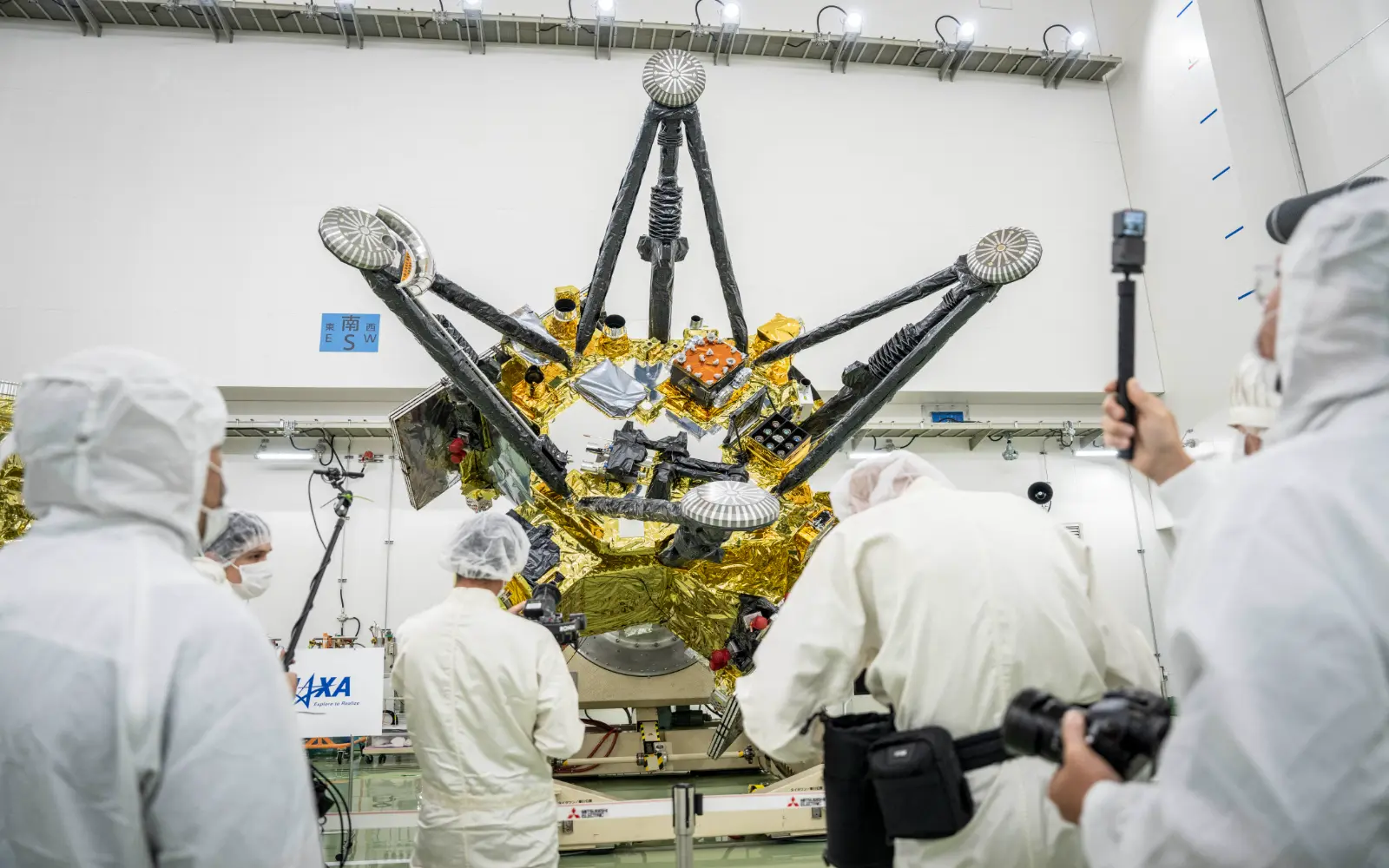
Japanese scientists are preparing an unprecedented mission to Mars' moons, with the goal of retrieving samples that could unlock the origins of the Solar System and life on Earth. The unmanned Martian Moons eXploration (MMX) probe, a joint effort with US and European space agencies, along with numerous universities and tech companies, could also pave the way for future human exploration.
The H3 rocket, carrying the MMX, is scheduled to launch from the Tanegashima Space Center in Japan on Tuesday at 4:41am. Project manager Makoto Arita of JAXA's H3 rocket team expressed excitement about being part of such a significant mission. The spacecraft will reach Mars around August next year, orbit one of its moons, Phobos, and then land to collect samples over a three-year period.
This mission marks the first round-trip to the Martian system, with the sampling from Phobos being the first of its kind. The rover, named IDEFIX, will conduct surface observations to ensure a safe landing. MMX will also investigate the possibility of using Phobos as a "natural space station" to establish requirements for a round trip to Mars, a crucial step for crewed Mars exploration.
The mission aims to explore the formation of Mars and its moons, which is essential in understanding the birth of the Solar System. One theory suggests the moons formed from a collision with Mars, while another proposes they are asteroids captured by Mars' gravity. Determining the correct theory will shed light on the potential for life to arise on rocky planets.
Japan's participation in this mission is a result of collaboration with France's CNES, Germany's DLR, NASA, ESA, and around 20 universities and tech companies. The development of the spacecraft's landing legs is particularly challenging due to Phobos' extremely weak gravity. Japan has experience in sample retrieval from space, including Hayabusa-2, which returned asteroid samples in 2020.
Written by urgent.news from Free Malaysia Today's reporting — not their text. Machine-written — may contain errors; check the original before relying on it.
Also reported by 4 other outlets
- Japan to launch historic round-trip mission to Mars’ moon freemalaysiatoday.com
- Japan to launch historic round-trip mission to Mars moon kahawatungu.com
- Japan to launch historic round-trip mission to Mars moon japantoday.com
- Japan to launch historic round-trip mission to Mars moon channelnewsasia.com