India must keep policy steady for FDI
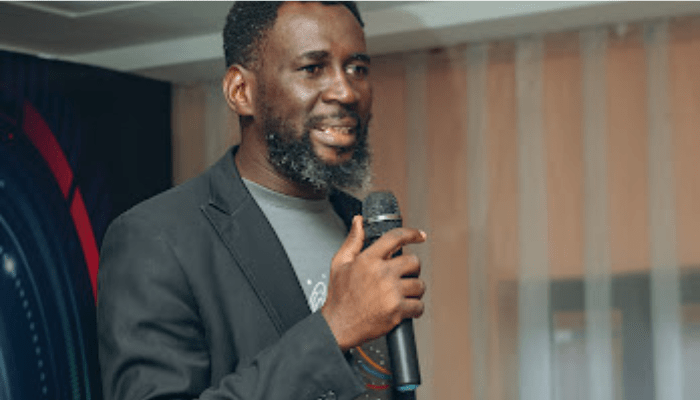
New Delhi: To attract sustained foreign direct investment, India must uphold its policy credibility and consistency, as robust economic expansion might not alone suffice to instill confidence in potential investors regarding the nation's long-term business climate, according to Kyunghoon Kim, Head of the India and South Asia Team at the Korea Institute for International Economic Policy.
In discussions with ANI, Kim emphasized that India's investment, trade, and industrial policies are attracting FDI across various sectors, including manufacturing, services, and financial services.
Kim urged the government to maintain its present policy trajectory and assure investors about the continuity of its business-friendly atmosphere. He praised the government's efforts in the realms of investment, trade, and industrial policies, with KIEP's acknowledgment of India's strong economic growth of 7.8% in the first quarter, which was bolstered by investment, consumption, and exports. Investment surged due to government capital expenditure, private investment, favorable financial conditions, and high demand.
Kim attributed India's growth to its strong economy fundamentals and policy adaptability, despite global uncertainties. The country's foreign exchange reserves, along with improvements in the banking sector's non-performing loan ratios and corporate debt ratios, bolster economic resilience. Free trade agreements, such as those with the United Kingdom and the European Union, could benefit India by providing broader market access in the medium to long term, Kim suggested.
Kim highlighted industrial policies, like production-linked incentive schemes and the India Semiconductor Mission, which encourage companies to expand production, investment, and employment within India's industrialization drive. However, he cautioned that high GDP growth does not guarantee sufficient employment or increased incomes for all.
To ensure job creation and higher incomes, India needs to focus on education, training, and the development of a skilled workforce capable of transitioning from lower-productivity sectors, such as agriculture, to higher-productivity industries and services.
Kim projected a potential 7% growth for India over the medium term and speculated that the country might become the world's third-largest economy by 2031 or 2032. However, he stressed that sustaining growth would necessitate continued investment, structural transformation, and a supportive business environment. Inflation posed a risk, especially if the Middle East crisis persists, leading to increased food, fuel, and fertilizer prices.
The central bank recently raised its policy interest rate by 25 basis points to 5.5%, marking the first increase in nearly four years. Kim noted that sustaining growth would require addressing inflation, expanding export markets, improving workforce skills, and managing inflation effectively.
Written by urgent.news from The Economic Times's reporting — not their text. Machine-written — may contain errors; check the original before relying on it.