Human skills will matter more in the age of AI, educators say
Abu Dhabi: Human skills such as communication, judgment and collaboration will become more important as artificial intelligence changes the workplace, educators and experts said during the panel discussion at the Edufair Abu Dhabi 2026. “Many academics and universities tend to look at disciplinary boundaries and silos. The world doesn’t, but universities do.” Said Dr. Anita Patagar, Executive…
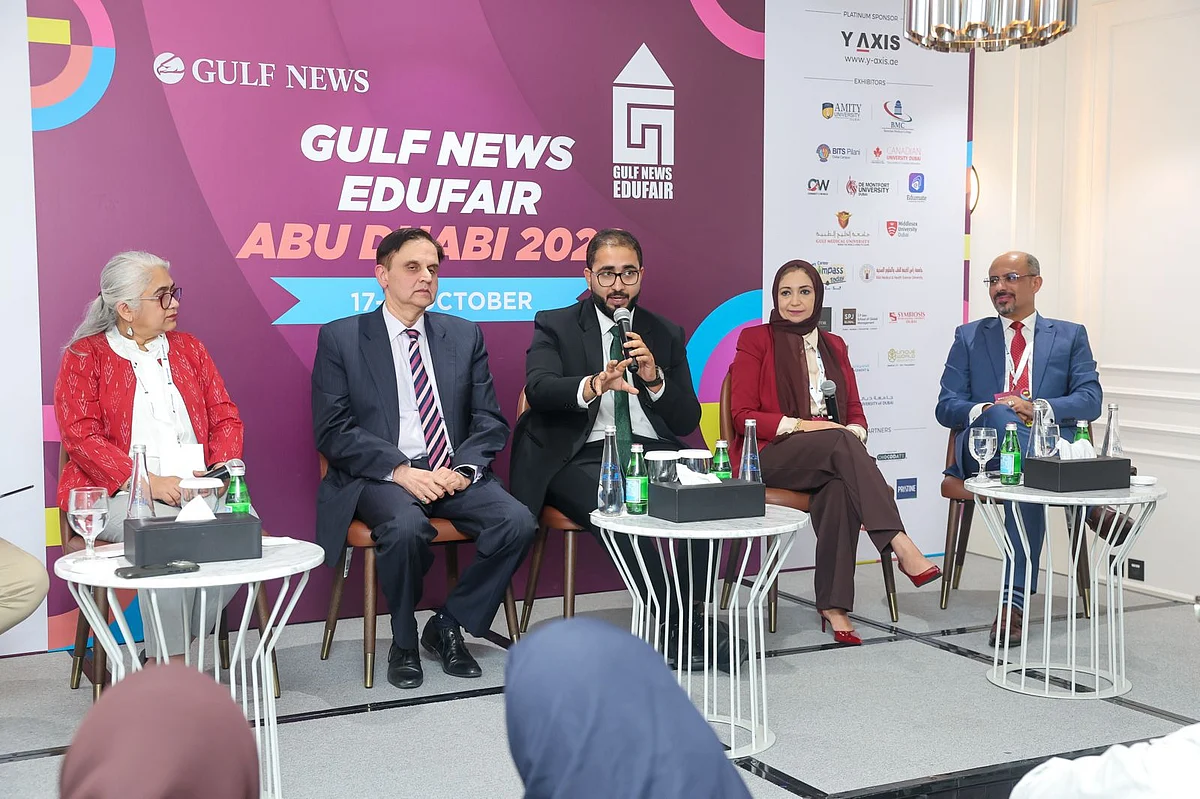
Human skills, such as communication, judgment, and collaboration, will become increasingly important as artificial intelligence reshapes the workplace, educators and experts said during a panel discussion at the Edufair Abu Dhabi 2026. Dr. Anita Patagar, Executive Director of Symbiosis International University Dubai, emphasized that universities must prepare students for careers that often cross traditional disciplinary boundaries.
Communication, judgment, curiosity, and collaboration must be paired with disciplinary knowledge and workplace experience to equip graduates for changing careers. While AI can automate certain job tasks, the panel argued that technology cannot replace the critical thinking, curiosity, and interpersonal abilities required to interpret information, make sound decisions, and work effectively with others.
Dr. Vishnu, Program Director of LLM at the University of Dubai, stated that while AI may replace some tasks, students must still possess a strong foundation in their chosen discipline to ensure technology doesn't replace them entirely. Universities can cultivate this breadth through cross-disciplinary study, industry projects, and exposure to subjects like sociology, psychology, and economics.
Integrating technology within existing degree programmes rather than treating it as a separate track is also crucial, according to Dr. Umesh Kathari, Assistant Dean and Assistant Professor at S P Jain School of Global Management. Healthcare serves as a prime example of the need for technical and human capabilities to develop together, as AI-assisted diagnosis often requires collaboration between clinicians, engineers, legal experts, and managers.
To give students a clearer understanding of different roles, panelists called for internships, industry projects, volunteering, and workplace assessments rooted in real situations. Dr. Riham Ahmed Ibrahim, Associate Professor at RAKMSHU, highlighted how AI-assisted diagnosis necessitates collaboration with engineers, legal experts, and managers, along with addressing questions of authorization and liability.
The educators stressed that students should look beyond their degree title and gain direct exposure to professions through reading, conversations with practitioners, and volunteering.
Written by urgent.news from Gulf News's reporting — not their text. Machine-written — may contain errors; check the original before relying on it.