Despite drought and diseases, farmers around Bengaluru achieve good pomegranate yield
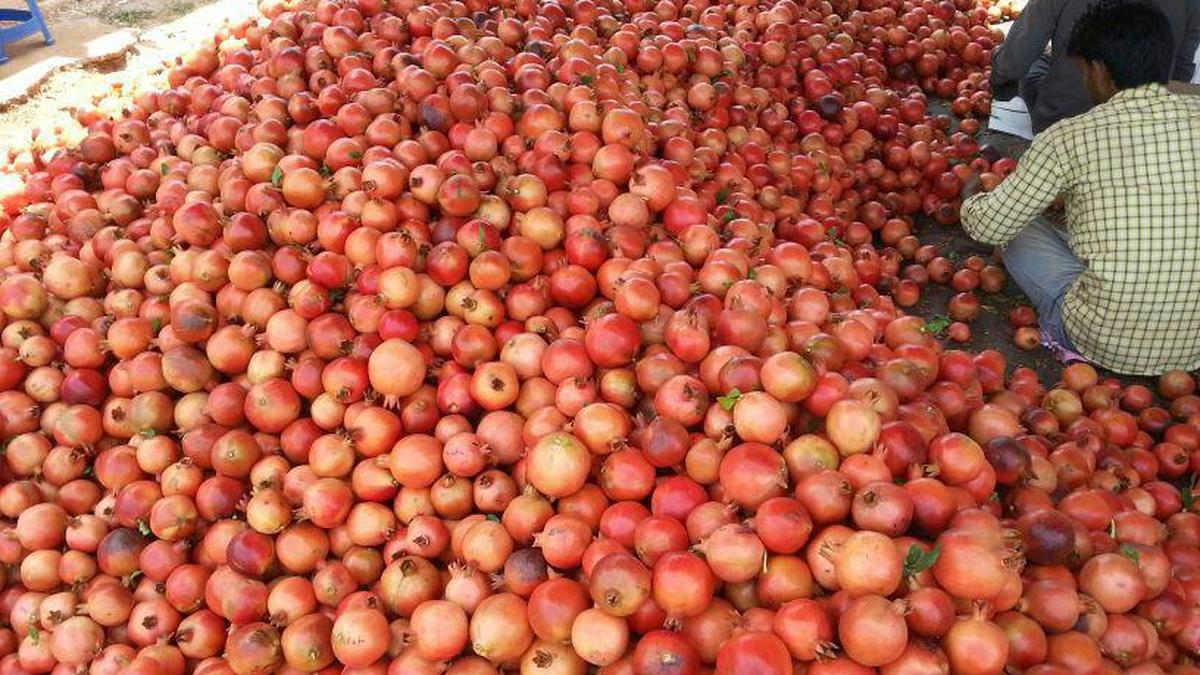
Despite drought and diseases, farmers in the Bengaluru region have been able to achieve a good pomegranate yield. Mr. Gonuru Srinivas, a farmer from Gonuru village in Devanahalli Taluk, has been growing pomegranate on his 15-acre farm for more than a decade. He has achieved yields of over 70 tonnes this year and over 150 tonnes in previous years. Mr. Srinivas emphasized that while pomegranate is drought-resistant, it requires a good water supply for healthy plants and to prevent diseases.
G.C. Mune Gowda and M.R. Devaraj, from Thondebhavi in Gauribidanur taluk, are also recognized for their successful cultivation of pomegranate, despite the risk of 'bacterial blight' disease. These farmers were honored by the Institute of Agricultural Technologists (IAT) and Department of Horticulture for their efforts in producing high-quality pomegranates. IAT president A.B. Patil noted that despite drought and disease risks, these farmers have continued to produce pomegranates by following certain practices.
To ensure a good yield, Mr. Srinivas recommended testing the soil pH level and ensuring access to clean water through a drip irrigation system. The pH level should ideally be between 6.5 and 7. Using healthy seedlings free of diseases and pests, preferably obtained from reliable nurseries in Maharashtra, Gujarat, or other parts of Karnataka, is also crucial.
Farmers should avoid planting materials with uncertain health status and ensure proper planting by checking the roots for infection. Regular spraying of insecticides and pesticides can help prevent pests from attacking the fruits and plants. Following these steps can help farmers in the Bengaluru region achieve a good pomegranate yield.
Written by urgent.news from The Hindu's reporting — not their text. Machine-written — may contain errors; check the original before relying on it.