China proposes export controls on solar-manufacturing technologies
The commerce ministry says greater oversight is needed because solar technologies are increasingly being used in sensitive sectors such as aerospace and national defence.
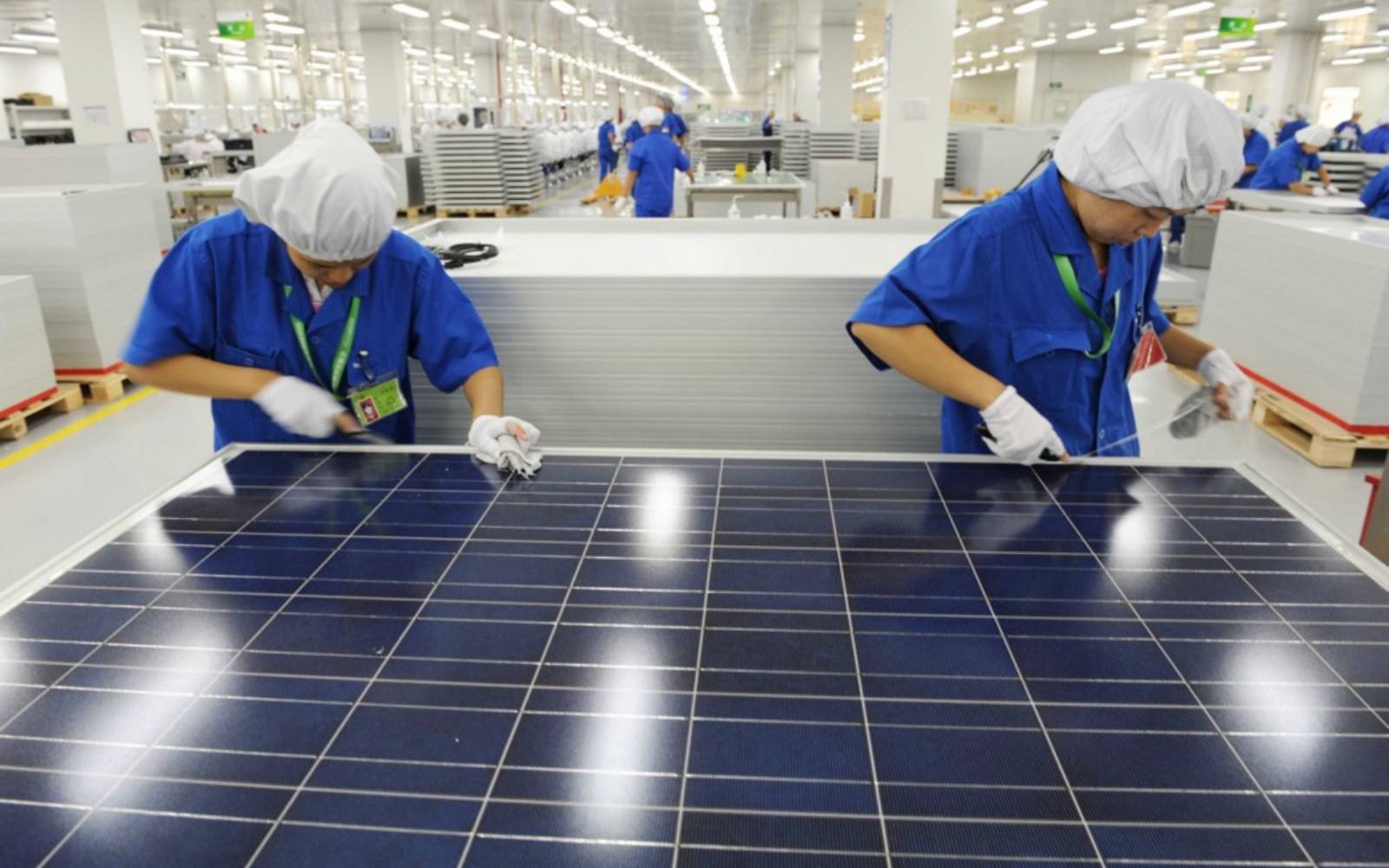
China has introduced proposed export controls on 12 technologies utilized in solar panel manufacturing, citing concerns over national security. This move is part of a more extensive revision that also encompasses AI and biotechnology. The commerce ministry announced the addition of these photovoltaic technologies to China's export-control list in a statement released on Friday.
The rationale behind the controls is that solar technologies are increasingly finding applications in sensitive areas such as aerospace and national defense, necessitating greater oversight.
Initial discussions with manufacturers regarding potential restrictions on advanced solar-panel manufacturing technologies were held by Chinese officials in April. This development could potentially impact plans by US firms, like Tesla, aiming to expand their production within the US. China has also imposed limitations on solar-manufacturing technology exports to India, as reported by Reuters.
Experts suggest that China's objective is to maintain its dominance in the industry, as India strives to build up its domestic manufacturing capabilities and reduce its reliance on Chinese technology. The export restrictions are designed to mitigate the risks of technologies running amok or being improperly disseminated while preserving normal international exchanges and cooperation in science and technology.
The commerce ministry stated that exporters must register certain overseas technology transfers until the export-control catalogue is formally updated. Public consultation on the proposal is set to conclude on November 15.
The technologies targeted for export controls include those used to produce certain thin wafers, perovskite and tandem solar cells, as well as those involved in large-scale fluidised-bed polysilicon production. Perovskite represents an emerging technology with the potential for enhanced conversion efficiency. Tandem cells combine perovskite and silicon layers to capture a broader spectrum of sunlight.
Fluidised-bed technology for polysilicon production, a crucial component in solar panels, is both cost-effective and more energy-efficient compared to the prevailing Siemens process. China will restrict, but not entirely prohibit, the export of advanced solar cell manufacturing technologies, including TOPCon, HJT, and XBC.
Written by urgent.news from Free Malaysia Today's reporting — not their text. Machine-written — may contain errors; check the original before relying on it.
This story
This is one outlet's version. Read the fullest account.
- China proposes export controls on solar-manufacturing technologies freemalaysiatoday.com
- China proposes export curbs on 12 key solar manufacturing technologies investing.com
- China proposes export controls on solar-manufacturing technologies brecorder.com
- China proposes export controls on solar-manufacturing technologies nst.com.my