Behold, Intel plans a 480GB GPU, a video card with more memory than the average laptop SSD has storage — but of course it's for AI, and curiously, it will use LPPDR5X, not even GDDR7
The Intel 480GB GPU combines 1.5TB/s bandwidth, 1.3 petaflops FP8 performance, and 350W power consumption, although pricing and availability remain undisclosed.
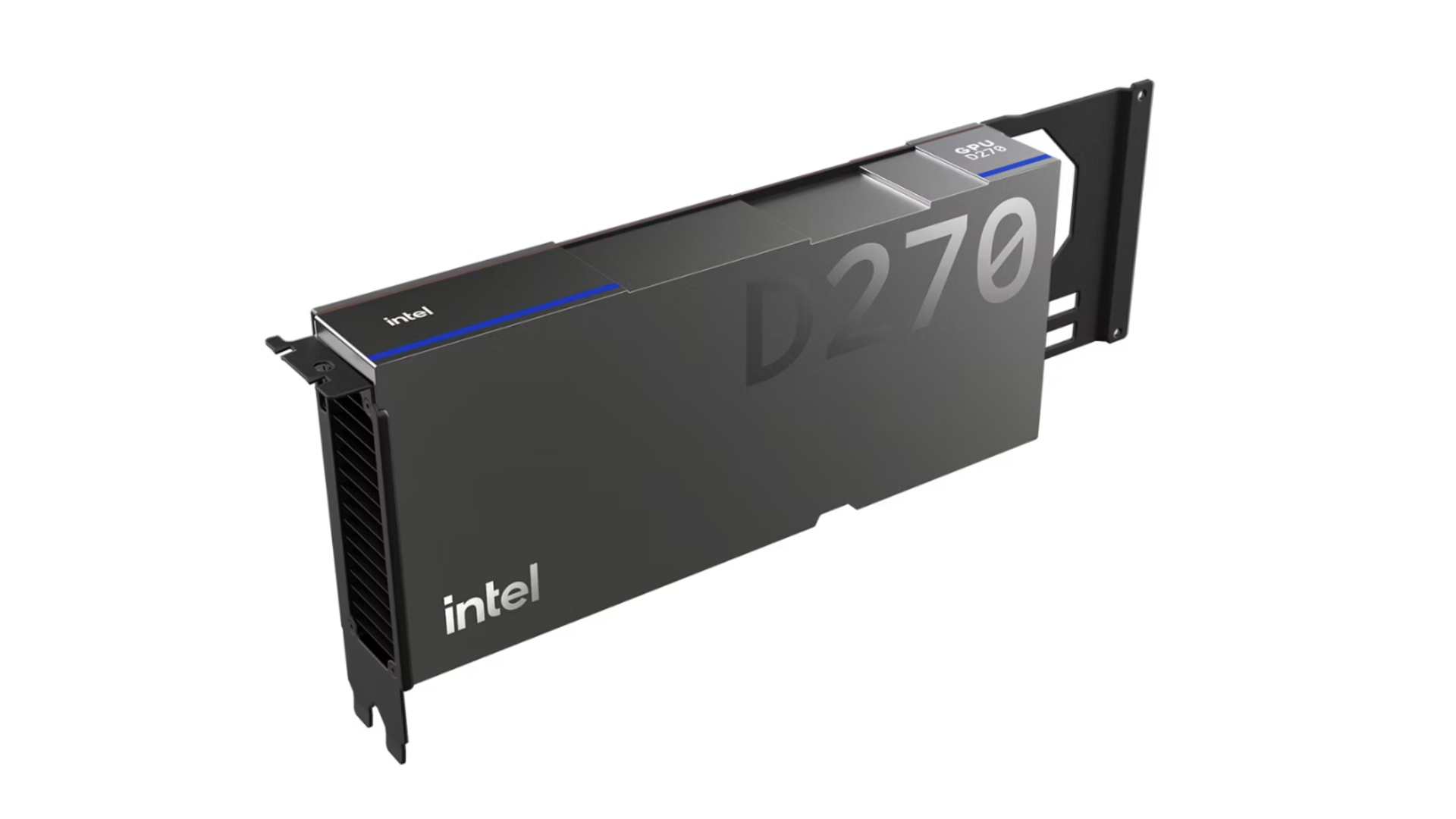
Intel has unveiled a groundbreaking graphics processing unit (GPU) with an unprecedented 480GB of memory, setting a new record for GPU memory capacity. Dubbed the Intel GPU D-series, this cutting-edge accelerator is designed specifically for demanding artificial intelligence (AI) inference workloads, surpassing Nvidia's Blackwell Ultra B300 in terms of memory capacity.
Instead of utilizing the more common GDDR7 memory technology found in modern graphics cards, Intel has opted for LPDDR5X, a power-efficient memory technology often employed in laptops and other devices. This decision indicates Intel's focus on memory capacity and power efficiency for AI applications rather than pursuing a conventional gaming graphics card.
Intel's D-series accelerator boasts the ability to handle large language models containing up to 300 billion parameters on a single card, with the capability to increase to over one trillion parameters when used in an eight-GPU system. These capabilities are tailored towards managing lengthy prompts, simultaneous inference requests, enterprise AI services, and robotics applications that require responsive processing.
Intel emphasizes the importance of high-capacity inference in AI, stating, "Inference is becoming the defining AI workload, and enterprises need infrastructure that delivers the right performance at the right cost." The accelerator is rated at 1.3 petaflops for FP8 computation, a numerical format optimized for AI operations while reducing memory requirements compared to higher-precision formats.
Additionally, its 1.5TB/s memory bandwidth ensures swift data transfer between memory and the processor. Intel has engineered the D-series to seamlessly integrate into existing data centers, specifying a 350W power envelope and a standard PCIe form factor. The inclusion of air cooling and software compatibility across Intel's GPU platforms aims to simplify deployment without necessitating specialized cooling arrangements or entirely new rack infrastructure.
Moreover, Intel plans to connect the accelerator with its Xeon processors, enabling CPUs to coordinate tasks, manage data movement, and handle workloads that don't require GPU acceleration. This strategy addresses the growing trend of AI systems built around multiple stages, including retrieval, reasoning, orchestration, external tools, and execution.
Intel's D-series GPU aims to accommodate various workloads and optimize resources based on the specific requirements of AI applications. While the public retail price and general-availability date for the Intel GPU D-series remain undisclosed as of the time of writing, Intel remains committed to empowering enterprises with the right intelligence, compute resources, and economics to fully leverage the potential of open models and advanced AI infrastructure.
Written by urgent.news from TechRadar's reporting — not their text. Machine-written — may contain errors; check the original before relying on it.